

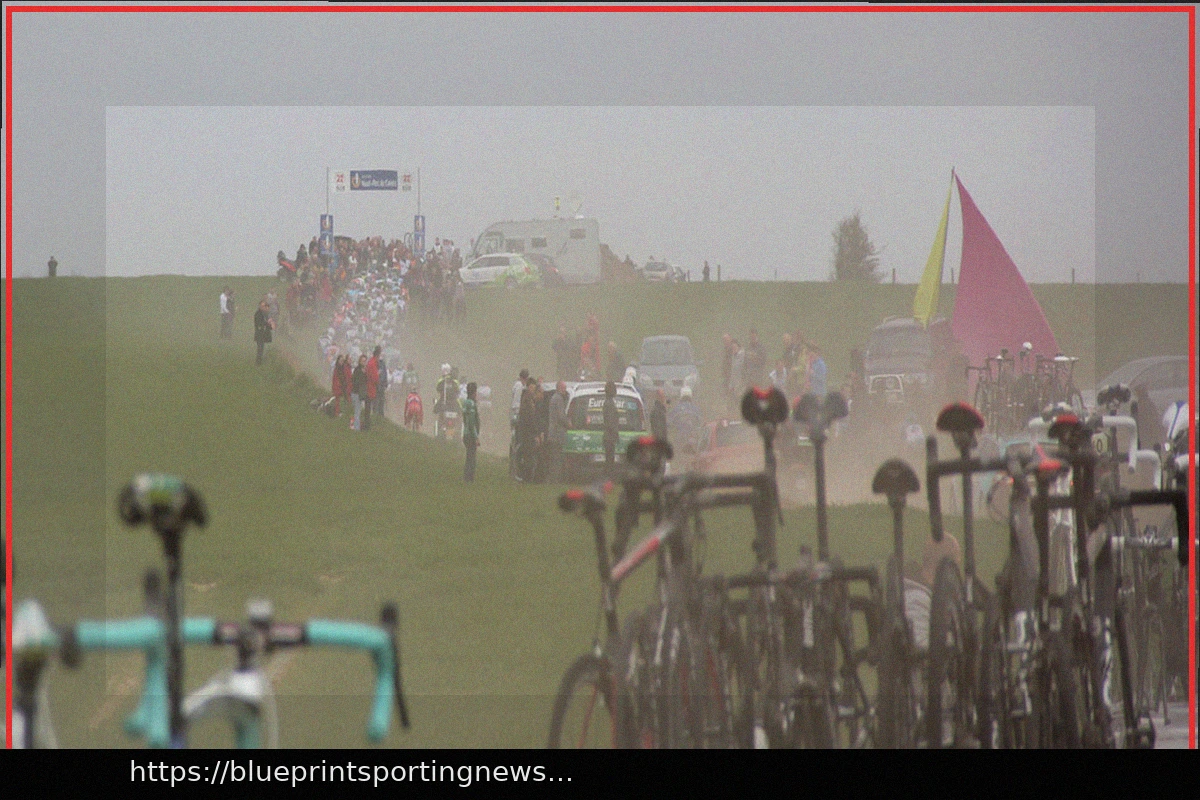
On April 8, 2012, I had an incredible second opportunity to chase Paris-Roubaix, arguably the most brutal of cycling’s Monuments. This day, like my prior experience riding the course, was nothing short of epic.
Looking back at the photographs, this was likely my best day ever capturing a bike race. Photographing targets moving at 60 kph across a dynamic landscape, filled with unexpected moments, is incredibly challenging. It’s why only a select few photographers reach the top level. I don’t see the final results until hours later, when I can examine the details and split-second captures on my computer.
This marked the final day of Velo Classic Tour’s “Spring Classics I: The Cobbles” tour, building on the excitement of the Tour of Flanders a week earlier. As always, Peter Easton had meticulously planned everything, allowing guests to simply soak in the unfolding spectacle.
Following the Paris-Roubaix course is a demanding endeavor. Its point-to-point nature requires constant “leapfrogging” of the peloton after each stop. This is further complicated by narrow, winding farm roads that make accessing and exiting viewing spots difficult. The sheer number of spectators also creates traffic jams in remote areas, posing a constant threat to staying on schedule.
Despite the challenges, this creates a fantastic adventure. For those chasing the race, the day has two distinct paces: the initial, more relaxed speed before encountering the race for the first time, and then the “warp speed super drive” that kicks in once you’ve seen the back of the peloton after your first checkpoint.
Our plan was to witness four key cobbled sectors: #27, #22, #16, and finally #10. At sector #10, Lisa would be waiting with a tent, hot food, cold beer, and the live race broadcast on a big screen TV, allowing us to enjoy the finale in comfort and style, avoiding the post-race scramble of being trapped in a field. This setup, perfected over nine previous editions by Pete, was ideal.
The race was expected to reach sector #27 around 12:40 PM, giving us ample time for a leisurely start and a relaxed approach to the course.
On this Easter Sunday, Tournai was unusually quiet. I was one of the few people out, aside from a few shopkeepers setting up their cafés and some cats by the church. The atmosphere was peaceful and serene, a stark contrast to the adrenaline-fueled chaos that would erupt in the coming hours.
Before each stop, Pete would brief us: “Hustle back to the van as soon as the race passes.” This was crucial for exiting quickly, avoiding the crowds, and reaching the next viewing spot before the peloton. Depending on how close Pete could get the van to the course, we sometimes had to run or jog to and from our positions. The urgency to keep moving was palpable, and no one wanted to hold up the group. There were a couple of times I was the last one into the van, earning a shouted “Let’s GO, RICH!” from Pete as he shifted gears before I’d even closed the door.
The rhythm of chasing Roubaix is akin to a roller coaster: a slow build as you ascend to the first peak, followed by an insane acceleration, the rush of wind, and shouts as you plunge unstoppably through twists, turns, crests, and valleys. This intensity continues until the race concludes, whether you make it to the velodrome or not.
The break hits Sector 27.
Without a prominent lead car, the race appears with astonishing speed, creating an immediate adrenaline surge as the riders emerge. My focus shifts to turning on the camera, getting into position, lining up the shot through the viewfinder, and firing off a rapid sequence of shots.
The choice is between watching the race or photographing it, as the viewfinder offers no preview until after the shots are taken and reviewed. However, having a visual record of events is a bonus. Often, when reviewing my photos, I discover details I missed in the heat of the moment. I once spotted Jered in a photo at a corner in Sector 17, but at the time, I had no idea where he was on the course.
Everyone looked good in the break as they hit the first sector of cobbles.
Sector 27 at Troisvilles à Inchy features 2200 meters of cobblestones. It branches off the main road, slopes slightly downhill, and winds through a field, passing a modest memorial to Jean Stablinksi. While several cars were already present, the crowds were relaxed, as it was too early for even the most dedicated fans to be in full swing.
Unlike the Grand Tours, there’s no promotional caravan. The race is primarily indicated by motorcycles. The rough terrain forces support cars to stay well ahead of the peloton. The approaching TV helicopters and the stream of pre-race vehicles signal the race’s imminent arrival.
Here comes the pack at Sector 27. Boonen (in 3rd wheel) would never be far from the front the rest of the day.
Without a clear signal, the break suddenly appears around a corner, and the action begins. Around twenty riders look composed. It’s the first cobbled sector, so everyone is still fresh at the 100km mark. Bikes and riders are clean—a stark contrast to later in the day, when dirt, dust, fatigue, and pain would accumulate over the brutal remaining kilometers.
I had heard about the distinct sound of the peloton on the cobbles, but this time, it was truly striking. When the main bunch passed by some four minutes later, the 180 bikes strung out took about 10-15 seconds to pass, and the sound was incredible…
It arrives like a wave, almost instantly, crests for the duration of the peloton’s passage, and then is gone. At this point, the group was still largely intact, and without the interference of cars and motos, all you hear is pure cycling: the rhythmic beating of 360 rubber tires on carbon and aluminum rims against the unyielding stones, connecting carbon bikes to the living, breathing organism of the professional bunch as they roll, pound, and bump over thousands of cobblestones simultaneously.
Then, silence. A moment of shared awe among the fans, followed by the urgent need to hustle back to the van for the next chase.
Hedges serve as naturally renewable fences in the region.
Sector 22 Capelle-sur-Écaillon à Ruesnes, 1700 meters
While we accessed Sector 27 via paved roads, reaching Sector 22 required traversing another cobbled sector, approximately 2000 meters long, leading us into the middle of a field. The crowds here were significantly larger, and ensuring a swift departure on the narrow cobbled access road meant parking about 700-800 meters from the course—a substantial distance to cover on foot in a hurry.
Our vantage point from the middle of the sector offered a clear view of the approaching “storm.” The TV helicopter arrived first, circling low for an expansive shot of the assembled fans.
The dust was thicker here, and the break appeared to have thinned by a few riders—though it’s impossible to count accurately through a viewfinder.
The toll of the early race was evident on the main pack, who still occupied the full width of the pave. However, the tail of the peloton had grown considerably as riders began to lose contact. While not a large number, a few stragglers were starting to emerge.
This guy was well back of the bunch, trapped in the dust between cars, and looking at a long ride to get back on.
Sector 17 Haveluy à Wallers, 2500 meters
This section of Sector 17 featured a sharp 90-degree right turn, creating an excellent viewing opportunity as we could see the race approach from one direction, blast through the turn, and then head towards Sector 16 and Arenberg.
The wind was strong all day, and a fine silt of dust settled on everything—cameras, clothes, eyes. This made choosing a side of the road to stand on relatively easy for me. Once the peloton arrived, one side of the road became a dust bowl, while the other remained relatively clear, even with the race traffic.
I spotted a small gap in the crowd about 30 meters past the turn and positioned myself next to a guy wearing a red, yellow, and black Jupiler cone hat. Assuming he was Belgian based on his headwear, I struck up a conversation in English. He explained that these hats are awarded for drinking approximately 25 Jupiler beers, adding with a chuckle that they “didn’t drink them today.” Then, his companion placed a hat on my head, and I was duly inducted as an honorary Belgian fan.
A minute later, a dust cloud appeared on the horizon, signaling the race’s arrival. With the day moving at an accelerated pace, this approach offered a slightly longer window to prepare. The fans began cheering as the lead moto powered through the turn, completely obscuring my view of the riders.
Where’s Jered? Check out the red hat.
It’s only after sorting through nearly 500 photos from the day that I can see the full extent of the race action captured. While Terpstra checked on Boonen, who was right behind him, I noticed Jered crouched on the ground in the corner, taking his own photos. I had no idea he was there at the time.
Quickstep was still in control, but the race was noticeably more strung out. The main bunch was smaller, with riders coming through in groups of three, four, two, and one. Some would rejoin the main group, while others were already fighting for survival.
I lingered as long as possible, not wanting to delay our transfer to the final sector, but also not wanting to miss any riders. Those dropped from the main group looked utterly spent, covered in dust, with over a hundred kilometers still to go.
Sector 10: Mons-en-Pévèle, 3000 meters
This is the second-longest stretch of cobbles. Even though I had ridden through it just two days prior, I struggled to recall the specifics of the section. I attributed this to the sheer number of sectors and perhaps a mental mechanism for blocking out the memory of pain.
Velo Classic had set up a tent with a barbecue, a deep fryer (serving freshly made frites), plenty of iced beer, and a group of their Belgian friends to celebrate with as we watched the race finale on VCT’s big screen TV. It was a truly enjoyable setup.
Terpstra and Boonen were at the front of the field, but first, we had the opportunity to witness the race roadside for our fourth time. I walked about a hundred yards into the sector and stepped down into a roadside ditch to set up a low-angle shot.
I glanced up and saw a lone Quickstep rider round the corner and blast onto the cobbles, accompanied only by the TV moto. This was the decisive move, and it was Boonen at his absolute best.
He was gone in a flash.
Seconds ticked by—perhaps half a minute before the next riders emerged, led by Juan Antonio Flecha, who was attempting to bridge the gap to the seemingly untouchable Tomeke in a desperate bid.
Astana’s Jacopo Guarnieri would finish in just under 6 hours, in 23rd place.
The gaps between the groups and individual riders were now immense. The strain of the past few hours had visibly transformed the world’s best cyclists before our eyes. The peloton was significantly smaller, and by the end, only 86 of the 200 starters would finish.
For us, it was a quick return to the tent to enjoy the rest of the race in relative comfort, eating, drinking, and laughing with the new friends we had all made during our shared days of riding and chasing the Classics.
The race disappears into the distance.
By now, riders too far off the back wisely elected to stop the madness and look for a smoother route to the team bus.
Once the race had passed our location, two local gendarmes assigned to manage traffic at the Sector 10 entrance walked through our tent, thanking and shaking each of our hands. I learned that Lisa Easton of Velo Classic had wisely befriended them earlier in the day with a plate of hot food. I suspected they were either relieved their day of telling people “Non!” was over, or were huge Boonen fans, or perhaps both. Regardless, everyone smiled as we absorbed the magnitude of what an incredible day this had been.
– Thanks for reading –
Richard Pestes
• And a BIG thanks to Velo Classic Tours for hosting a week of fantastic riding and chasing the Classics.