

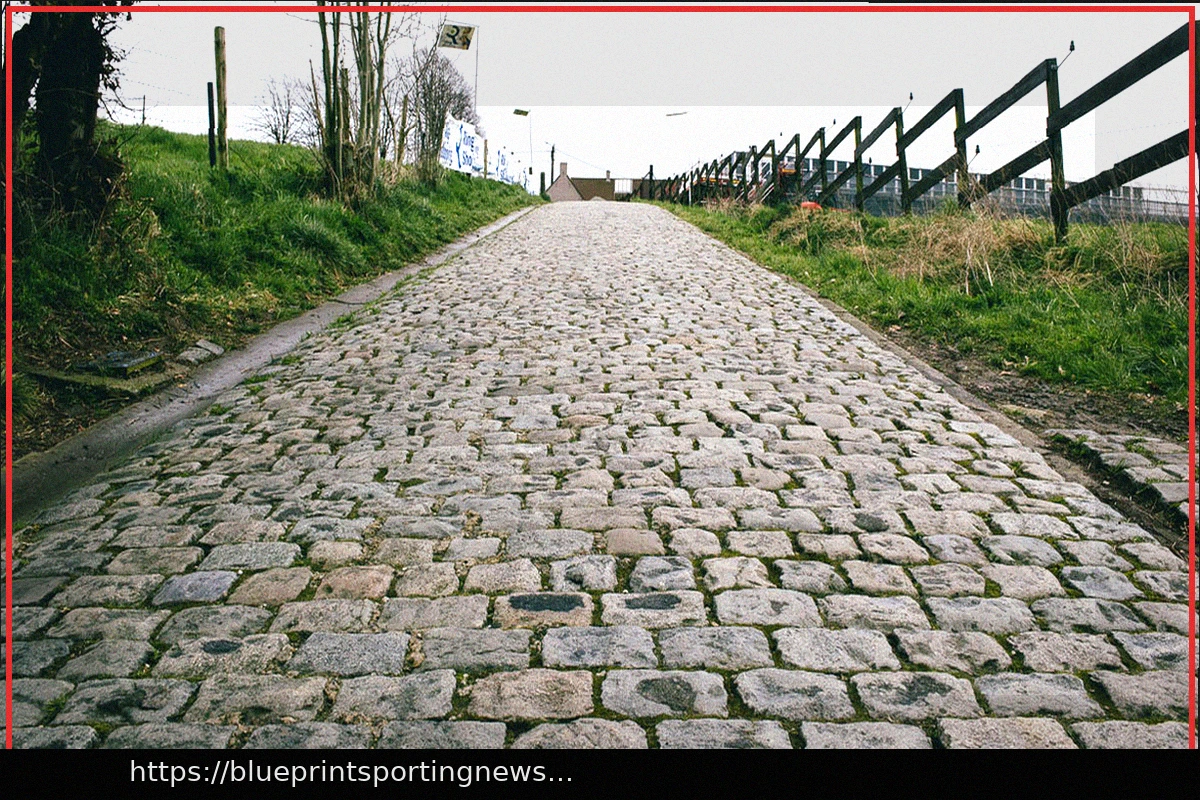
If you consider yourself a true cycling enthusiast, in the Flemish spirit, then Flanders beckons. The infamous cobbled ‘bergs’ of the Tour of Flanders are where legends are forged and amateurs face a stark reality check. From the swift Eikenberg to the chaotic, wheel-spinning Koppenberg and the brutal slopes of the Paterberg, these climbs demand raw power, impeccable traction, and unwavering nerve. To help you conquer these legendary roads and perhaps outpace your companions, we rode the route a week before the race, gathering insights into each climb’s unique character and essential local tips.
In the Ronde Van Vlaanderen (Tour of Flanders), no two hills are alike; each possesses its own distinct personality and an optimal path to the top. Here, local insight is just as crucial as strong legs. To convey the singular challenge of ascending these Belgian ‘bergs’ and to equip you with insider tips for outsmarting your riding partners, I tackled several key climbs a week prior to the main event. For those planning their own Flanders cycling adventure, numerous signposted routes are available, as is the official Tour of Flanders sportive held the day before the professional race.
EIKENBERG – 1250m, 11% Max Gradient
Often encountered early in the Tour of Flanders, the Eikenberg serves as an appetizer for the more challenging climbs ahead. Its cobbles are tightly packed, and despite its length, the gradient remains manageable. A wide turn at its base allows riders to maintain significant speed, making it possible for many to ascend in the big chainring. Given its speed and early placement in the race, the Eikenberg typically isn’t a prime spot for major attacks, though a cohesive team effort can certainly test competitors’ legs.
MOLENBERG – 500m, 14% Max Gradient
My initial encounter with the Molenberg was on a wet February day, where its cobbles resembled stepping stones in a downhill river, and its severely crowned, narrow path made riding the edges impossible. Loose cobbles and water-filled gaps added to the challenge. Fortunately, recent maintenance has improved the surface, reducing the crown and filling some potholes with concrete. Without its previously brutal surface, this climb is relatively short and not overly steep. To achieve a fast time, maintaining momentum through the turn off the main road is crucial. The most demanding part is at the very beginning; once past that, the incline lessens towards the summit. The Molenberg is narrow and somewhat concealed from the main road, making it easy to miss. Keep an eye out for a yellow building and a sign for the picturesque water mill, which gives the climb its name.
KOPPENBERG – 620m, 19% Max Gradient
The Koppenberg rightfully holds its place as one of the world’s most renowned climbs, embodying the very essence of Belgian cycling. It transitions from a fast, exposed highway into a cobbled section barely wide enough for a single car. Approaching it on the race route, the climb remains hidden until a sudden sharp right turn dramatically reveals its daunting length and extreme ascent. While the cobbles have recently been relaid, offering a smoother surface devoid of major deformities, the challenge persists. Mid-climb, the gradient hits a punishing 19%, and the surrounding trees keep the road perpetually damp, often coated with mud washed down from the steep banks. The ultimate test here is maintaining traction; losing grip or putting a foot down means a walk to the top. Professionals typically vie for the cleaner left side of the road, and if you’re riding with friends, sticking to this line will give you an advantage.
TAAIENBERG – 800m, 18% Max Gradient
After the seemingly endless drag of the Steenbeekdries, riders on the Flanders Sportive can briefly enjoy a fast descent with scenic views of the bergs and windmills. However, this respite is short-lived. A sharp hairpin left turn strips away all momentum, leading directly into the formidable 18% ascent of the Taaienberg. While a new surface and clear gutters on both sides make it slightly more manageable, the summit always feels distant. Mud often accumulates in the left-hand gutter, so to gain an edge, position yourself in the right-hand gutter. For professional racers, its location just 35 kilometers from the finish line makes it a critical point. The Taaienberg has earned the moniker ‘Boonenberg’ due to Tom Boonen’s frequent aggressive attacks here throughout his career, exemplified by intense battles like the one with Lars Boom at Omloop Het Nieuwsblad. Boonen, unfortunately, was absent from races this year due to a shoulder injury from Paris-Nice.
OUDE KWAREMONT – 2200m, 11% Max Gradient
Following recent course adjustments, the Oude Kwaremont has emerged as a crucial turning point in the Tour of Flanders. As the penultimate climb, situated just 17 kilometers from the finish, it consistently ignites significant race action. Personally, I find the Oude Kwaremont to be the toughest ascent on the Ronde route due to its extensive length, feeling almost endless. The initial hundreds of meters are paved with tarmac, lulling riders into a false sense of security before the relentless cobbles begin and the gradient sharply increases. The steepest section occurs approximately halfway up. Even upon reaching the town of Kwaremont, which appears to be the summit, another kilometer of brutal cobbles awaits. Sustaining an acceleration over this segment is a challenge typically reserved for professional riders. For most, the latter half of the Oude Kwaremont is a slow, jarring struggle until it finally flattens out, offering a brief chance to recover. If participating in the sportive, cherish this momentary reprieve, as the next formidable challenge is imminent.
PATERBERG – 380m, 20% Max Gradient
Positioned just a few kilometers after the Oude Kwaremont, the Paterberg is the shortest yet steepest climb of the day, and since 2012, it has served as the final ascent before the finish line. After sacrificing all speed to navigate a sharp turn at its base, there’s no escaping the immediate, extraordinary gradient. A gutter along the left side of the climb often becomes a battleground for riders seeking an advantage during the race. However, be cautious: after heavy rain, this gutter can be covered in a treacherous layer of mud. Only sheer power will get you up this climb quickly. Attack the bottom turn with maximum effort, stay seated, and channel your inner cycling legend until the road levels out at the summit. From this point, it’s a predominantly downhill 13-kilometer time trial to the finish in Oudenaarde, where a well-deserved beer awaits.
DE FLANDRIEN BRASSERIE
After conquering the formidable challenges of the Tour of Flanders, a fitting reward is essential. The De Flandrien Brasserie, located next to the Tour of Flanders Museum in Oudenaarde, offers the perfect conclusion to your cycling adventure. We highly recommend trying a Kwaremont beer and their renowned ‘Spaghetti Boonenaise.’ This brasserie is a popular hub where you’re likely to encounter notable cycling figures, both current and legendary. World Champion Freddy Maertens, the museum’s curator, often frequents the establishment, and it’s a preferred spot for professional teams to end their training rides.