

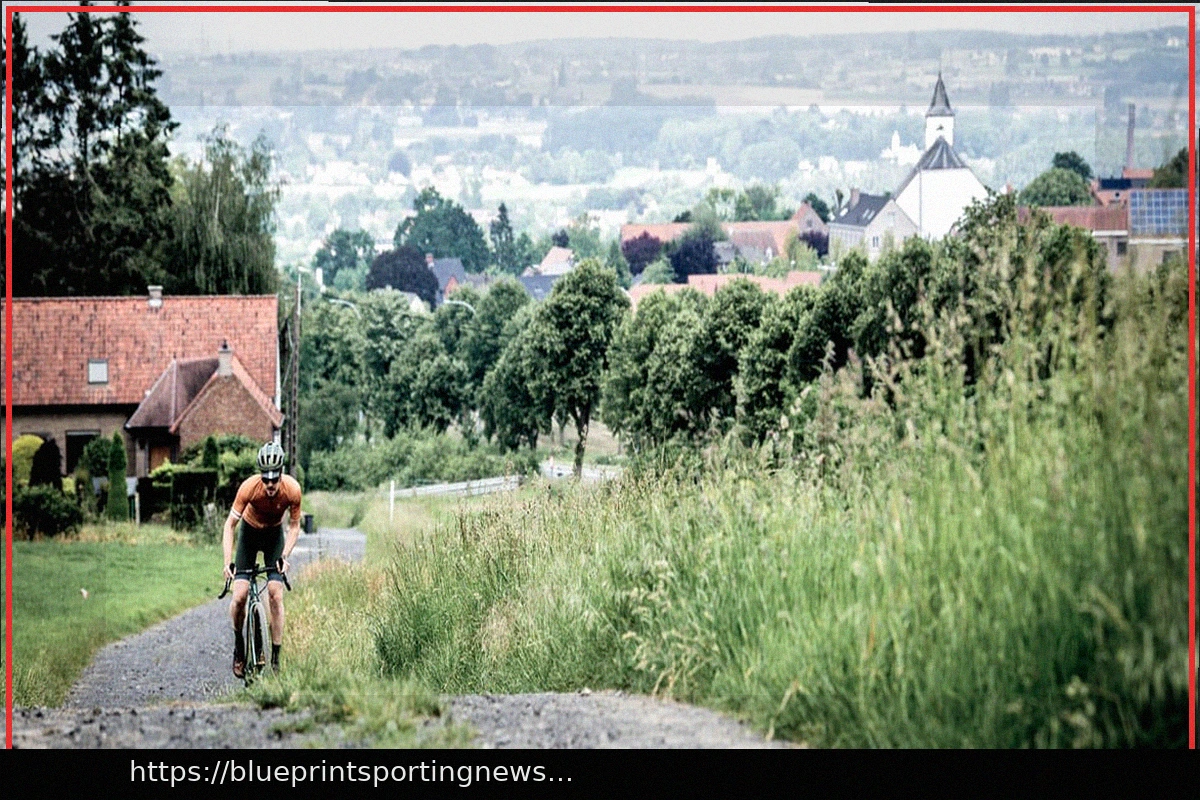
Historically synonymous with formidable cobblestones, challenging climbs (bergs), and the rich legacy of Spring Classics, Flanders is now witnessing a significant shift. With gravel cycling gaining immense popularity across Europe, Belgium’s renowned cycling hub is adapting, integrating its famous ascents with an expanding grid of unpaved roads, forest trails, and routes ideal for bikepacking. This transformation offers cyclists an entirely new perspective on its legendary landscape—where the formidable Koppenberg can now lead to serene gravel paths, and the intensity of competitive races gives way to extended, engaging journeys through history, picturesque rural settings, and a continually evolving cycling ethos.
Flanders’ identity has long been intertwined with the iconic, narrow cobbled roads that form the core of Belgium’s spring classics. However, this revered cycling destination was not, until recently, recognized for gravel riding. That perception is rapidly changing. As a growing number of cyclists seek out gravel alternatives, Flanders is actively transforming its infrastructure with substantial investments in a wide-ranging network of gravel routes.
“The gravel cycling scene has seen significant growth over the past few years,” notes Vincent Van Parys, an enthusiastic gravel rider and the proprietor of Secteur Pavé, a custom bike shop located in Mechelen. “Many road cyclists have come to appreciate the unique charm of gravel, which in turn has fueled a surge in gravel events, bikepacking adventures, and dedicated gravel routes throughout Flanders. While some of these events are quite competitive, others are designed to be much more relaxed, often concluding with enjoyable refreshments like beer and fries.”
Van Parys acknowledges that a competitive spirit now significantly shapes Flanders’ gravel landscape, yet emphasizes that the recreational side is equally flourishing. “Many riders are still drawn to cycling through natural landscapes, enjoying extended days on their bikes, and sharing good times with fellow enthusiasts,” he explains, adding, “It’s not exclusively focused on aerodynamic advantages anymore.”
Many cyclists in Flanders maintain a collection of bikes, allowing them to switch between road and gravel disciplines. However, the “all-road bike” has gained considerable traction recently, with some riders opting to change wheelsets to create a versatile, multi-purpose machine. Furthermore, while mountain biking traditionally served as a winter activity in Flanders, a significant number of cyclists now favor their gravel bikes for year-round use, appreciating the ability to maintain a consistent riding position rather than adapting to the distinct geometry of a flat-bar mountain bike.
Almost ten years ago, Van Parys transitioned from the corporate sector to dedicate himself entirely to cycling, particularly focusing on gravel riding and bikepacking. His shop, Secteur Pavé, specializes in bespoke, high-end custom bicycle orders, and he reports that gravel and all-road bikes now constitute close to 80 percent of his total sales.
The burgeoning popularity of gravel cycling in Flanders is inextricably linked to the development of adequate infrastructure, a process in which VISITFLANDERS has played a pivotal role. While VISITFLANDERS is known for its strong engagement in promoting cycling, particularly through the region’s spring classics which draw thousands of visitors annually, the tourism agency views gravel cycling as a natural and complementary expansion of the established road cycling culture.
Predictably, VISITFLANDERS has designed numerous gravel routes, some of which echo the prestigious Spring Classics such as De Ronde van Vlaanderen and Ghent–Wevelgem. Other routes cater to the competitive gravel scene, replicating circuits from events like Dwars door het Hageland, Flanders’ leading professional gravel race, or even the upcoming UCI World Gravel Championships course.
Cyclists who appreciate the challenge of cobbled climbs but prefer to avoid the busy main roads between them now have access to clearly marked circuits. These routes skillfully connect the iconic cobbled segments with serene gravel roads and paths, providing a fresh and immersive cycling experience. The integration of gravel and cobbles is, in many respects, a fitting evolution, considering that the historic cobblestones were originally laid to reinforce Flanders’ fundamental dirt tracks.
Vincent Van Parys served as our knowledgeable guide across three of the region’s newly established gravel routes.
1. De Ronde van Vlaanderen Gravel Circuit
Our journey began in Ghent, where we made a quick stop at Jaegher Atelier, a new cycling hub on the city’s edge, for a final coffee. We then cycled along the Schelde River’s bike path towards Oudenaarde, linking up with the thoughtfully designed 86-kilometer De Ronde van Vlaanderen gravel circuit. Van Parys ascended the classic’s renowned cobbled hills, including the Koppenberg and Oude Kwaremont, with remarkable ease. “It’s certainly much simpler to conquer these climbs on a gravel bike,” he chuckled. He equally relished exploring the diverse gravel roads and singletrack trails encountered along the way. “Some sections are quite challenging in their own right,” he commented. “Overall, it’s an excellent circuit, and I particularly enjoy concluding the ride in Oudenaarde. It’s a place steeped in cycling history and also perfect for enjoying a post-ride beer!”
2. Ghent–Wevelgem Gravel Circuit
That afternoon, we headed north to experience the 91-kilometer Ghent–Wevelgem circuit, which led us from Ypres through the historic Flanders Fields and up the iconic Kemmelberg. A secluded singletrack trail brought us to Ploegsteert, the former residence of the late Belgian cycling icon, Frank Vandenbroucke. We paused briefly at Café de la Grande Place in the village, a spot that continues to honor the legend known as VDB.
The Ghent–Wevelgem circuit offers a significant immersion into the Flanders Fields. Ascending the Kemmelberg, we noticed markers for the Lettenberg Bunkers, a series of fortifications strategically embedded in the hillside during World War I. These bunkers, situated on a quiet rural lane, are easily accessible once found. Van Parys dismounted his bike to explore them. A profound stillness permeated the air around the bunkers, and our brief stop naturally prompted reflection on the century-old battles fought on this ground.
Our route then led us to the Ossuaire Français, a repository holding the remains of thousands of French soldiers who perished in the war. A monument, “The Angel,” erected in 1932, commemorates these fallen heroes. We continued our climb up a steep cobbled road, passing the imposing monument on our way to the Kemmelberg summit. Beyond the demanding cobbled ascent, the area around Kemmelberg now features numerous bike paths, transformed from a historic battlefield into a national park welcoming cyclists and hikers alike.
3. Dwars door het Hageland Gravel Circuit
Despite the appeal of the Ronde van Vlaanderen and Ghent–Wevelgem circuits, Van Parys was particularly keen on our final excursion: the 76-kilometer Dwars door het Hageland circuit. This loop, situated east of Leuven, incorporates many of the same trails and roads used in the professional gravel race. “For me, this is hands down my favorite region in Flanders for gravel riding,” Van Parys declared. “While it lacks the iconic ‘bergs’ and cobbles of areas like Koppenberg or Kwaremont, I believe it offers the most superior experience due to its incredible variety. Along the Demer River, for instance, you’ll find fast, flowing gravel roads linking Aarschot and Zichem. But there’s also so much more to explore, such as the Citadelbos in Diest, which features a narrow cobbled ascent to the ancient citadel. There’s truly an abundance of discoveries awaiting riders here.”
During an ascent amidst a forested section, Van Parys’s face lit up. “Ah, I nearly forgot to show you the Stairway to Heaven,” he exclaimed. He wasn’t, of course, referencing the famous Led Zeppelin song, but rather a distinctive iron staircase monument that seems to ascend directly into the sky.
This peculiar structure, replacing a former lookout tower that overlooked the Brabant Hageland region, is quite literally situated in isolation. Nevertheless, it has evolved into a popular and recognizable waypoint for cyclists on this gravel route. It’s a place not just for a quick refreshment, but also to ascend the stairs and savor the panoramic views. The atmosphere here is notably amicable, with cyclists readily engaging in conversation, whether discussing the unique stairway or simply admiring the scenery.
Van Parys particularly enjoys a section that traces through expansive forest roads en route to Averbode Abbey. “I absolutely adore this part of the ride,” he shared. “The forest itself is stunning, and there are ample opportunities to veer off the primary paths onto some truly enjoyable singletrack trails. But honestly, my favorite aspect is the presence of ice cream trucks at the finish! It’s always a compulsory stop whenever I ride here.”
Our ice cream break provided a perfect conclusion to our final ride. “Witnessing the evolution of gravel cycling has been incredibly rewarding,” Van Parys reflected. “Gravel riding is unequivocally one of my preferred forms of cycling, accessible to riders of all skill levels. While a robust competitive gravel racing scene is emerging, these circuits are truly designed for everyone. Moreover, the bikepacking gravel segment is expanding rapidly, offering multi-day rides with camping opportunities that allow cyclists to genuinely disconnect from daily routines and reconnect with nature. The philosophy of ‘less is more’ rings true here. For instance, the Flanders Divide gravel route, available on the Komoot app, presents an excellent way to experience Flanders’ scenic beauty, tracing from the eastern part of the region all the way to the North Sea coast. Truly, now is an exciting era for gravel riding, and Flanders stands out as the ideal destination for it.”