

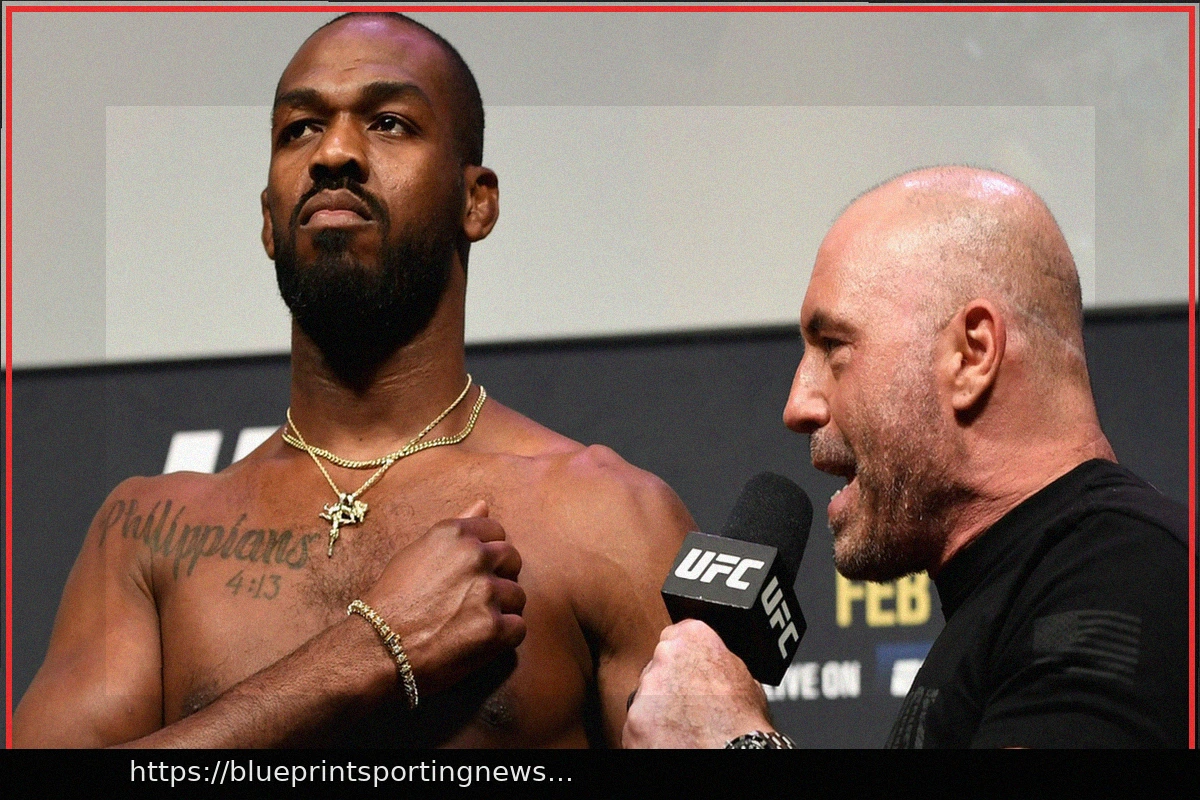
Joe Rogan, the prominent UFC commentator and influential podcast host, has recently voiced strong criticism against the Ultimate Fighting Championship, alleging that the promotion offered superstar Jon Jones a “lowball” deal for a highly anticipated fight. Rogan’s candid remarks reignite the long-standing and often contentious debate surrounding fighter compensation within the premier mixed martial arts organization.
Speaking on his widely popular “Joe Rogan Experience” podcast, Rogan expressed significant dismay over the reported offer, specifically referencing a “White House fight offer” that Jones allegedly received. While the precise details surrounding this particular offer remain somewhat ambiguous – whether it was an offer discussed during a period when UFC personnel were at the White House or simply a high-profile bout that Jones felt was dramatically undervalued – Rogan’s core sentiment was unmistakably clear: the UFC is, in his view, severely undervaluing one of its greatest athletes.
“They’re lowballing the greatest fighter of all time,” Rogan declared, emphatically stressing Jones’s legendary status and his perceived market worth. “Jon Jones wants to get paid what he’s worth. He wants to get paid like a heavyweight champion, which he should be. He’s arguably the greatest of all time.” Rogan further highlighted the financial disparity often observed between top-tier athletes in other major sports and UFC fighters, arguing that someone of Jones’s caliber should command substantially higher compensation, especially for major pay-per-view headliner events.
Jon Jones himself has a well-documented and sometimes contentious history with the UFC regarding his contract and compensation. For several years, he has openly expressed frustration over what he believes to be inadequate pay, particularly when contemplating a highly anticipated move to the heavyweight division, where both the financial stakes and physical demands are considerably higher. Such a transition to heavyweight would represent a monumental challenge and a potentially massive draw for the promotion, making the ‘lowball’ accusation all the more potent and resonating.
This is not the first instance where Rogan has publicly spoken out on the issue of fighter pay. He has consistently advocated for improved remuneration for UFC athletes, frequently drawing comparisons to the sport of boxing, where top fighters can secure tens, if not hundreds, of millions for mega-fights. The controversy surrounding Jones’s alleged offer underscores a broader and recurring issue within the UFC, where many fighters, even established champions, often feel they are not receiving a fair share of the substantial revenue generated by their performances and drawing power.
The incident serves as a stark reminder of the inherent power dynamics at play between the UFC, as a dominant promotion, and its talent roster. While the organization has undoubtedly grown into a global powerhouse with immense commercial success, the ongoing debate over how that success is equitably distributed among its most valuable assets continues to simmer. For Jon Jones, who has frequently been on the sidelines due to contract disputes, the alleged “lowball” offer only adds another complex layer to his already intricate legacy and his persistent quest for what he believes is fair and rightful compensation in the latter stages of his illustrious career.