

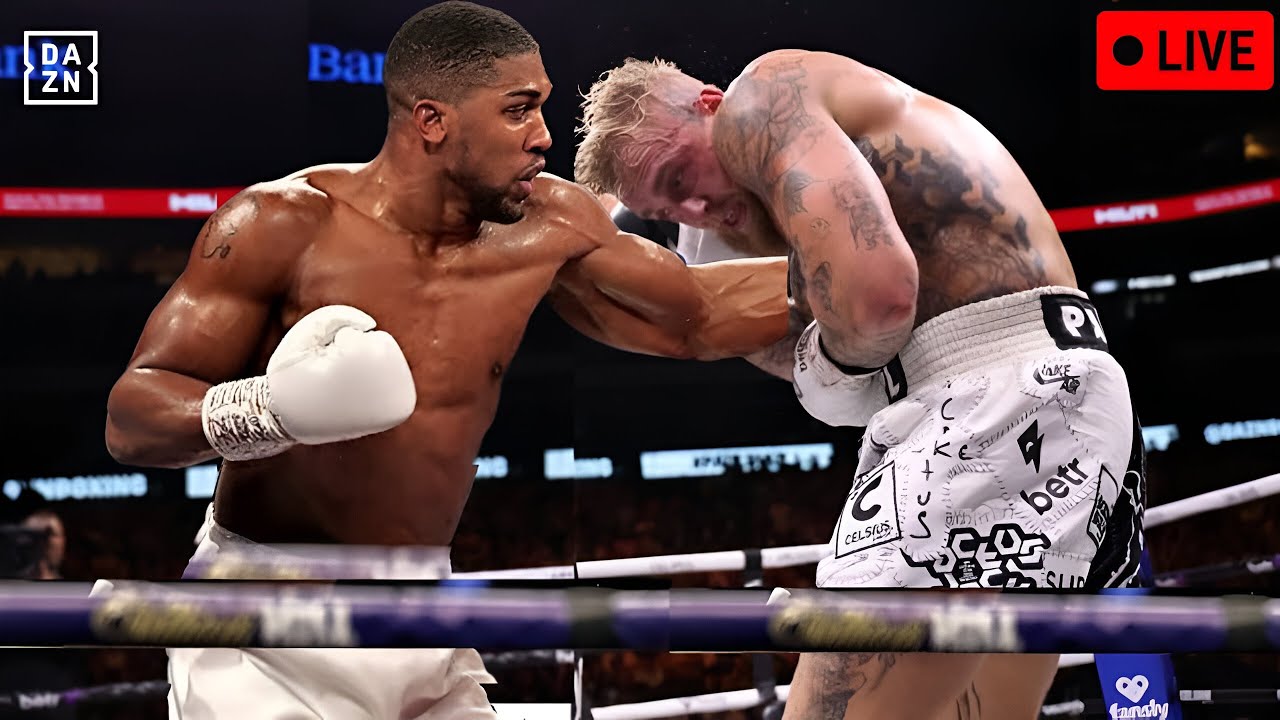
The collision between elite professional boxing pedigree and high-stakes celebrity crossover reached a decisive, and perhaps inevitable, conclusion last Friday at the Kaseya Center in Miami. In a highly anticipated bout, former unified heavyweight champion Anthony Joshua successfully halted Jake Paul’s rapid, unconventional ascent through the boxing ranks, stopping the influencer-turned-boxer in the sixth round.
For Joshua, the victory was more than a mere addition to his record of 29-4 (26 KOs); it was a necessary reassertion of his status as a technical force within the upper echelons of the sport. For Paul, this marked the second loss of his career, but significantly, his first via technical knockout—a painful graduation into the unforgiving reality of true professional power.
The Context of Consequence: Stakes for Both Fighters
Anthony Joshua entered the ring carrying the weight of recent, complex history. Having lost his major titles to Oleksandr Usyk in 2021 and subsequently dropping the 2022 rematch, AJ had been navigating a high-pressure comeback trail. While he secured four subsequent victories, a stoppage loss to Daniel Dubois in September 2024—a bout many critics claimed exposed vulnerabilities—meant that a defeat here, even against a perceived novice, would have been catastrophic for his legacy.
Jake Paul (12-2, 7 KOs) arrived with the confidence of a fighter who had consistently defied expectations. His transition from online personality to pay-per-view attraction had been swift and lucrative, punctuated by wins over former MMA stars and, most recently, a unanimous decision victory over former middleweight titleholder Julio Cesar Chavez Jr. His only previous professional stumble was a split decision loss to Tommy Fury in early 2023.
The environment surrounding Paul’s preparation was also complicated. The fight against Joshua was a late-stage replacement, necessitated by the cancellation of a high-profile exhibition match with lightweight champion Gervonta ‘Tank’ Davis, following legal issues against Davis. While Paul successfully pivoted to face a former heavyweight champion, the move underscored the volatility and opportunistic nature of his campaign.
The Technical Gulf: Analyzing the Stoppage
The early rounds of the fight established a clear technical hierarchy. Joshua, utilizing his superior reach and structured defense, controlled the distance, peppering Paul with jabs that served not just as scoring punches but as rangefinders for his formidable power shots. Paul attempted to rely on the aggression and wide power hooks that had served him well against less experienced opponents, but he found the defense impenetrable and the return fire overwhelming.
The narrative of the fight was defined by the increasing frequency and brutality of Paul`s collapses. Joshua systematically dismantled Paul’s structure, securing four knockdowns across the six rounds. These were not glancing blows; they were calculated strikes demonstrating the vast difference in concussive power between a true heavyweight contender and a fighter campaigning at a much lighter catchweight.
The end came decisively in the sixth round. Following a blistering combination that left Paul visibly shaken and compromised, Joshua pressed his advantage, cornering his opponent and delivering a precise, powerful right hand that sent Paul crashing to the canvas for the final time. The referee had no choice but to wave off the contest, officially recorded as a stoppage victory for Anthony Joshua.
Implications of the Outcome
For Anthony Joshua, this victory serves as a powerful reset. While Jake Paul is not a traditional top-tier heavyweight opponent, the high visibility of the fight ensured maximum exposure for AJ`s returning power and composure. He demonstrated that his chin and offensive capabilities remain intact, putting him back into conversations for potential major title eliminators or blockbuster matchups in the heavyweight division. It was the clinical performance expected of an Olympic Gold Medalist and former unified champion, effectively silencing critics who questioned his competitive spirit.
For Jake Paul, the loss presents a complex challenge. He has consistently argued for his legitimacy as a “real fighter,” yet this bout emphatically proved the vast chasm separating genuine world-class boxing infrastructure from celebrity boxing. While his heart and willingness to step up in competition are undeniable, the brutal reality of fighting an elite former champion—even one operating outside his peak years—is a technical bridge too far at this stage. Paul now faces a choice: return to the drawing board for slower, more incremental professional development, or retreat to matchups where the competitive edge is less steep. The lesson delivered by Joshua was uncompromising: hype can only carry you so far when genuine world-class power is staring back.
 Nathan Blackwood