

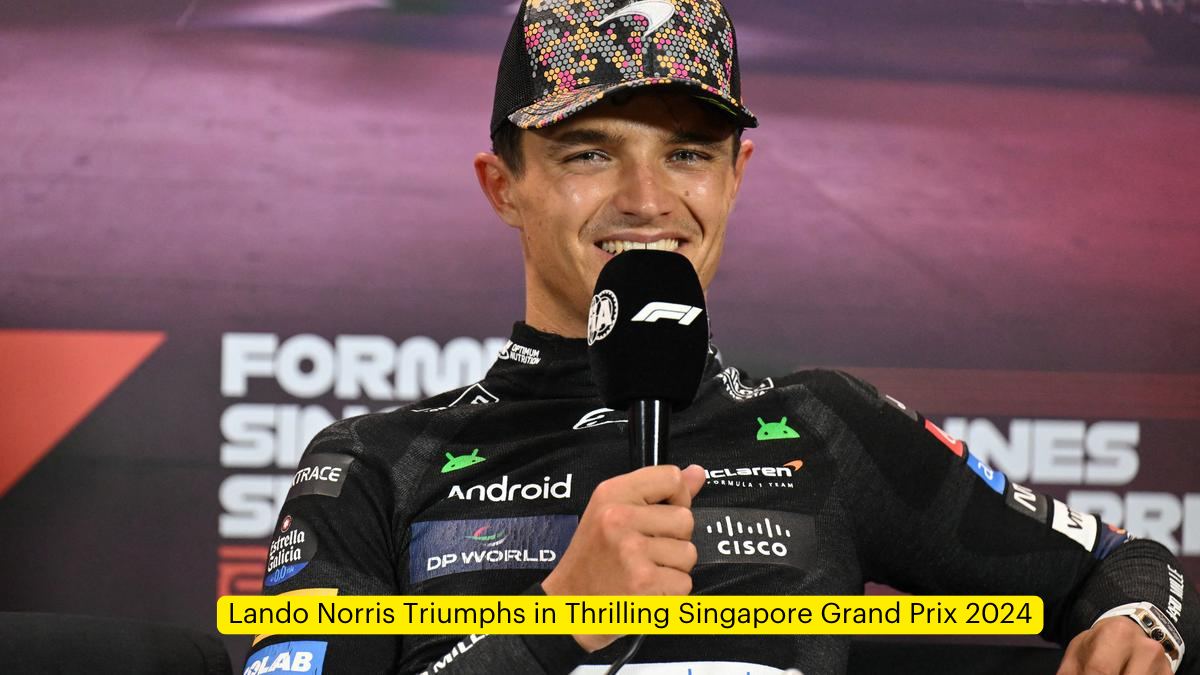
The waiting game is officially over. Lando Norris, at the age of 26, has secured the Formula 1 Drivers` World Championship. The final, decisive step came with a calculated third-place finish at the Abu Dhabi Grand Prix. This victory is more than a trophy; it represents the culmination of five years spent operating in the crucible of expectation, near misses, and profound strategic learning. Norris now stands as the eleventh British driver to claim the individual crown, but his path to glory was arguably paved with more technical heartache than many of his predecessors.
The Rookie Era: Foundations and Frustration (2019–2020)
Norris`s entry into Formula 1 in 2019 was swift and highly anticipated, cementing his seat at McLaren just two years after joining their young driver program. His rookie season alongside Carlos Sainz showcased immediate talent, though results took time to materialize. His first grand prix in Australia resulted in a respectable 12th place finish, but the critical breakthrough arrived in the subsequent race in Bahrain, where he secured his maiden F1 points, finishing sixth.
The first flash of brilliance, however, was tinged with technicality. At the 2020 Austrian GP, Norris finished fourth. Only a five-second penalty applied to Lewis Hamilton for a collision with Alex Albon nudged the young Englishman into third place. It was a deserved podium, arriving just 4.8 seconds behind Hamilton before the time penalty was applied. Though thrilling, achieving a podium via regulation, not purely pace, served as a symbolic preview of the strategic challenges he would face.
The Cost of Inexperience: Sochi and Monza Heartbreak (2021–2023)
For every athlete’s highlight reel, there exists the mandatory lowlight—the moment that defines the lesson learned in the most painful way possible. For Norris, this was the 2021 Russian Grand Prix in Sochi, where he secured his first career pole position in variable weather conditions.
The race offered him a clear shot at victory. Leading late in the running, as the unpredictable Russian rain began to intensify, Norris faced the pivotal call: pitting for intermediate tires, or gambling on the drying track with slicks. Hamilton, the seasoned strategist, took the sensible call and pitted. Norris, clinging desperately to the lead, opted for the dry tires. The track instantly devolved into an ice rink. His car skidded off course, forcing a belated, chaotic pit stop. The dream of a maiden win dissolved into a seventh-place finish, handing Hamilton his 100th career victory. It was a technical miscalculation rooted in youthful optimism, a mistake that would haunt him until his first win.
This period was characterized by consistent pressure. He often watched rivals he had bested in junior categories succeed higher up the grid while McLaren struggled with performance consistency. The 2021 Italian GP at Monza, where he finished second behind teammate Daniel Ricciardo, added insult to injury, with McLaren implementing team orders to ensure Ricciardo`s lead was maintained. For a driver of Norris’s ambition, finishing second due to reliability or strategy was one thing; finishing second due to internal mandates felt like a technical restraint on raw ability.
The Barrier Broken: Miami and the 2024 Title Fight
The monkey finally dismounted the back in 2024 at the Miami Grand Prix. Starting fifth, Norris drove a race that mixed pace with timely intervention. A well-timed safety car allowed him to take the lead and successfully hold off the dominant Max Verstappen. The relief, captured by the euphoric celebration, was palpable. He had done it. Remarkably, it took him 16 podium finishes before his first victory—a record he now shares for the longest wait before reaching the top step.
This victory catalyzed his 2024 season, turning him into a legitimate title contender against Verstappen. The ensuing rivalry was fierce, testing their celebrated friendship with heated on-track clashes in races like Austria and Mexico. Though the championship eluded him that year (largely due to Verstappen’s miraculous drive from 17th in Sao Paulo), Norris had proven he possessed the pace and tenacity required.
The Calculated Crown (2025)
The 2025 season was a masterclass in strategic execution and consistent performance. Starting the year strong with a win from pole in the Australian GP, Norris established himself as the benchmark. However, the internal battle at McLaren was just as intense as the external one. Teammate Oscar Piastri became a formidable rival, temporarily seizing the championship lead after the Saudi Arabian GP.
But Norris hit his stride in the mid-season. Victories on hallowed ground—Monaco, his home race at Silverstone, Austria, and Hungary—demonstrated a driver who had honed his race craft and eliminated the strategic vulnerabilities of years past. His win in Mexico further cemented his lead, making him difficult to catch.
The season did contain one final twist: a late-season disqualification in Las Vegas momentarily opened the door for a desperate charge by Verstappen. Yet, Norris maintained his composure. Arriving in Abu Dhabi with the necessary cushion, he executed a flawless, safe race, securing the third-place finish required to clinch the title.
Lando Norris’s journey was not one of effortless dominance but of incremental, deliberate improvement. He transformed the raw speed of a junior talent into the calculated efficiency of a world champion, proving that persistence, even through highly publicized technical setbacks, is the ultimate winning strategy in Formula 1.
 Marcus Bellamy
  Connor Westbrook