

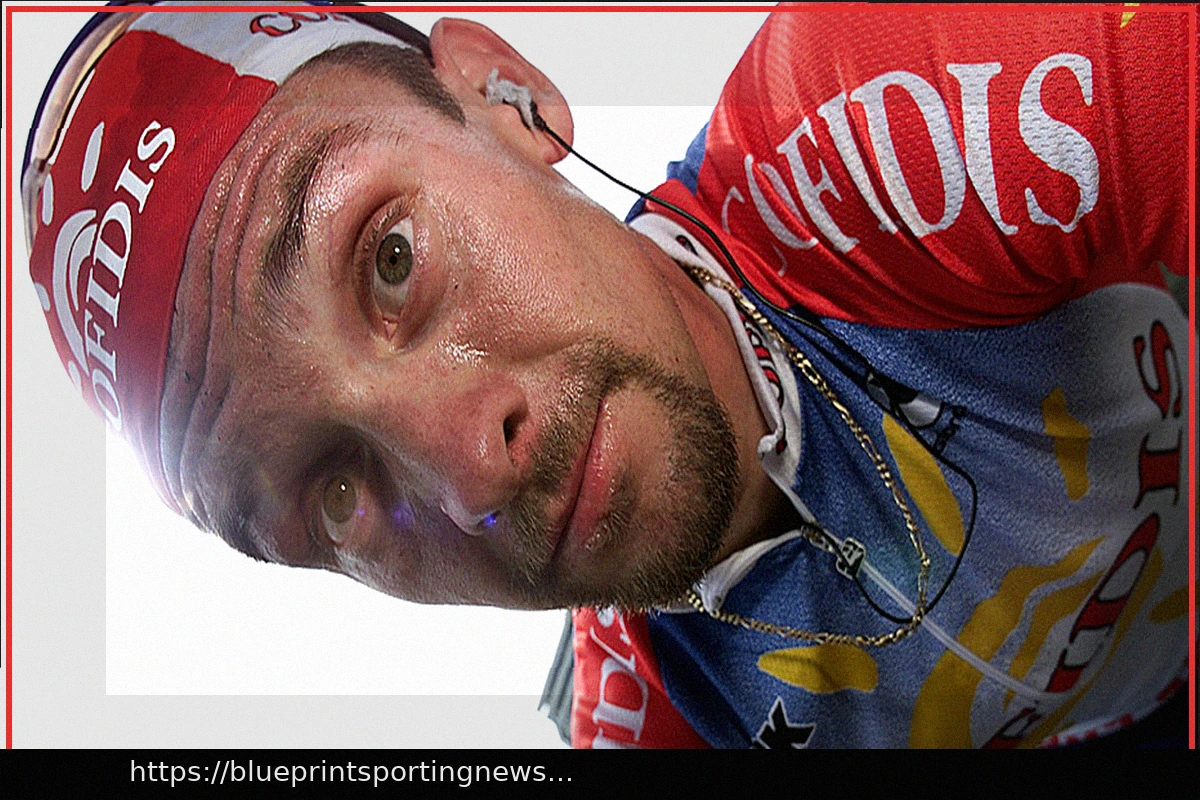

Nico Mattan secured a highly debated victory at Gent-Wevelgem in 2005, an edition that sparked extensive media coverage. Despite the controversy, cycling legend Sean Kelly found “no problems” with the outcome. This article revisits that contentious day through Mattan’s own perspective, providing insights into his career, race strategy, and the enduring allegations.

No pressure
Pressure and Team Dynamics
Question: Considering Lotto team’s struggles in early 2005, was there significant pressure on you before the race?
Nico Mattan: The primary pressure fell on team leaders Van Petegem and Steels, as their roles entailed securing victories, unlike my own. My personal form was excellent, having recently finished third in De Panne, and the fact that Gent-Wevelgem’s course ran just five kilometers from my home boosted my morale. I never felt stressed approaching a race.

Mattan leading Museeuw in Brabantse Pijl
Question: It’s been suggested that some Flandrian riders, like yourself, faced challenges fitting into the largely Walloon Lotto team. What are your thoughts on this?
Nico Mattan: I had no specific problems with the team, but I did notice a difference compared to my previous experience with Cofidis, where I felt more freedom. I’ve always been a rider who enjoys an occasional beer, which was never an issue at Cofidis; they simply allowed me to live my life. At Lotto, however, a visit to a bar for a beer would often make it into newspapers and TV news – “Mattan is drinking,” which was a problem for me. I’ve been a professional for 14 years, roughly double the average career length, and I wouldn’t have achieved that if I drank excessively.

Mattan leading Belgian champion, Nico Eeckhout, in De Panne
Mastering the Gent-Wevelgem Parcours
Question: Could you describe the unique characteristics of the Gent-Wevelgem course?
Nico Mattan: There are two Belgian races where wind is the dominant factor: De Panne and Gent-Wevelgem, and I’ve won both. Positioning is absolutely everything. Two kilometers before a corner or a climb, I’m already thinking about my optimal placement on the road and within the peloton; you must consistently maintain a position in the top 20. I trained on these roads daily, knowing every single one intimately. If you’re an Italian or Spanish rider, you simply won’t know what’s coming, making it almost impossible to perform well. In Flanders, course knowledge is even more crucial; it often takes four, five, or even six attempts before you can secure a win. You could take Lance Armstrong at the peak of his July form, drop him into Flanders, and he couldn’t win. Besides wind and good positioning, extreme caution is needed on the descent of the Kemmel – it’s very dangerous. I can’t explain it, but I really don’t like the Kemmel – it’s just not my hill. In 2007, when my DFL team wasn’t riding Flanders, I took the squad around most of the Gent-Wevelgem parcours on the Sunday before the Wednesday race, to familiarize them; it’s absolutely vital.

On home roads

In Het Volk’07 with DFL
Question: While on the topic of Flanders, what other factors are important when tackling the cobbles?
Nico Mattan: Beyond condition and course knowledge, the right tire pressure for the cobbles is vital. Normally, I ride with 7/8 bars, but for Flanders, it’s 5 bars. At the start, I even check the tires of other riders; even experienced guys like Bettini would often have their tires too hard. Critical decisions are made on the cobbles at Flanders, and you cannot be comfortable or ready if you’re bouncing around uncontrollably.


Happy with 3rd place and the win for VDB
The Controversial 2005 Victory
Question: Gent-Wevelgem is often considered a “sprinters classic,” yet you secured your win from a breakaway. Can you elaborate on that?
Nico Mattan: It’s true, it’s not often won by a rider alone. Frank Vandenbroucke achieved a solo win in ’98, and that day I finished third, which was my first significant result. In 2005, I launched an attack on the small hill immediately after the Kemmel, and a group of eight or nine of us broke away. Those specific roads are part of my daily training circuit; in fact, I ride the last eight kilometers of Gent-Wevelgem practically every day. As we approached the finale, Flecha had already jumped ahead, but I was rapidly closing in, with Baden Cooke chasing behind me, though he was fading and losing ground. Flecha and Cooke were likely riding at 50-51 kph, while I was pushing 51-52 kph. When I caught Flecha with about 600 meters to go, I felt strong enough to ride to the line with my arms in the air, but I chose not to take that risk. Flecha was clearly tired, and I was still powerful; seeing him ahead was like a magnet drawing me towards victory.

On the attack in Gent-Wevelgem 2005

Should Juan Antonio Flecha have won in 2005?
Question: Were you troubled by the accusations that you had used race cars to bridge the gap to the leaders?
Nico Mattan: Not at all. People are still talking about that finish, and it certainly won’t be easily forgotten, nor will my win. Of course, I rode in the slipstreams of motorbikes and cars whenever I could; that’s a common part of professional bike racing. However, the specific car I was alleged to have followed was actually slowing down to exit the finish straight, moving at perhaps 40 kph, while I was doing over 50 kph. If you look at the video, everyone was focused ahead on Flecha; I simply took everyone by surprise.

Nico Mattan – The 2005 Gent-Wevelgem winner

Wevelgem 2005 Podium
Question: How was the team morale after your victory?
Nico Mattan: We celebrated with a party that lasted until three in the morning! There were 600 people dancing on tables and drinking beer.

Beer or champagne, Mattan liked both
Question: Was the 2005 Gent-Wevelgem victory the one that brought you the most satisfaction?
Nico Mattan: Absolutely. My wife, family, and all my friends were there. Freddy Maertens, a good friend of mine, was even in tears at the finish. Winning on your home territory is incredibly special. In 2001, I won the Tour of Piedmont, beating Paolini and Sacchi on their own ground. It was a big win, but afterward, you simply move on to the next race; it’s not quite like winning at home.

You can’t beat a bike throw

Nico Mattan still likes a good time, here with Jo Planckaert and friends
2005 Gent-Wevelgem Result:
- Nico Mattan (Davimaton-Lotto) in 4:53:07
- Juan Antonio Flecha (Fassa Bortolo) at 0:02
- Daniele Bennati (Lampre-Caffita) at 0:09
- Fabian Cancellara (Fassa Bortolo)
- Thor Hushovd (Crédit Agricole)
- Baden Cooke (Française des Jeux) at 0:16
- Tom Steels (Davimaton-Lotto) 0:18
- Simone Cadamuro (Domina Vacanze)
- Erik Zabel (T-Mobile)
- Stuart O’Grady (Cofidis)
- Jaan Kirsipuu (Crédit Agricole)
- Magnus Bäckstedt (Liquigas)
- Marcus Ljungqvist (Liquigas)
- Steven De Jongh (Rabobank)
- Grégory Rast (Phonak)
- Antonio Cruz (Discovery Channel)
- Matti Breschel (CSC)
- Stefan Van Dijk (MrBookmaker-Sports Tech)
- Vladimir Gusev (CSC)
- Marcus Burghardt (T-Mobile)
- Robert Hunter (Phonak)
- Ludovic Auger (Française des Jeux)
- Lars Michaelsen (CSC)
- Frédéric Guesdon (Française des Jeux)
- Mathew Hayman (Rabobank)
- Tom Boonen (Quick Step-Innergetic)