
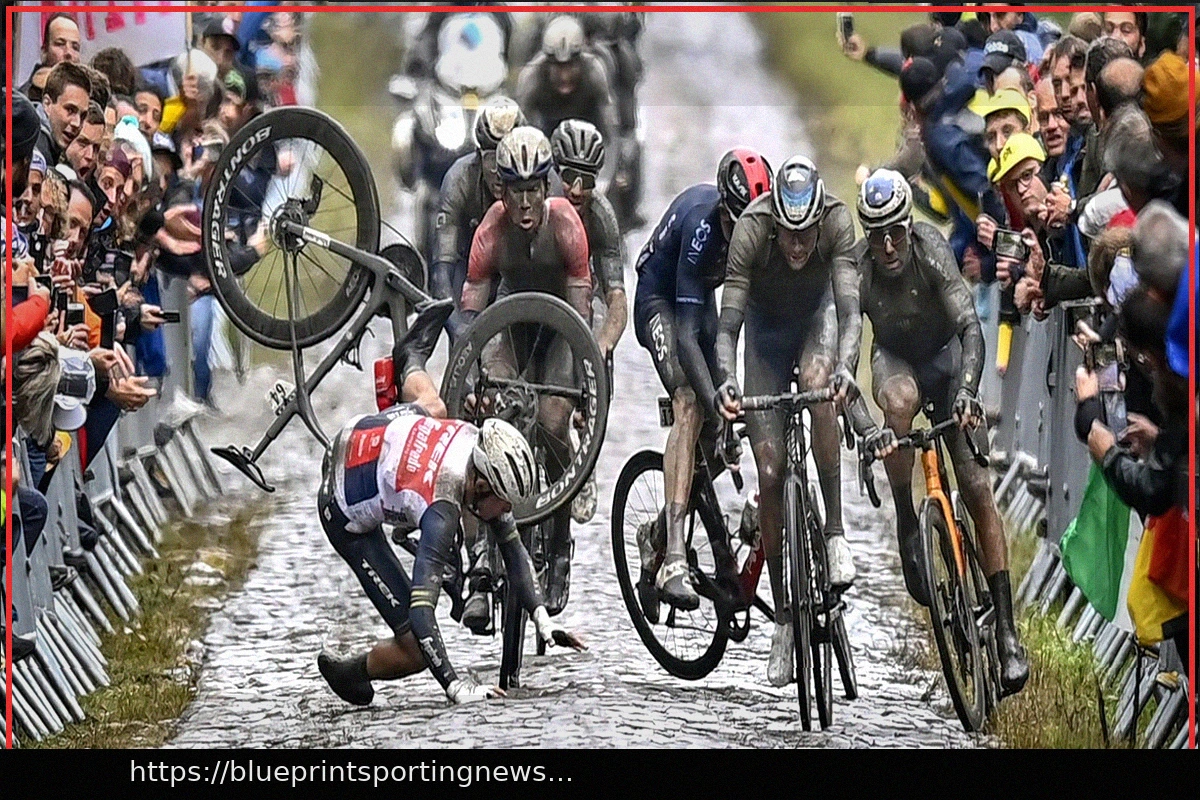
Known colloquially as “The Hell of the North,” Paris-Roubaix stands as one of professional cycling’s most brutal yet revered one-day races. As two-time champion Sean Kelly (1984, 1986) famously remarked, “Paris-Roubaix is a terrible race to ride, but the most beautiful one to win.” Its distinctive challenge and dramatic spectacle captivate a broad audience, much like the Grand Tours such as the Tour de France, setting it apart from races like the Giro d’Italia or the Tour of Flanders, which often appeal more exclusively to dedicated cycling aficionados.
Paris-Roubaix holds an unparalleled position in the annals of cycling. To survive its notorious cobbled sectors and emerge victorious on the hallowed velodrome track is to secure a place in history forever. French journalist Guy Lagorce’s description perfectly encapsulates its essence: “Paris-Roubaix starts as a party, but ends as a bad dream.” For many competitors, it’s an arduous trial of resilience, characterized by crashes, relentless pain, and the repeated struggle to get back up and continue. Yet, this self-imposed cruelty paradoxically draws riders back each year. Henri Pélissier declared in 1919 that it was “not a cycling race, but a pilgrimage,” a sentiment echoed by four-time victor Tom Boonen, who famously quipped, “When I take a shower in Roubaix, I actually start preparing for next year.”
This iconic French Classic was first organized in 1896 by Theo Vienne and Maurice Perez, two textile manufacturers from Roubaix. Inspired by the success of Bordeaux-Paris, they envisioned a similar event, insisting that it culminate on the cycling track they had constructed in Roubaix the preceding year. They sought the backing of the prominent French sports newspaper Le Vélo. Despite editor Victor Breyer initially deeming the proposed route excessively perilous during his reconnaissance ride due to severe weather, he ultimately endorsed the concept, bringing Paris-Roubaix into existence. The inaugural race in 1896 saw German cyclist Josef Fischer claim the first historic victory.
Paris-Roubaix swiftly gained recognition, giving rise to countless heroic narratives over the decades. Though a French race by origin, it has become intrinsically linked with the formidable “hard men” of Belgium. Since Cyrille Van Hauwaert’s breakthrough victory in 1908, Belgian cyclists have amassed an astonishing 56 additional wins. Legends like Rik Van Looy, Eddy Merckx, and Johan Museeuw each boast three triumphs, while Roger De Vlaeminck and Tom Boonen share the prestigious record for the most victories, having conquered “The Hell of the North” four times apiece.
Beyond the esteemed four-time champions, a pantheon of cycling greats, including Gaston Rebry, Rik Van Looy, Eddy Merckx, Johan Museeuw, and Fabian Cancellara, have each claimed three victories. In more contemporary times, renowned champions such as John Degenkolb, Greg Van Avermaet, Peter Sagan, and Philippe Gilbert have also celebrated triumph on the Roubaix velodrome. While some winners might be seen as “surprises,” they are invariably riders of exceptional talent and unwavering grit, examples including Magnus Bäckstedt, Stuart O’Grady, Johan Vansummeren, Mathew Hayman, and Frédéric Guesdon. A retrospective glance at the past decade’s winners reveals a distinguished roster of Classics specialists: Dylan van Baarle, Sonny Colbrelli, Philippe Gilbert, Peter Sagan, Greg Van Avermaet, Mathew Hayman, John Degenkolb, Niki Terpstra, and Fabian Cancellara.
In 2022, Dylan van Baarle achieved the most significant victory of his career with a powerful solo charge to Roubaix. A formidable late breakaway group, comprising Matej Mohorič, Tom Devriendt, and Laurent Pichon, had established a maximum lead of three minutes. Behind them, a strong chase group included Wout van Aert, closely shadowed by Mathieu van der Poel. Van Baarle launched a decisive counter-attack from the favorites’ group, bridging to Mohorič, Yves Lampaert, and Devriendt on the challenging Cysoing-Bourghelles cobbles. With a 45-second advantage over the Van Aert group, the INEOS Grenadiers rider recognized his opportunity. He then dropped his breakaway companions on the Champhin-en-Pévèle cobbles, riding solo through the Carrefour de l’Arbre, the final and most brutal cobbled sector. Van Baarle ultimately entered the Roubaix velodrome alone to claim a magnificent victory, nearly two minutes ahead of Van Aert, who narrowly out-sprinted Stefan Küng for second place.
Mathieu van der Poel has decisively shaped the contemporary narrative of Paris-Roubaix, achieving an extraordinary three consecutive victories from 2023 to 2025, each marked by undeniable authority. In 2023, Van der Poel delivered a classic Roubaix knockout blow, decisively dropping Wout van Aert on the infamous Carrefour de l’Arbre. A subsequent puncture unfortunately ended Van Aert’s resistance, allowing Van der Poel to power solo into the Roubaix velodrome, while his Alpecin-Deceuninck teammate Jasper Philipsen secured a dominant 1-2 finish for the team. The 2024 edition witnessed less drama and more outright demolition. Fresh from his Tour of Flanders triumph, Van der Poel’s team orchestrated an early detonation of the race before the reigning World Champion launched a stunning long-range solo attack—a staggering 60 kilometers of pure pavé punishment. By the time he reached the velodrome, the race was effectively over by minutes, with Philipsen once again leading the rest of the field and Mads Pedersen taking third. The 2025 race solidified his legacy, as Van der Poel completed a rare Roubaix hat-trick, once again proving untouchable on the cobbles. Whether through impeccable race-winning timing, raw power, or unparalleled technical mastery, he has redefined how Paris–Roubaix can be won: not merely survived, but utterly controlled. Three editions, three solo victories: it is undeniably Van der Poel’s era at Paris-Roubaix.
Paris–Roubaix Winners (1896–2025)
Early Years (1896–1939)
- 1896 Josef Fischer
- 1897 Maurice Garin
- 1898 Maurice Garin
- 1899 Albert Champion
- 1900 Émile Bouhours
- 1901 Lucien Lesna
- 1902 Lucien Lesna
- 1903 Hippolyte Aucouturier
- 1904 Hippolyte Aucouturier
- 1905 Louis Trousselier
- 1906 Henri Cornet
- 1907 Georges Passerieu
- 1908 Cyrille Van Hauwaert
- 1909 Octave Lapize
- 1910 Octave Lapize
- 1911 Octave Lapize
- 1912 Charles Crupelandt
- 1913 François Faber
- 1914 Charles Crupelandt
- 1915–1918 No race (WWI)
- 1919 Henri Pélissier
- 1920 Paul Deman
- 1921 Henri Pélissier
- 1922 Albert Dejonghe
- 1923 Albert Dejonghe
- 1924 Jules Van Hevel
- 1925 Félix Sellier
- 1926 Georges Ronsse
- 1927 Georges Ronsse
- 1928 André Leducq
- 1929 Aimé Dossche
- 1930 Julien Vervaecke
- 1931 Gaston Rebry
- 1932 Gaston Rebry
- 1933 Georges Speicher
- 1934 Gaston Rebry
- 1935 Gaston Rebry
- 1936 Georges Speicher
- 1937 Jules Rossi
- 1938 Lucien Storme
- 1939 Émile Masson Jr.
War & Post-War Era (1940–1979)
- 1940–1942 No race (WWII)
- 1943 Marcel Kint
- 1944 No race
- 1945 Serge Caput
- 1946 Georges Claes
- 1947 Georges Claes
- 1948 Rik Van Steenbergen
- 1949 André Mahé / Serse Coppi (shared result)
- 1950 Fausto Coppi
- 1951 Antonio Bevilacqua
- 1952 Rik Van Steenbergen
- 1953 Germain Derycke
- 1954 Raymond Impanis
- 1955 Jean Forestier
- 1956 Louison Bobet
- 1957 Fred De Bruyne
- 1958 Léon Van Daele
- 1959 Noël Foré
- 1960 Pino Cerami
- 1961 Rik Van Looy
- 1962 Rik Van Looy
- 1963 Emile Daems
- 1964 Peter Post
- 1965 Rik Van Looy
- 1966 Felice Gimondi
- 1967 Jan Janssen
- 1968 Eddy Merckx
- 1969 Walter Godefroot
- 1970 Eddy Merckx
- 1971 Roger Rosiers
- 1972 Roger De Vlaeminck
- 1973 Eddy Merckx
- 1974 Roger De Vlaeminck
- 1975 Roger De Vlaeminck
- 1976 Marc Demeyer
- 1977 Roger De Vlaeminck
- 1978 Francesco Moser
- 1979 Francesco Moser
Modern Classics Era (1980–2025)
- 1980 Francesco Moser
- 1981 Bernard Hinault
- 1982 Jan Raas
- 1983 Hennie Kuiper
- 1984 Sean Kelly
- 1985 Marc Madiot
- 1986 Sean Kelly
- 1987 Eric Vanderaerden
- 1988 Dirk Demol
- 1989 Jean-Marie Wampers
- 1990 Eddy Planckaert
- 1991 Marc Madiot
- 1992 Gilbert Duclos-Lassalle
- 1993 Gilbert Duclos-Lassalle
- 1994 Andrei Tchmil
- 1995 Franco Ballerini
- 1996 Johan Museeuw
- 1997 Frédéric Guesdon
- 1998 Franco Ballerini
- 1999 Andrea Tafi
- 2000 Johan Museeuw
- 2001 Servais Knaven
- 2002 Johan Museeuw
- 2003 Peter Van Petegem
- 2004 Magnus Bäckstedt
- 2005 Tom Boonen
- 2006 Fabian Cancellara
- 2007 Stuart O’Grady
- 2008 Tom Boonen
- 2009 Tom Boonen
- 2010 Fabian Cancellara
- 2011 Johan Vansummeren
- 2012 Tom Boonen
- 2013 Fabian Cancellara
- 2014 Niki Terpstra
- 2015 John Degenkolb
- 2016 Mathew Hayman
- 2017 Greg Van Avermaet
- 2018 Peter Sagan
- 2019 Philippe Gilbert
- 2020 No race (COVID-19)
- 2021 Sonny Colbrelli
- 2022 Dylan van Baarle
- 2023 Mathieu van der Poel
- 2024 Mathieu van der Poel
- 2025 Mathieu van der Poel