

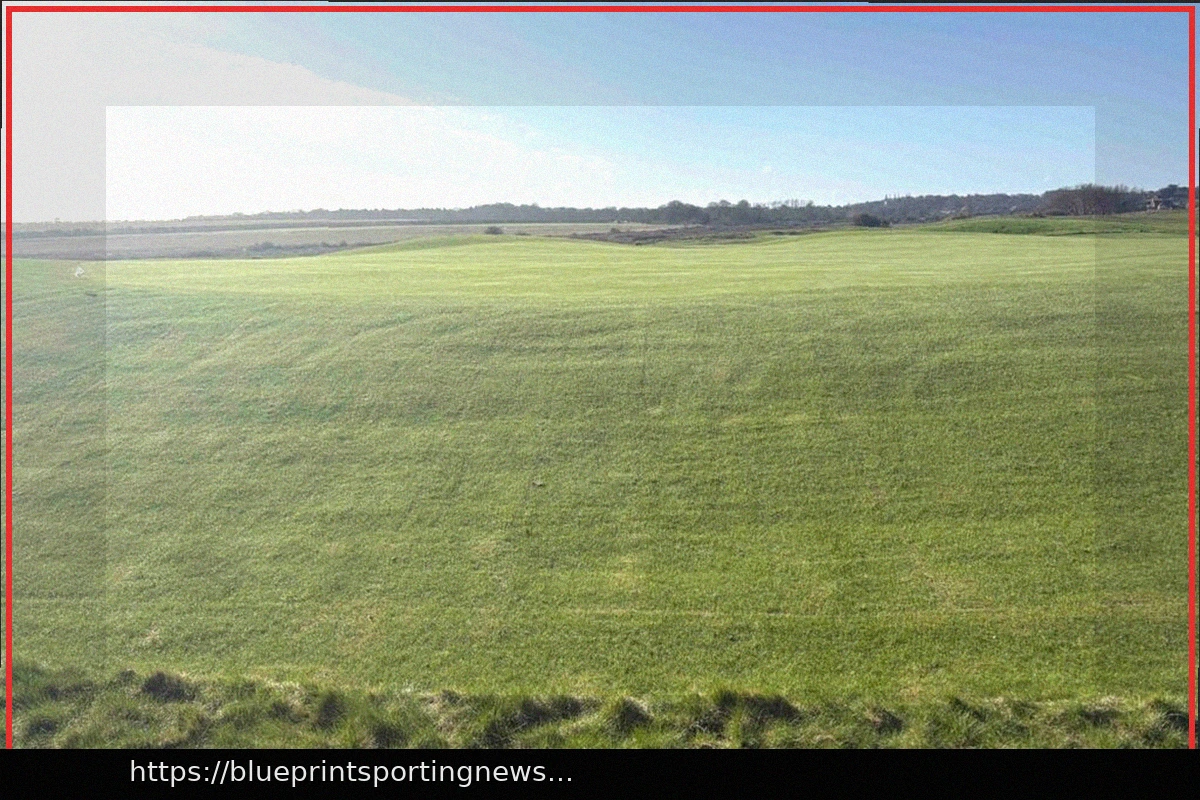
Hunstanton Golf Club has undertaken a significant transformation of its notorious 14th hole, a par-3 widely known for being one of golf’s most controversial “blind” holes. While the legendary Tommy Armour once famously remarked that a blind hole is “only blind once,” many golfers found the 14th at Hunstanton, despite its initial intrigue, to be more frustrating than enjoyable. Experts from Evalu18 characterized it as “a fully blind one-shot hole that seems to draw ire from many,” noting its deceptive 219-yard length due to a downhill slope after a ridge, often turning shots into a lottery for many club golfers.
Chris White, Hunstanton’s General Manager, acknowledged the hole’s issues. He observed that while well-executed shots consistently found the green, “a variety of bad shots that seemed to be a long way offline would end up on the green as well,” leading him to question the fundamental fairness of a blind par-3.
In response to these concerns, the Norfolk club initiated a comprehensive renovation over the winter. The formerly blind par-3 has been completely reimagined into a shorter, slightly uphill, yet still challenging iron shot directed towards a newly constructed green. This redesign is a crucial element of architect Martin Hawtree’s masterplan to further enhance the renowned Top 100 venue.
What Changes Have Been Made to Hunstanton Golf Club’s 14th Hole?
As part of a phased project, Hawtree has redesigned holes from the 12th to the 15th, with the new par-3 serving as the crowning achievement. However, the modifications were not solely driven by aesthetics. White explained that a primary problem with the old 14th, beyond its architectural quirks, was its length and close proximity to another par-3. “If the pin was back left on both those holes at the same time there would only be 20 feet between them,” he noted, creating a significant safety hazard. A blind 3-wood shot over a sand dune made it nearly impossible to effectively warn other players. White emphasized, “That was the obvious starting point [to make changes], but if you’re going to do it you might as well make a fantastic golf hole.”
Where the tee shot once played over two grass bunkers, a new green has been meticulously laid, incorporating turf from the original putting surface. Tees have been repositioned approximately 30 yards back and to the right, fundamentally altering the angle and fully revealing the new green complex. The green itself features Hawtree’s signature run-offs on all sides. The revitalized 14th hole will now play 190 yards from the Championship tee and between 160 to 170 yards for daily play later this year.
White added that the 14th now sits at a distinct 45-degree angle, deviating from Hunstanton’s traditional “out-and-back” course layout, which typically plays either downwind or into the wind. He highlighted the course’s embrace of links golf principles: “There are no bunkers and the topography of the land is the challenge. You won’t end up putting your ball in your pocket because you got stuck in a huge revetted bunker. The challenge is using the natural contours of the land as much as possible, which is the point of links golf.”
This strategic redesign will undoubtedly add further challenge to Hunstanton’s famous closing stretch, known as the “Hunstanton mile.” The formidable finish now consists of the 190-yard par-3 14th, the 470-yard par-4 15th, the 190-yard par-3 16th, the 475-yard par-4 17th, and the 465-yard par-4 18th. As White concluded, “The Hunstanton mile is going to be tough.”