

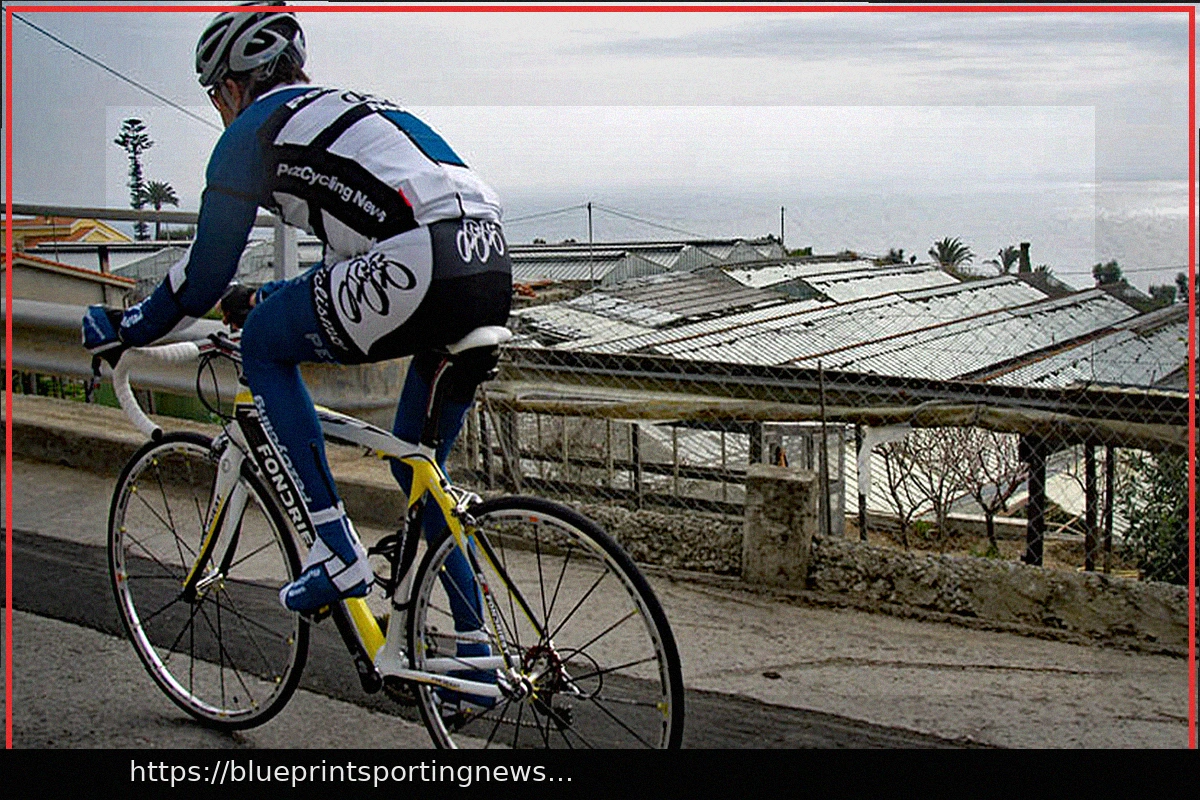

The initial leg of my quest to witness the Milan-San Remo race involved traversing the Lombard plains and coastal ranges. The scent of the Mediterranean’s salty air, encountered for the first time, was an unforgettable and deeply moving experience, almost beyond description.
This account chronicles my inaugural trip to San Remo to experience ‘La Primavera’ – the Milan-San Remo race – firsthand. My aim was to capture the essence of this monumental event, exploring what makes it so extraordinary, and to document this profoundly spiritual journey through imagery and prose.
For many, including myself, the professional cycling season truly begins with Milan-San Remo. Having long yearned to attend this legendary race, I finally reached San Remo in 2010. The journey there proved to be as significant and demanding as the 300-kilometer trek the cyclists undertake along the Ligurian coast to the finish line.

The initial hours of any European trip often require an adjustment. It’s akin to entering a temporal-spatial tunnel (an airplane) and emerging in a foreign land, often disoriented, after a surprisingly brief period. Compounded by sleep deprivation and the common stresses of modern air travel, the transition feels surreal: one moment, I was gazing at a map, imagining my quest for San Remo; the next, I was navigating Milan’s Corso Buenos Aires, weaving through noisy mopeds.

My travel proceeded exceptionally smoothly; everything fell into place perfectly, from car rental to bike arrival, and I even managed to check into my hotel by 3:30 PM, a new personal best. After coordinating online, I indulged in my first celebratory Negroni of the trip.

Stepping into a small bar, I was astonished by the bartender’s preparation of what appeared to be the largest Negroni I’d ever encountered. He filled the glass generously with ice, then continued pouring gin, Campari, and Cinzano until it brimmed. I estimated the potent concoction contained a substantial 6-7 ounces of spirits – a drink powerful enough for King Kong.
To be entirely candid, and I’m unsure whether to be proud of this confession, I did not manage to finish the entire drink. It was simply ‘too much Negroni’ for my immediate consumption, though I anticipated I’d adjust after a day or two.
What was truly astonishing was discovering that both the bartender and his waiter professed complete ignorance of the ‘Milan-San Remo’ race. Their blank stares when I inquired about their podium favorites were genuine – a remarkable and perplexing revelation.
After a Restful Night…
The following day, as I drove from Milan towards Sanremo, the uncertain weather prompted a detour to Passo Turchino. This 12-kilometer ascent, once a gravel track and a crucial point in the race during Coppi’s era, now holds more historical significance than tactical impact due to modern paving and technology.

Shortly after the climb officially began, I encountered a stark reminder of the distance covered. Imagine having cycled 123 kilometers in merely two and a half hours, only to then face such a sign – a truly daunting prospect.
The ascent largely parallels a river descending from snow-capped peaks. The temperature hovered around 9°C, accompanied by light rain, aligning with the forecast for that year’s race – a tough condition for any rider.

Midway through the climb, rounding a bend revealed the charming town of Campo Ligure, distinguished by its ancient stone bridge.

I paused to admire the town, though I knew sightseeing would be far from the cyclists’ thoughts during the race. However, considering the challenging weather and the daunting 300km distance, I mused that it wouldn’t be the worst place to abandon the effort.
The town’s apparent quietness was simply due to its residents being at the lively local farmers’ market, a Friday tradition observed across Italy.

Revisiting my initial ‘tunnel’ analogy, it’s truly remarkable how traversing this long passage can transform bleak, cold conditions into weather perfectly suited for a Negroni. Despite Alessandro’s assurances that the coastal weather would be pleasant (his Genoese roots gave him credibility), I remained skeptical until I witnessed the change firsthand.

I descended the Turchino and rejoined the autostrada, urging my rental car to 140 km/h. Thoughts of an afternoon ride, closely followed by the increasing pangs of hunger for lunch, dominated my mind.
Heading west, I navigated through a staggering number of tunnels—54, by my map count—before finally finding an ideal roadside spot for lunch. Behold…

My meal consisted of grilled vegetables drizzled with extra virgin olive oil and balsamic vinegar, a bread roll, lasagna bolognese, and a glass of red wine. It tasted every bit as delicious as it appeared. My wife, unfortunately, disapproves of me enjoying such feasts without her.
Minutes after finishing lunch, the sun emerged from behind the clouds, its brightness intensifying with every kilometer closer to Sanremo. I felt the impatience of my four-year-old daughter on a long drive, thinking, ‘It’s taking too long! When will we arrive? Drive faster!’ Had I not been at the wheel, I’d have been equally eager to hurry along; there was riding to be done!
By 3 PM, I was departing my hotel, setting out to find the legendary Cipressa and Poggio climbs. No words can adequately capture the depth of this experience, but I was moments away from cycling these iconic ascents for the very first time.
It was an utterly incredible experience – a must-do for any cycling enthusiast. Seriously.


I’ve discovered that forming new connections, especially with those speaking a different language, is vital to any memorable day. Upon entering a bike shop for directions, I met Charlie. Already on a ride, he kindly offered to guide me to the Poggio (my need for directions there remains a mystery). I promptly enlisted him as my impromptu photographer, and, as any ardent fan would, we paused for the customary photo documenting my arrival at this sacred cycling site.
As is my custom when cycling any revered location, I deliberately savored every aspect of the experience. It’s impossible not to envision past race moments, thinking, ‘This is where [rider’s name] launched their attack,’ while passing greenhouses, olive groves, and navigating the winding switchbacks.

Following a delightful, scenic ascent, it was time for a final photograph before embarking on the renowned Poggio descent. This iconic turn, marking the swift transition from uphill to downhill, is instantly recognizable from countless race broadcasts. It’s like turning a pivotal page in an unwritten thriller. A brief brake tap, a shift of weight rearward, and a daring maneuver past the signpost and phone booth – then it’s full-throttle ‘big-ring mania’ as the final 3 kilometers unfold at breakneck speed.
The descent itself is genuinely intimidating. While I navigated it cautiously (certainly not out of fear, of course), with every bend, switchback, and off-camber drop, I couldn’t help but imagine hurtling down at 50-60 km/h, where glory or disaster could hinge on the slightest pressure of the brake pads.

What insights did I gain from this day? It’s premature to articulate; it will take time for the full weight of the experience to settle and for me to fully comprehend its significance.
Race day itself would be an entirely different narrative, a story for another time.