

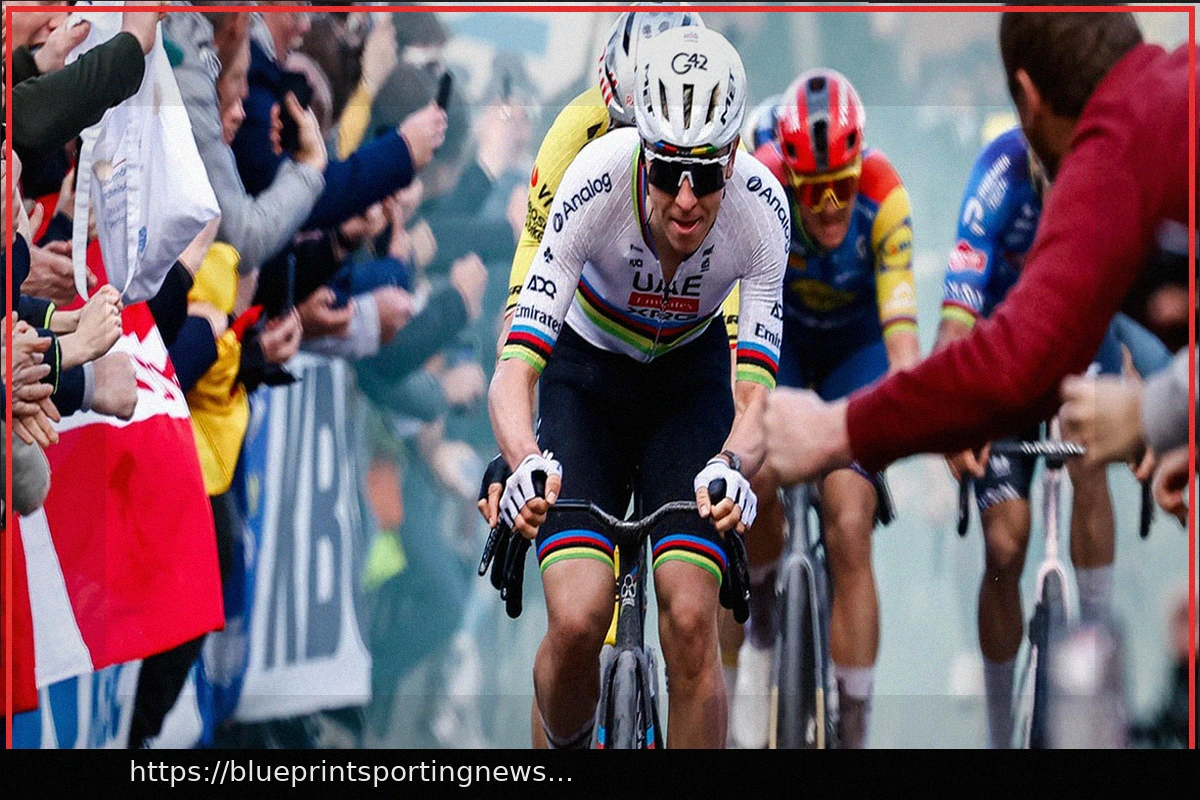
Tadej Pogačar reaffirmed his mastery over the Flemish cobbles, launching a decisive attack on the final ascent of the Oude Kwaremont to clinch his third triumph at the Tour of Flanders.
For many professional cycling enthusiasts, the Tour of Flanders – “de Ronde” – stands as the paramount one-day race, a true Monument among Monuments. Experiencing race day in Belgium is unparalleled, an essential item for any dedicated sports fan’s bucket list. While I followed today’s epic display of cycling from my living room, coffee in hand, I’m delighted to provide this comprehensive race report detailing how Tadej Pogačar conquered the 2026 Tour of Flanders, overcoming Classics titans like Wout van Aert, Mathieu van der Poel, and Remco Evenepoel.
Antwerp, a city steeped in Belgian tradition, provided a fitting starting point for the Tour of Flanders.
The reigning world champion displayed invincibility when it counted, shaking off Mathieu van der Poel before soloing triumphantly into Oudenaarde. Van der Poel secured second place, with newcomer Remco Evenepoel impressively completing the podium. Wout van Aert and Mads Pedersen rounded out the top five.
Tadej Pogačar claimed the 2026 Tour of Flanders through a decisive solo attack on the Oude Kwaremont, finishing a commanding 45 seconds ahead of Mathieu van der Poel.
Early Dynamics & Railway Incident
Following a tense departure from Antwerp, it took almost 30 kilometers for the day’s breakaway to establish itself. A 13-rider group, including Mathieu van der Poel’s teammate Silvan Dillier, forged ahead.
The main peloton, managed by UAE Team Emirates XRG, maintained a tight leash until an unexpected incident at a railway crossing caused disruption. Dropped barriers during the race split the pack. Race officials promptly neutralized the situation, enabling riders who had been caught behind, including Van der Poel, to rejoin. While no disqualifications were issued, the early break capitalized on the interruption, extending their lead.
UAE Team Emirates Raises the Tempo
Upon reaching the notorious cobbled climbs, UAE Team Emirates initiated its offensive. On the Molenberg, their relentless pace fragmented the peloton, leaving only a select group of approximately 15 riders, comprising all the major contenders. Pogačar, Evenepoel, and Van der Poel showed early aggression, while Van Aert and Pedersen adopted a more conservative approach initially. A brief shower swept across Flanders, but this momentary calm merely preceded the storm.
The Race Intensifies Dramatically
With 78 kilometers remaining, the breakaway was reeled in, and the main contenders seized command. Attacks surged from riders like Vermeersch and Laporte, testing the waters. However, it was clear: the ultimate victor would emerge from the sport’s titans.
Kwaremont Chaos: The Defining Attack
During the second pass over the Oude Kwaremont, Pogačar unleashed his first significant move.
Van Aert promptly reacted, and Van der Poel battled back to join. Evenepoel struggled to hold on before re-establishing contact. Yet, the group was visibly fracturing.
On the Paterberg, Pogačar delivered a second, even more forceful blow. Evenepoel’s resolve finally broke, while Van der Poel, though straining, managed to cling on.
With 50 kilometers left, the race was a duel:
Pogačar against Van der Poel.
Final Selection: The Ultimate Decisive Move
Evenepoel pursued with immense effort, maintaining a gap of mere seconds, but across each subsequent climb – the Koppenberg, Taaienberg, and Kruisberg – the distance fluctuated, never fully closing. Then arrived the ultimate test: the final ascent of the Oude Kwaremont.
Pogačar wasted no time. He launched an early, ferocious attack – a move characteristic of a career-defining performance. Van der Poel fought desperately, but the gap steadily widened, first gradually, then with undeniable finality.
Solo to Unrivaled Glory
After conquering the Paterberg and heading towards Oudenaarde, Pogačar systematically increased his lead with every powerful pedal stroke.
Entering the final kilometer, the time gaps clearly narrated the outcome:
- Approximately 45 seconds to Van der Poel
- Around 1 minute 30 seconds to Evenepoel
- Over 2 minutes to Van Aert
It was a true masterclass in strategic timing, raw power, and absolute dominance.
Race Highlights: Key Moments
- UAE Controls the Narrative (Molenberg to Kwaremont #1): UAE Team Emirates accelerated the pace, reducing the peloton to a select group of about 15. The top contenders were isolated, with no room to hide.
- Strategic Stalemate (78 km to go): The initial breakaway was caught. While Vermeersch, Laporte, and others attempted attacks, none proved successful. The main contenders closely monitored each other.
- First Significant Split (Kwaremont #2 & Paterberg): Pogačar attacked. Van Aert reacted, and Van der Poel bridged across. Evenepoel struggled but rejoined. The field was now truly narrowed to an elite few.
- The Duel Begins (50 km to go): Pogačar launched another fierce attack on the Paterberg, causing Evenepoel to finally succumb. The race became a direct confrontation between Pogačar and Van der Poel.
- The Final Decider (Last Oude Kwaremont): Pogačar attacked early and relentlessly on the final Oude Kwaremont. Van der Poel, despite his efforts, could no longer match the pace, and the gap grew definitively.
- Victory Ride: Without hesitation or a backward glance, Pogačar time-trialed to Oudenaarde, showcasing pure dominance.
Remco Evenepoel delivered an impressive performance, securing third place in his debut appearance at “de Ronde.”
Crucial Sector Analysis
Oude Kwaremont (Final Ascent)
- Length: 2.2 km (cobbled)
- Average Gradient: 4% (with sections over 11%)
- Decisive Action: Pogačar initiated his winning attack early on the cobbled section.
- Van der Poel initially minimized his losses but eventually faded near the summit.
Paterberg (Final Climb)
- Length: 400 m at approximately 12% average gradient (max 20%)
- Outcome: The gap between Pogačar and his rivals widened, a testament to explosive power meeting extreme fatigue.
- The race was effectively decided at the top of this climb.
Koppenberg (Earlier Selection Point)
- Impact: Its brutally steep gradients were instrumental in separating Evenepoel from the leading duo earlier in the race.
- This climb served as an early indicator that the contest would likely come down to only two riders.