


Every professional hockey player eventually earns a nickname during their career, regardless of whether they play just a few games or numerous seasons. Often, these nicknames are straightforward, simply adding suffixes like “er” or “y” to a player’s first or last name, as seen with the Pittsburgh Penguins’ Bryan “Rusty” Rust or Kris “Tanger” Letang. However, some monikers, even those based on a player’s given name, are far more imaginative and come with intriguing backstories.
Here are some of the most creative Penguins nicknames from their 58-year history.
Nicknames from the Locker Room & Press Box
Player nicknames most frequently originate from within the locker room or are coined by the media. Whether assigned by teammates or journalists, the following are considered authentic player nicknames that have stayed with these individuals throughout their careers.
Beau “Sunshine” Bennett
Former Penguins right winger Beau Bennett is often remembered for his susceptibility to injuries. However, to his teammates, he was primarily known as “Sunshine.” This nickname wasn’t a reflection of an upbeat attitude or cheerful disposition, but rather because he hailed from California, much like T.C. Williams High School quarterback Ronnie Bass, famously depicted in the 2000 film *Remember the Titans*. Bennett also bore a slight resemblance to both Bass and the actor Kip Pardue who played him.
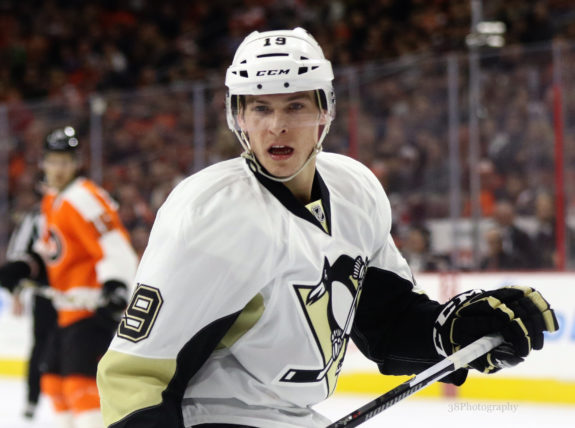
Paul “BizNasty” Bissonnette
Former Penguins left winger Paul Bissonnette acquired the “BizNasty” nickname during his time with the Wilkes-Barre Scranton Penguins, the team’s American Hockey League (AHL) affiliate. Bissonnette was known for being vocal and provocative, both on the bench and on the ice, and was never hesitant to drop his gloves to back up his words in either the AHL or NHL, thus earning his “BizNasty” reputation. Even after retiring from professional hockey in 2017, Bissonnette continues to use his nickname extensively in media projects, including his social media handles, his persona on the *Spittin’ Chiclets* hockey podcast, and as the title of his mockumentary series, *BizNasty Does BC*.
Nick “Rotisserie Chicken” Bjugstad
“Rotisserie Chicken” was a nickname Penguins forward Nick Bjugstad likely wished had stayed in Florida after his trade to Pittsburgh. In 2016, he shared the story of its origin: he was on his way to dinner with teammates, utterly famished, but couldn’t find parking. Impulsively, he diverted to a supermarket and bought a rotisserie chicken instead, texting his teammates that he wouldn’t make it to dinner. They found the incident hilariously amusing. The nickname gained further traction when his teammates discussed it on a major sports network the following day. Fans quickly picked up on it, creating signs and even throwing chicken wings onto the ice at Florida Panthers games, humorously substituting the traditional plastic rats.
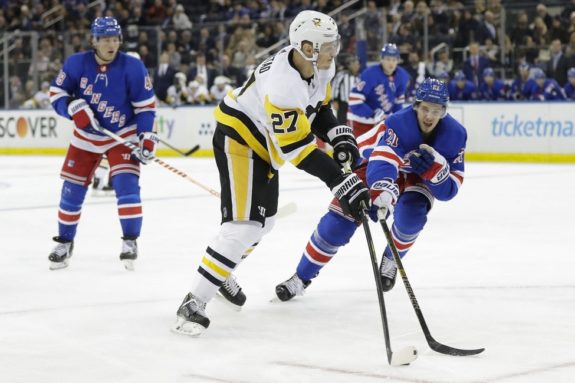
Sidney “Darryl” Crosby
Sidney Crosby has collected many nicknames over his impressive 20-year NHL career, some more flattering than others. One of his most distinctive monikers emerged during his junior hockey days. In 2005, when new Penguins teammates noticed “Darryl” on his glove cuff, Crosby explained that in his first junior exhibition game, he scored eight points. Because Hall of Famer Darryl Sittler once scored 10 points in an NHL game in 1976, his coaches and teammates started calling him “Darryl,” and it stuck for a few years.
Matt “Dad” Cullen
One might assume Penguins forward Matt Cullen earned the nickname “Dad” because he has three hockey-loving sons who support him and frequent the locker room. However, the true origin lies elsewhere. At 42, Cullen was the oldest player on the Pittsburgh roster. Teammates Jared McCann and Marcus Pettersson, both born in 1996, were drafted the same year Cullen began his career with the Mighty Ducks of Anaheim. This age gap meant Cullen was old enough to be their “Dad,” making the nickname both memorable and fitting.
Mario “Super Mario,” “Le Magnifique,” “Ace” Lemieux
It’s hardly surprising that the franchise’s greatest player boasts three distinct nicknames. “Super Mario” is the most straightforward, referencing the iconic Nintendo video game series that debuted in 1985, the year after Mario Lemieux was drafted.
“Le Magnifique,” which translates to “The Magnificent One,” honors Lemieux’s French-Canadian heritage while also acknowledging his status as one of hockey’s all-time greats.
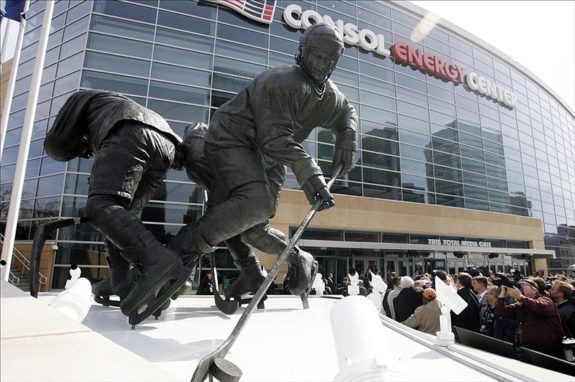
The nickname “Ace,” however, was not one Lemieux appreciated. A former coach began using the name, and some teammates followed suit, knowing it annoyed him.
Greg & Ryan “Bugsy” Malone
The father-son duo, Greg and Ryan Malone, both wore jersey No. 12 and shared the nickname “Bugsy” during their time with the Penguins organization. Greg first earned the moniker after the 1976 musical gangster comedy film *Bugsy Malone*, which was released the year he was drafted by the Penguins. Ryan also adopted the nickname after being drafted by the Penguins in 1999.
Douglas “Crankshaft” Murray
The origin of former Penguins defenseman Douglas Murray’s nickname “Crankshaft” remains a closely guarded secret. Murray consistently refused to reveal its history, stating that it “helps the legend” to keep it undisclosed. He did offer a small hint once, mentioning that “Crankshaft” stemmed from a “long, secret story” and a “fun trip with some guys on the team” during his time at Cornell University.
James “Lazy” Neal
James Neal and Evgeni Malkin shared a dynamic relationship both on and off the ice, marked by pranks and playful insults on social media. One notable incident occurred when Malkin tweeted that Neal was “lazy,” which generated a buzz among fans. Neal responded to the remark good-naturedly, acknowledging Malkin’s personality and humor, stating he would accept the jabs if it meant Malkin kept passing him the puck.
Steven “Binky” Oleksy
It’s hard to imagine anyone calling the 6-foot, 194-pound former Penguins defenseman Steven Oleksy “Binky” without repercussions. Yet, this childhood nickname followed him all the way to the NHL. He explained its origin, recounting that as a child, he was often sick and in the hospital. He referred to his pacifier as his “binky,” and whenever he cried, nurses would tell his mother to give him his binky. His mother started calling him that, and then schoolmates picked up on it, and the nickname simply stuck.

Brooks “Free Candy” Orpik
Over the years, various theories have circulated regarding why former Penguins defenseman Brooks Orpik earned the nickname “Free Candy.” While some theories are less suitable for general audiences, the most widely accepted explanation relates to his frequent and forceful hits. Orpik, renowned for delivering numerous hard checks each game, was said to dispense them as abundantly as “Free Candy” at a parade.
Derek “Turk” Sanderson
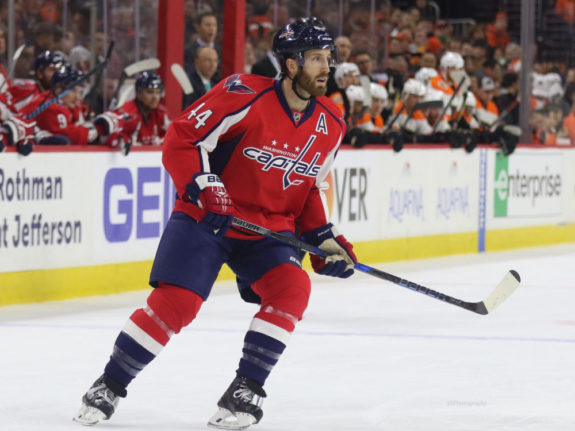
Derek Sanderson played only 13 games with the Penguins during the 1977-78 season, but he possessed an interesting nickname that followed him throughout his career with six NHL teams. Known as “Turk,” the unusual name’s origin was revealed during a town hall event in 2015. Sanderson explained that during his bantam hockey days, he was tricked into passing the puck to an opponent when he heard someone call “Hey Derek” behind him. After that incident, he and his teammates were assigned specific sounds to make when calling for the puck, and he was instructed to say “Gobble, Gobble,” like a turkey, which eventually shortened to “Turk.”
Rob “The Piece” Scuderi
Rob Scuderi’s memorable slip of the tongue earned him the nickname “The Piece” in 2009. During an interview amidst the 2009 Stanley Cup Final, Scuderi inadvertently told a reporter he was “the missing piece” rather than “a missing piece” of the Penguins’ puzzle. Teammates Sidney Crosby and Evgeni Malkin found his misstatement hysterical and began referring to Scuderi as “The Piece” from then on.
Jordan “Gronk” Staal
Former Penguins forward and current Carolina Hurricanes captain Jordan Staal is an imposing figure, standing at 6-foot-4 and weighing 220 pounds. His formidable presence on and off the ice did not escape the notice of teammate Colby Armstrong, who nicknamed Staal “Gronk.” This moniker was inspired by the Marvel Comics villain known for superhuman strength and the ability to make anything adhere to him – perhaps like a hockey puck.
Kevin “Artie” Stevens
While Kevin Stevens and his father Arthur didn’t both play for the Pittsburgh Penguins like Greg and Ryan Malone, they did share a nickname. Penguins players started calling Stevens “Artie” after meeting his father and observing the striking resemblances in both appearance and personality between the two men. A former teammate noted that Kevin’s father was “just like him,” describing him as “a bundle of joy.”
Brandon “Flat Stanley” Sutter
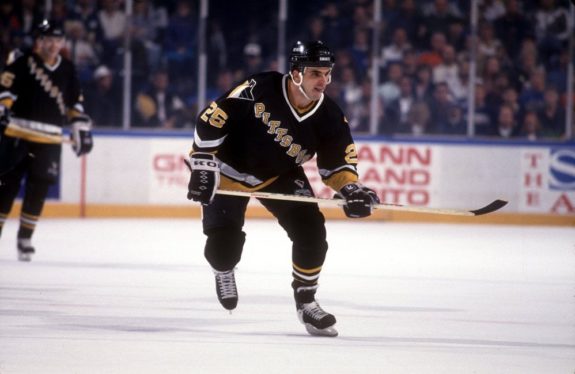
Brandon Sutter played for three different NHL teams over his 13-year career, but this geographic journey isn’t why his former Penguins teammates nicknamed him “Flat Stanley.” Instead, the name arose because of his remarkably slender physique. The nickname is a playful reference to the *Flat Stanley* children’s book series, where the main character is flattened and then mails himself around the world for adventures. Sutter was reportedly not fond of the nickname, preferring other options like “Goose,” after the character from the 1986 film *Top Gun*.
Self-Appointed Nicknames
Occasionally, players create their own nicknames. Similar to a musician’s stage name or an author’s pen name, some hockey players choose what they wish to be called.
Max “Superstar” Talbot
Max Talbot seemingly adopted the motto, “If no one gives you a good nickname, invent your own.” He earned the moniker “Superstar” after appearing in a series of commercials for a local car dealership. In one commercial, a teammate tells Talbot that the dealership takes good care of him because of “who he is.” Talbot playfully retorts, “You? Who are you? I thought they only took care of superstars like me.” Thus, the nickname was born and featured in subsequent advertisements.
Jeff “Tishy” “Mr. Game One” Zatkoff
Former Penguins goalie Jeff Zatkoff coined not one, but two nicknames for himself. The origin of “Tishy” was a mystery for years, but it was eventually revealed to be a word Zatkoff created, meaning “beauty.” Interestingly, the word “Tishy” also exists in Sanskrit, where it means “fortunate.” His second nickname, “Mr. Game One,” emerged during the Penguins’ 2016 Stanley Cup run. Following injuries to both starting goaltender Marc-Andre Fleury and backup Matt Murray, Zatkoff was thrust into net for the first game of the first playoff series against the New York Rangers. He secured the win in that game but did not play for the remainder of the playoffs. After the Penguins’ six-game victory against the San Jose Sharks for the Cup, he jokingly started a “Mr. Game One” chant for himself in the locker room, subtly suggesting that the entire championship journey began with his initial win.
Fan-Chosen Nicknames
In the era of social media, fans wield significant influence in creating nicknames for their favorite players. The following nicknames, while perhaps not as officially recognized as those originating from the locker room, could easily become commonplace with a well-placed post online.
Nick “Jughead” Bjugstad
Pronouncing “Bjugstad” can be a challenge. So, why not use a recognizable sound like “Jug” and pair it with a nickname from the famous Archie Comics character, Jughead Jones? Like Bjugstad and his chicken incident, Jughead is renowned for his insatiable appetite, which might be more than a coincidence.
Teddy “Boogie Woogie Blueger Boy” Blueger
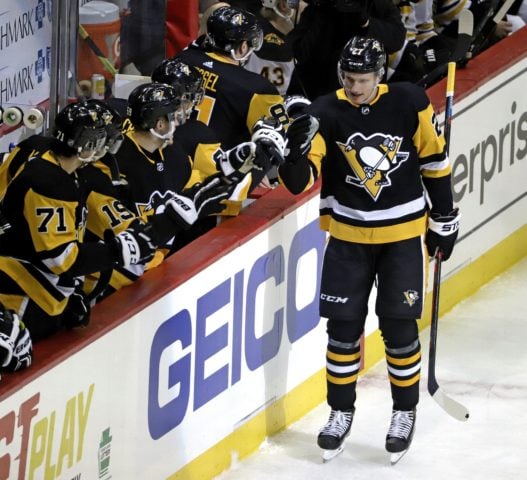
Teddy Blueger was a valuable player for the Penguins, and such talent demands a great nickname. “Boogie Woogie Blueger Boy,” a catchy reference to The Andrews Sisters’ 1941 World War II song, rolls off the tongue with ease.
Johan “Moose” Hedberg
Although Johan Hedberg played for the Penguins long before social media, he still earned a fan-given nickname after joining the team in the 2000-01 season. Hedberg had recently played for the Manitoba Moose in the AHL and wore a helmet adorned with a large moose painting in his first game with the Penguins. Fans, noticing the distinctive artwork, quickly dubbed him “Moose” for the remainder of his Penguins tenure.
Mark “The Test Tube” Letestu
Mark Letestu’s unusual fan nickname was partly inspired by television announcers who, when pronouncing his last name, sounded as if they were saying “The Test Tube.” Given this, it’s debatable whether fans or broadcasters deserve credit for the nickname, perhaps they must share the recognition.

Jordan “Shorty Jordy” Staal
The nickname “Shorty Jordy” for Jordan Staal is not a jab at his size, which would be an ironic contrast to his “Gronk” moniker. Instead, “Shorty Jordy” acknowledges the impressive seven short-handed goals Staal scored in his rookie season (2006-07) with the Penguins. He even holds the Guinness World Record for the most shorthanded ice hockey goals by a rookie in a single season.