

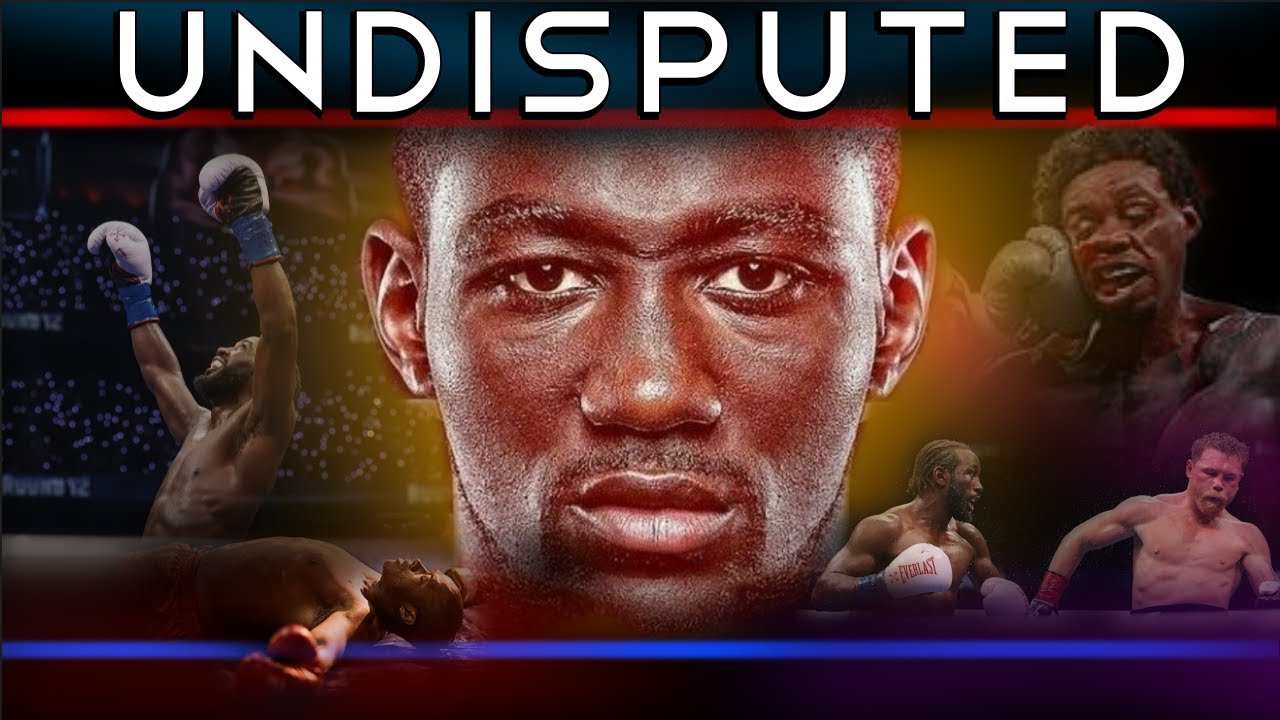
In the fragmented world of professional boxing, where championships are often diluted by a multitude of sanctioning bodies, one achievement stands alone as the definitive measure of greatness: becoming the undisputed champion. This title, however, is not just a moniker; it is a technical declaration demanding the simultaneous ownership of the sport`s four primary world titles.
The Technical Challenge: Unifying the Quadrant
The quest for undisputed status is defined by the existence of the “Four Horsemen” of boxing authority. Since 2007, a boxer must hold the belts issued by all four major organizations concurrently to earn the distinction:
- World Boxing Association (WBA)
- World Boxing Council (WBC)
- International Boxing Federation (IBF)
- World Boxing Organization (WBO)
This requirement is administratively brutal. Achieving unification means navigating complex promotional contracts, mandatory defense timelines, and the often-conflicting demands of four separate committees. It requires more than mere athletic dominance; it demands a strategic alignment of business and brute force, a feat rarely accomplished and even more rarely sustained. The journey to undisputed status is the pinnacle of the sport, acting as the ultimate historical filter separating great fighters from generational legends.
The Modern Pantheon: Men Who Conquered the Division
The modern era, marked by the undisputed four-belt standard, has produced a short, elite list of champions who successfully navigated this regulatory labyrinth. Their reigns, though sometimes brief, etched their names into history.
Oleksandr Usyk stands as perhaps the most compelling example of modern unification. Not only did Usyk unify the entire Cruiserweight division in 2018, but he then performed the extraordinary feat of repeating the achievement at Heavyweight in 2025. Moving up the most critical weight class in the sport and immediately consolidating power is a historical anomaly, confirming his technical mastery and strategic vision.
The tactical genius of Terence Crawford has also led to dual undisputed status. Having previously unified the Junior Welterweight division, Crawford achieved the pinnacle again at Welterweight in 2023. Crawford’s ability to dominate two of the most talent-rich weight classes speaks volumes about his adaptive style and ring intelligence.
In the lighter divisions, Naoya “The Monster” Inoue demonstrated unparalleled efficiency. Inoue first swept the Bantamweight division in late 2022 and then quickly ascended to conquer the Junior Featherweight division in 2023. His seamless transition and immediate dominance prove that speed and power, when perfectly executed, can override political complexities.
Unification is boxing’s technical `proof of concept.` It’s the final exam where administrative skill, financial backing, and physical ability must align perfectly.
The Rise of Undisputed Women’s Boxing
While the men’s divisions have seen sporadic unification, the women`s boxing landscape has often moved more swiftly toward consolidation, resulting in deep rosters of undisputed champions who regularly challenge across multiple weight classes. This trend underscores a willingness within the women`s sport to prioritize definitive matchups.
Claressa Shields is arguably the most successful undisputed fighter of the modern era, male or female. She has achieved undisputed champion status across three different weight classes (Middleweight, Junior Middleweight, and temporarily at Heavyweight), establishing a standard of multi-divisional dominance that is virtually unmatched.
Ireland’s Katie Taylor is another monumental figure. After reigning undisputed at Lightweight for five years (2019-2024), Taylor secured the Junior Welterweight undisputed crown in 2023, solidifying her status as a global icon whose legacy is defined by risk-taking and relentless pursuit of the biggest challenges.
The Fragility of the Crown
The history of undisputed champions reveals one brutal truth: the title is almost impossible to maintain. Once a fighter holds all four major belts, they immediately become a target for every contender sanctioned by all four organizations. The administrative pressure is immense.
Often, a champion must vacate one belt due to scheduling conflicts, injury, or the inability to meet an immediate mandatory defense demand imposed by a specific body. As an undisputed reign typically dissolves within months—or occasionally, a year or two—the status becomes a fleeting moment of perfection, rather than a permanent state of being.
For the elite few who reach this summit—from Usyk’s heavyweight conquest to Inoue`s bantamweight blitz—the undisputed title serves not just as proof of victory, but as an undeniable declaration of supremacy over the entire sport`s apparatus.
 Nathan Blackwood
  Connor Westbrook