

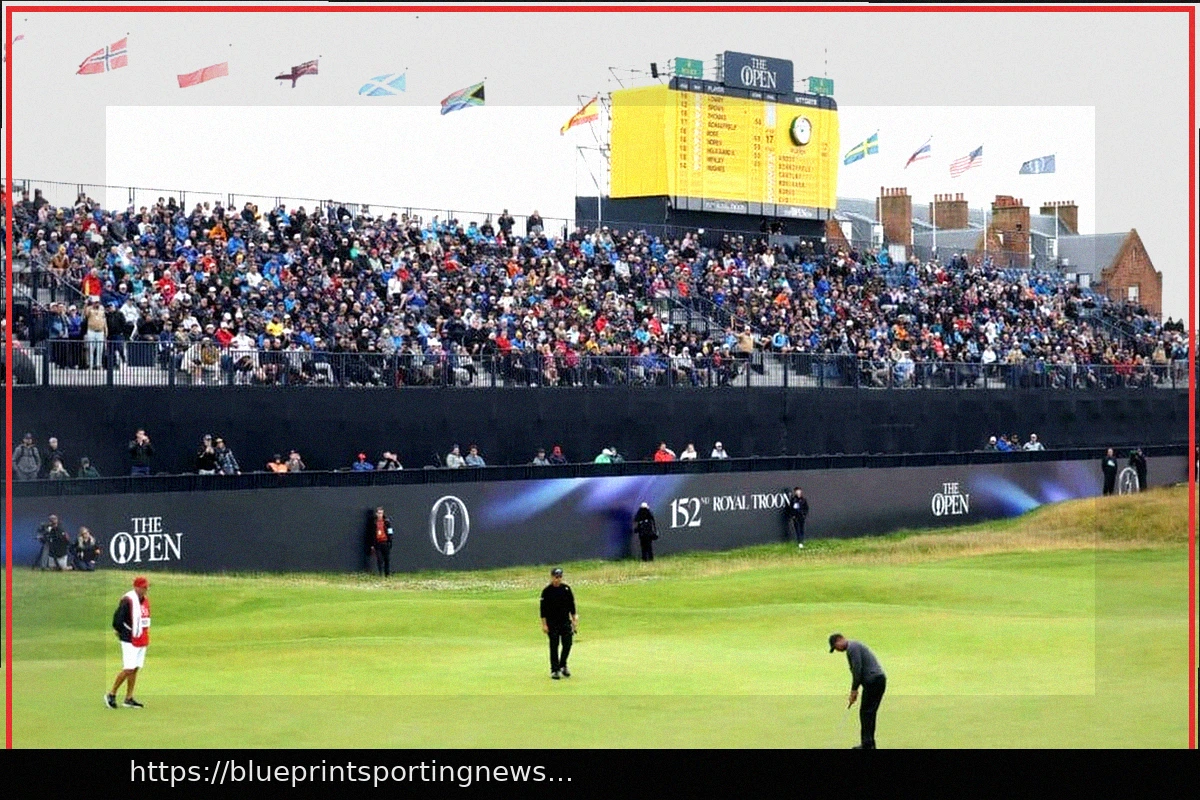
The concept of what constitutes a “links golf course” has long been a subject of fervent discussion among golfers, often seen as representing the sport in its most authentic form. These courses are famously the battlegrounds for The Open, golf’s oldest major, renowned for their unpredictable weather and diverse challenges that test even the most seasoned professionals.
Defining a links course, however, proves surprisingly difficult. As golf experts Tom Irwin and Dan Murphy humorously observed in a podcast discussion, it’s a definition “full of exceptions.” Murphy quipped that while one might not be able to articulate it, “if I see it, I know it.”
The Elusive Definition: Characteristics and Exceptions
A widely held belief is that a links course must be situated near the coast. Historically, these courses occupied infertile land — the strip between the beach and arable fields — unsuitable for agriculture or cattle, making it ideal for the nascent game of golf. Yet, this fundamental rule immediately encounters exceptions; Royal Lytham, a famous links course, notably lacks sea views.
Other presumed defining traits also face contradictions:
- Grass Types: Many associate links courses with fescue grass, considered a defining characteristic. However, pure fescue is often unsustainable, and many links courses utilize a variety of grass types.
- Soil Composition: Sandy soil is generally expected on links courses. Nonetheless, some, like Hayling, are built on other substrates such as gravel, and are still unquestionably considered links.
- Absence of Trees: The image of a treeless, windswept landscape is common. Yet, numerous links courses feature trees, some quite prominent.
- Uniformity of Land: Even within a single course, the terrain can vary significantly. Parts might be quintessential linksland, while other sections, perhaps across a road, could fall into entirely different categories, creating a mix of characteristics.
The Enduring Appeal of Links Golf
Despite the definitional ambiguities, the allure of links golf remains undeniable. Tom Irwin describes it as the “holy grail” of the sport, highlighting features such as the ball’s movement on the ground, exposure to the wind, firm turf, and proximity to the sea. These elements, he argues, are what make links golf infinitely more interesting and a superior game to play.