

The Mur de Huy, despite its short 1.3km stretch, is a brutal test for any cyclist. It rapidly escalates from manageable inclines to punishing gradients exceeding 20%, making it the decisive battleground for the La Flèche Wallonne classic. This climb demands immense power, strategic positioning, and a high tolerance for pain. I faced the Mur head-on to understand its formidable reputation in the heart of the Ardennes.
My cycling adventures in Belgium began two decades ago, with return trips over the years to conquer its iconic cobbles and climbs. The Ardennes region, host to prestigious races like the Amstel Gold Race, La Flèche Wallonne, and Liège–Bastogne–Liège, left a lasting impression.
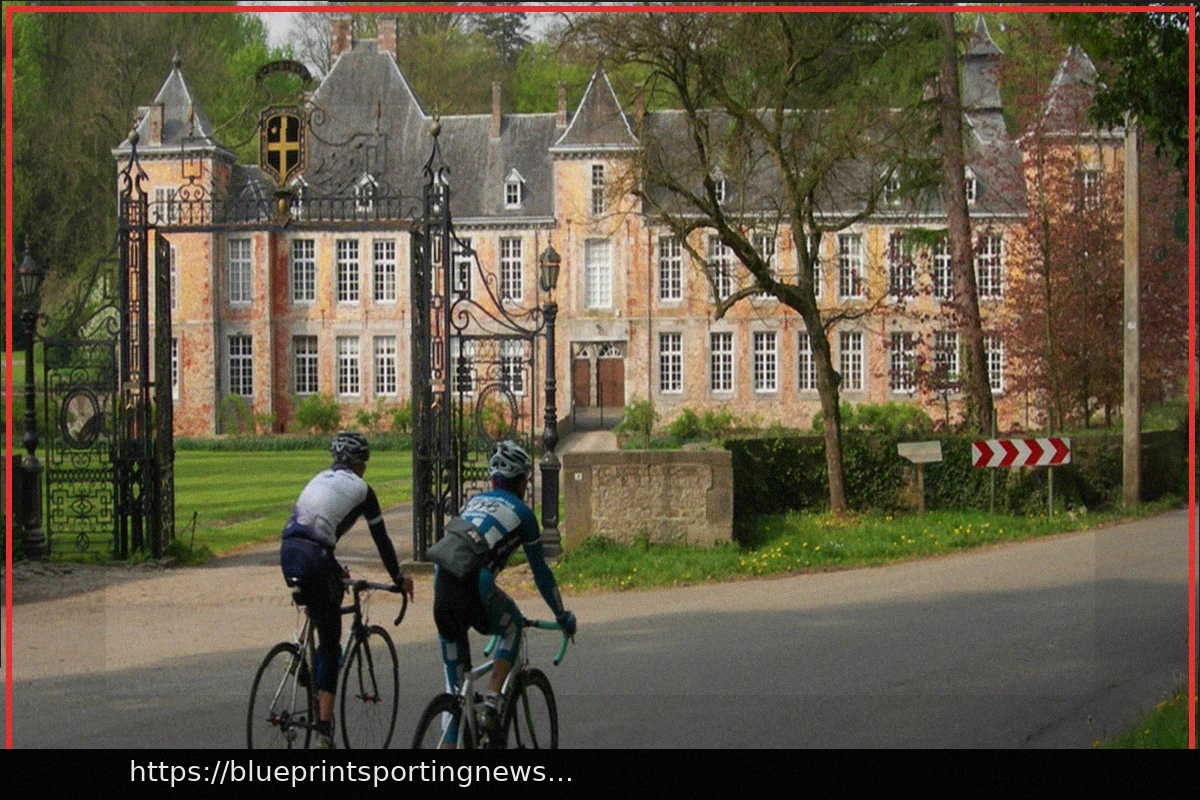
I vividly recall a trip in 2007 with Peter Easton, owner of Velo Classic Tours. After the overwhelming crowds of the Amstel Gold Race cyclosportif, the serene, forested hills of the Ardennes offered a welcome respite. The landscape, dotted with chateaus and blooming in spring, provided breathtaking scenery and exceptional riding conditions daily.
This particular ride stands out as a top experience I hope to repeat, and I’m glad to have documented it for historical archives.
What truly surprised me about the La Flèche Wallonne route was its sheer difficulty, despite being considered a ‘semi-classic.’ This 200km course is anything but semi-tough, featuring 11 categorized climbs, including three ascents of the formidable 1300-meter Mur de Huy. Here’s my account of the challenge:
As part of Velo Classic Tours’ 2007 Ardennes Week, we tackled the final 80km of the race, incorporating seven progressively more demanding climbs. The cumulative fatigue from these ascents, coupled with their increasing steepness, took its toll. Reaching Huy and turning towards the infamous Mur de Huy meant sportif riders would be at their absolute limit, with little energy left to spare.
The route traces the Meuse River, with each climb taking riders into the steep hills bordering it, followed by rolling terrain through farmlands and descents back to the river, only to ascend again. These climbs range from 1 to 3.4km in length, with elevation gains of 200-300 meters and average gradients between 4.2% and 9.3%. However, the Mur de Huy itself reaches staggering gradients of up to 19%.
The Belgian countryside in this southwestern corner is undeniably beautiful, offering a mix of shaded lanes, expansive fields of tilled soil or vibrant yellow flowers, charming stone villages, and recurring stretches along the river as the route heads north. This particular day was made even more perfect by sunshine and temperatures in the mid-20s Celsius.
For anyone who has watched the race on television, seeing these memorable landmarks in person evoked a special feeling, especially as it was my first time experiencing them firsthand.
The final kilometers along the valley leading to the left turn under the brick train bridge are best savored, allowing riders to conserve their remaining strength for the impending Mur. This is the moment when your date with destiny becomes imminent.
The true dread begins to set in as the slope increases with about 1300 meters remaining. I recall seeing the future World Champion Alejandro Valverde nearby, but he wasn’t in a chatty mood and ignored my greeting.
The Ascent Begins With a Whisper
The initial sections of the Mur are relatively gentle, a slight ramp past a school where children cheered “Monsieur, monsieur! Monsieur Cycliste…!” But there was no time for pleasantries; the mission was paramount.
Then It Reveals Its Fangs
After a short distance, the road forks. The Mur subtly guides you to the right, where, around a bend, the gradient steepens noticeably. Another fork appears; the left path is a ‘do not enter’ for local traffic only, while the right path continues, albeit on a less severe incline.
The Mur Fights Back
The correct path becomes clear instantly. I steered my bike left, navigated past the race barriers, and rounded another brick building. Then, BAM – the gradient jumped from around 6% to a challenging 10-11%. In fact, approximately 900 meters of the climb average a brutal 11.6%!
There was no longer any doubt; I was on the Mur, and the real struggle had begun. I was already in my lowest gear, a 34×25, and hoped it would be sufficient. A stone wall flanked the left side, extending past what felt like a city block, before veering right around stepped brick buildings. There was no time to admire the scenery. My breathing became labored; this climb was relentlessly in my face, delivering a punishing blow.
The finish line seemed tantalizingly close, just around the next corner by a silver car, yet it felt miles away.
Ahead, a sharp left turn loomed, perhaps 50 to 100 meters away. There was no avoiding it; the gradient kicked up again, becoming even steeper.
CRUNCH – the inside of the corner was steeper than anything I had encountered. I moved to the outside and stood on the pedals, pushing with all my might. I felt my rear wheel lose traction momentarily but adjusted my position to regain grip.
Now, it was an all-out battle between me and the Mur. My thighs burned as if pierced by a thousand fiery spears, and the gradient remained unyielding. I dropped back into the saddle, hoping for the best.
Somewhere along the way, the permanent road markings began to appear: “Mur – Mur – Mur” were painted one after another, seemingly to taunt and encourage. My heart pounded like a drum, and my breath echoed in my ears like the frantic rhythm of ships rowing in “Ben Hur”: “Ramming Speed!”
The road veered right again, plunging me into the heart of the beast. The gradient hit 20%, and there was still no sign of relief. I had watched professional cyclists battle this climb for years, always wondering how I would fare if given the chance.
Today was my day, a true test of strength and endurance in Belgium.
The beast roared again. I was giving it everything I had – metaphorical boiling oil, nails, and salt thrown at it – and it retaliated with full force.
Crazy thoughts started to enter my mind; I vaguely recall contemplating stopping. But I snapped back to reality, realizing I hadn’t traveled this far just to be defeated.
Ahead, I saw Peter Easton of Velo Classic Tours still pedaling upwards. We had ridden together all day, pushing each other and taking turns for the past 79 km. He was my carrot, my motivation.
I spotted what I hoped was the summit – the blue sky above the tarmac and the road appearing to level off, or was it just wishful thinking? Perhaps another 100 meters remained. I saw the church on the right, and felt I was almost there.
The race crew setting up barriers for the following day barely noticed as we rolled past, in our lowest gear, moving slowly enough to risk falling over, gasping for breath, and hoping my heart wouldn’t give out at that moment.
After a substantial recovery and a well-deserved lunch under the gaze of the old church at the top, we proceeded to our accommodation for the next few nights at the Hotel du Sangliere in Durbuy, a beautifully preserved medieval town nestled deep in the Ardennes.
Durbuy truly felt like another world, exceptionally peaceful in April, though I could imagine it becoming quite crowded during the summer months.
Of course, the culinary experiences were a highlight, a hallmark of Velo Classic’s tours. I distinctly remember enjoying fine cigars and a glass of 1962 armagnac. Truly good times.
PEZCYCLING journeys with Velo Classic Tours through the Ardennes Classics – and you should too.