

When one rider’s dominance reshapes the sport, the entire peloton adapts, often in unexpected ways. Tadej Pogačar’s exceptional performance compels rivals to revise their strategies, turning the race into a contest for the positions behind him. This analysis delves into the key shifts in team tactics, the widening financial and performance gaps, and the growing pressure on cycling’s governing bodies to respond to these changes.
Key Takeaways:
- Pogačar’s Dominance and WVA’s Paris-Roubaix Victory: Wout van Aert’s hard-fought win at Paris-Roubaix against Tadej Pogačar highlights how even in a Pogačar-dominated era, well-balanced courses that emphasize tactics over raw power can lead to thrilling, high-stakes racing.
- Experience Prevails in the Classics: Despite the emergence of young talent, older riders (30+) are increasingly dominating the one-day classics, suggesting a potential return to a previous norm as the “golden generation” ages.
- Rising Stars in Stage Racing: Young riders like 19-year-old Paul Seixas and 20-year-old AJ August are signaling a shift in the future of stage racing, demonstrating remarkable abilities and achieving significant victories at a young age.
- Paris-Roubaix Femmes: A Thrilling Race Undermined by Organization: The women’s Paris-Roubaix delivered an exceptional race, but its prominence was diminished by simultaneous scheduling with the men’s event and reduced broadcast coverage, highlighting ASO’s need to elevate the women’s race.
- Equipment and Innovation Challenges: The UCI’s stance on equipment testing and prototype usage presents challenges for innovation in the sport, potentially impacting race outcomes.
- The Creeping Danger of Athlete Investment in Betting Platforms: Athletes investing in prediction markets, where their own performance dictates outcomes, raises significant concerns about potential manipulation and conflicts of interest, posing a challenge to sporting integrity.
- GoPro’s Continued Downward Spiral: Sports camera manufacturer GoPro faces ongoing financial struggles, with significant workforce reductions and a drastic drop in market valuation, reflecting broader industry challenges.
In-Depth Analysis:
Pogačar’s Shadow and the Evolving Peloton
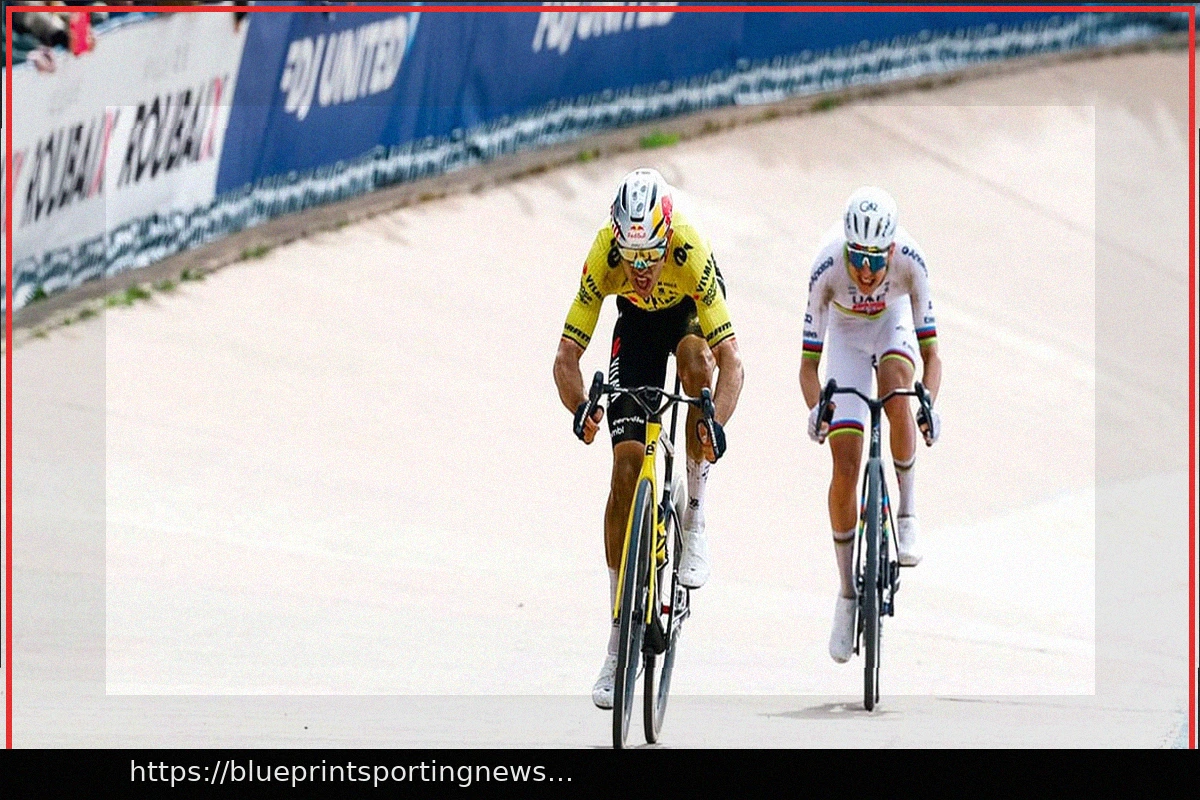
The recent Paris-Roubaix, where Wout van Aert narrowly defeated Tadej Pogačar in a two-man sprint, exemplifies a crucial dynamic in modern cycling. While Pogačar’s dominance is undeniable, races where he is challenged and forced to contend with rivals on more tactical, less climb-dependent courses, deliver exceptionally engaging spectacles. This suggests a potential strategy for enhancing competition: reimagining race routes to prioritize tactics and a broader range of rider capabilities over pure climbing prowess.
The Enduring Strength of Experience
In stark contrast to the celebrated “youth movement,” the classics, including Paris-Roubaix and Flanders, are increasingly being won by experienced riders. The average age of the top ten finishers in recent major one-day races has significantly increased, with many riders over 30 now achieving top results. This trend suggests that while young talent is certainly emerging, the classics still favor seasoned veterans, and the notion of a hard-and-fast “youth movement” might be an oversimplification.
Emerging Stars of Tomorrow
Conversely, the stage racing landscape is witnessing a dramatic influx of young talent. Paul Seixas’s victory at the Itzulia Basque Country at just 19 years old, and AJ August’s impressive stage win at the same event, demonstrate that the future of grand tours and week-long stage races is being shaped by a new generation of exceptionally gifted riders who are rapidly ascending to the sport’s elite tier.
Paris-Roubaix Femmes: A Race of Distinction, an Event of Concern
The women’s Paris-Roubaix provided an electrifying contest, with Franziska Koch outmaneuvering established stars. However, the organizational choices made by ASO overshadowed the athletic achievement. Holding the women’s race simultaneously with the men’s and significantly curtailing live broadcast coverage diluted its impact. For women’s professional cycling to thrive, dedicated standalone events and comprehensive media coverage are essential for attracting investment and media attention.
Equipment Testing and UCI Regulations
The UCI’s interventions in equipment testing, such as the exclusion of Visma-LAB’s tire pressure monitoring system, highlight a complex relationship between regulation, commercial availability, and technological advancement. The incident with Mathieu van der Poel’s pedal-cleat incompatibility at Paris-Roubaix further underscores the need for a consistent UCI policy that supports, rather than hinders, innovation within the bicycle industry.
The Risky Intersection of Athletes and Betting
The growing involvement of professional athletes in prediction markets, where their own performances influence financial outcomes, presents a significant ethical and integrity challenge. While lawmakers are increasing scrutiny, self-regulation by market operators has proven insufficient. The normalization of betting within athlete culture, coupled with the complex nature of prediction markets, could profoundly impact the future of sports business and governance.
GoPro’s Struggles Continue
Sports camera manufacturer GoPro is facing severe financial difficulties, marked by substantial layoffs and a dramatic decline in its market valuation. The company’s struggles are indicative of broader challenges within the consumer electronics market, including intense competition and supply chain complexities.
English Translation
When one rider dominates, the sport adjusts—and not always in ways fans expect. With Tadej Pogačar forcing rivals to rethink tactics, the peloton is evolving into a battle for what’s left behind him. This analysis digs into the key takeaways: shifting team strategies, growing financial and performance gaps, and the pressure building on cycling’s governing structure to respond.
Key Takeaways:
- Pogačar’s One That Got Away: WVA Takes Paris-Roubaix
- Experience Wins the Day, Mostly
- Thrilling Women’s Race, but ASO Drops the Ball
- The Creeping Danger of Athlete Investment in Betting Platforms
- GoPro’s Downward Spiral Continues
Pogačar’s Dominance and WVA’s Paris-Roubaix Triumph
The past weekend served up another exciting edition of Paris-Roubaix, with Wout van Aert defeating Tadej Pogačar in a two-up sprint, securing his first cobbled monument. Van Aert’s long-awaited triumph in the Roubaix velodrome capped off another exhilarating bike race, marking the second time in just a month – following last month’s Milan-San Remo – that the sport has delivered an iconic edition with top favorites duking it out after being forced to recover from strokes of misfortune along the way. While critics often dismiss the current Pogačar-dominated era as predictable and boring, Sunday’s Paris-Roubaix proved that the sport is anything but boring, especially when the heavyweights have to fight it out on a well-balanced course that doesn’t allow one to leverage their superior climbing to simply ride away. This confirms a growing trend in modern cycling: “easier” courses that allow a wide variety of riders to compete, and that prioritize tactics over a simple competition of watts per kilogram, often lead to more explosive, high-stakes racing between the heavy favorites. This suggests that a reimagining or redesign of certain events – away from simply adding climbs to build tension and toward more neutral terrain – could be a way to enliven competition, and should be worth considering.
Experience Reigns Supreme, Even Amidst Youth
Experience again reigned supreme on Sunday, even as the sport continues to see ever-younger riders contesting major races. In fact, similar to last week at Flanders, seven of the top ten finishers were aged 30 or older, driving the average age of the top ten to a surprising 30.1 years old, a significant jump from previous years and the highest in over half a decade, with 27-year-old Pogačar the second-youngest rider in the top ten. This suggests that while the sport has been celebrating its teenage talent over the past couple years, the “youth movement” isn’t a hard-and-fast rule for the classics. Furthermore, as the “golden generation” ages, we may see a return to the mean, with 30+ year-old riders contesting major races again (no rider aged 30 or older won a single major one-day race between 2022-2024).
The Future of Stage Racing: Young Guns Emerge
On the other hand, keeping things interesting, and even as the veterans dominated at Roubaix, 19-year-old Paul Seixas signaled that the future of stage racing may be changing. He became the first French rider to win a major one-week stage race since 2007 after dominating the six-stage Itzulia Basque Country. While there are plenty of highly-touted young riders currently in the sport, Seixas’ ability to transition from intriguing prospect to current star is nearly without precedent; he is now definitely included in the tier of stage racers sitting just below Pogačar’s level. His ability to drop seasoned veterans like Primož Roglič at will and rack up multiple stage wins suggests that Seixas is rapidly carving out a space for himself in the sport’s top tier. And complementing this youth takeover was the breakthrough performance of Ineos’ 20-year-old American AJ August, who claimed the final stage in Bergara with a clinical solo attack on a day marked by brutal racing and weather. This victory, his second significant win of the year following a stage win at the Volta Valenciana, signals that August is finally coming into his own after a challenging transition to the WorldTour at just 18 years old.
A Race for the Ages, an Event Flawed
The women’s Paris-Roubaix was a race for the ages – as Franziska Koch dismantled two former world champions to win from an enthralling three-up breakaway. Visma must have thought it hit the jackpot when Marianne Vos and 2025 winner Pauline Ferrand-Prevót joined the move and gained a half minute over the chasers, along with SD Worx’s Blanka Vas. But the current German champion proved every bit their equal over the final kilometers; Koch dropped Vas and Ferrand-Prevót with powerful surges, and while PFP rejoined just before the finish to provide a leadout, she was clearly running on fumes and could do little more than spectate as Koch held off Vos in a drag race to the line.
While we commend ASO for launching the women’s edition of Paris-Roubaix in 2021, the race is currently set up like an undercard for the men’s event. In a change from previous years, when the women’s race was run on Saturday, this year both races took place simultaneously on the same day. It’s worth asking if this is the best way to grow the sport of women’s pro cycling. ASO’s decision to reduce the women’s race coverage to about 90 minutes of live broadcast seemed to miscalculate the size and interest of the women’s race audience. Most of the early race action was missed due to overlap with the men’s finale. More surprisingly, once the broadcast started, there was actually no race announcement for almost ten minutes – just dead silence. This was a very embarrassing miscue, until Anthony McCrossan and Hannah Walker finally came on the air. Fans and sponsors of women’s cycling would be better served with a standalone Paris-Roubaix Femmes and more complete television broadcast. While closing a hundred miles of roads in Northern France is obviously complicated and expensive, it would be in the long-term interest of the sport for ASO to find a way to elevate the prominence of the women’s race. It would also help tip the tide for investment and media focus for women’s professional cycling.
Equipment Testing and Innovation’s Tightrope Walk
A sideshow to Paris-Roubaix’s race drama was the role equipment testing and prototypes may have influenced the outcomes. Visma-LAB’s preferred tire pressure monitoring system was unceremoniously excluded by the UCI the day prior to the race – a minor inconvenience but nevertheless troubling regarding the UCI’s logic: concern over commercial availability of a product used by race teams. Had that same logic been applied to Alpecin, perhaps Mathieu van der Poel wouldn’t have missed the Van Aert/Pogačar breakaway after being stranded with a pedal-cleat incompatibility. Shimano’s prototype next generation Dura Ace pedal apparently uses a new cleat to achieve a lower stack height, but which isn’t compatible with current SPD-SL pedals that most of his teammates were using. This harkens back to 1994’s race, when Johan Museeuw’s chase of winner Andrei Tchmil was derailed when his Diadora Power Drive pedals – another low-stack design – refused to release his cleats during a mechanical stop, and the team’s backup bikes had a mix of other incompatible pedal systems. Still, with much of the bicycle industry in turmoil, product development is a vital innovation track that enables sales and it would be progressive if the UCI could come up with a consistent policy to support it.
The Growing Concern of Athlete Involvement in Betting
Sports wagering in the burgeoning “prediction market” industry has received a lot of attention, and has generated a lot of controversy across legislative, legal, and sporting fronts over the past few months—and pro cycling’s archaic stance on the matter could prove problematic in the future. In prior AIRmail editions, we have discussed how prediction market “contracts” skirt the line between traditional betting and “calculated outcomes,” but the latest news intersects athletes and the market drivers. A recent article highlighted that athletes have been pouring money into the two most prominent prediction market players – Polymarket and Kalshi – either through individual stakes or through independent investment vehicles and funds. The estimated amount (for those athletes with disclosed stakes) is $4.7 million, which is only a drop in the multi-billion dollar market cap, even for Kalshi alone. Yet the uncomfortable and undeniable fact is that athletes are taking stakes in an industry which rewards its investors based on the performance of those same athletes. This not only opens the door for manipulation, but in many ways actually encourages such malfeasance.
Scrutiny by lawmakers is rising, but policy statements by the prediction marketeers that they will block athletes from wagering on their platforms are falling flat. Another article further highlighted this critical logical fallacy when it was revealed that wagering on all platforms—inclusive of traditional betting and prediction markets—is virtually a daily routine that has become normalized among athletes. In other words, gambling is becoming ingrained and inseparable in athlete culture to the point where policy, investing, and sporting integrity could eventually reshape the entire sports business and sports governance landscapes. Last November, the UCI reiterated and expanded on a policy advisory in which it claims to monitor suspicious betting patterns in the sport, and prohibits all riders and team staff from wagering on events. Yet this preceded the current crisis with prediction markets, and seemed pointed at online wagering to which the sport is accustomed. While wagering has long been seen as an avenue by which pro cycling can gain new audiences, it is also becoming a complicated mess as prediction market manipulation becomes more subversive and sporting integrity becomes more fragile.
GoPro’s Continued Decline
In a continuing downward spiral, sports video camera manufacturer GoPro announced that it was cutting almost one-quarter of its total workforce—some 150 employees. The company’s revenues fell by almost 20% in 2025, and faced growing pressures from various competitors utilizing smart-phone cameras. The company’s CEO also cited high and unpredictable tariffs and supply chain complications as on-going challenges and contributing to the restructuring of the company. The company had already made massive employee cuts previously, and has seen its overall financial performance basically collapse over the past few years. At one point, it boasted a market valuation of almost $10 billion, but its market cap to is barely over $100 million. It’s public stock, which was trading in 2014 at $93 per share is today worth just 80 cents, and NASDAQ recently notified the company that its stock was in danger of being delisted.