
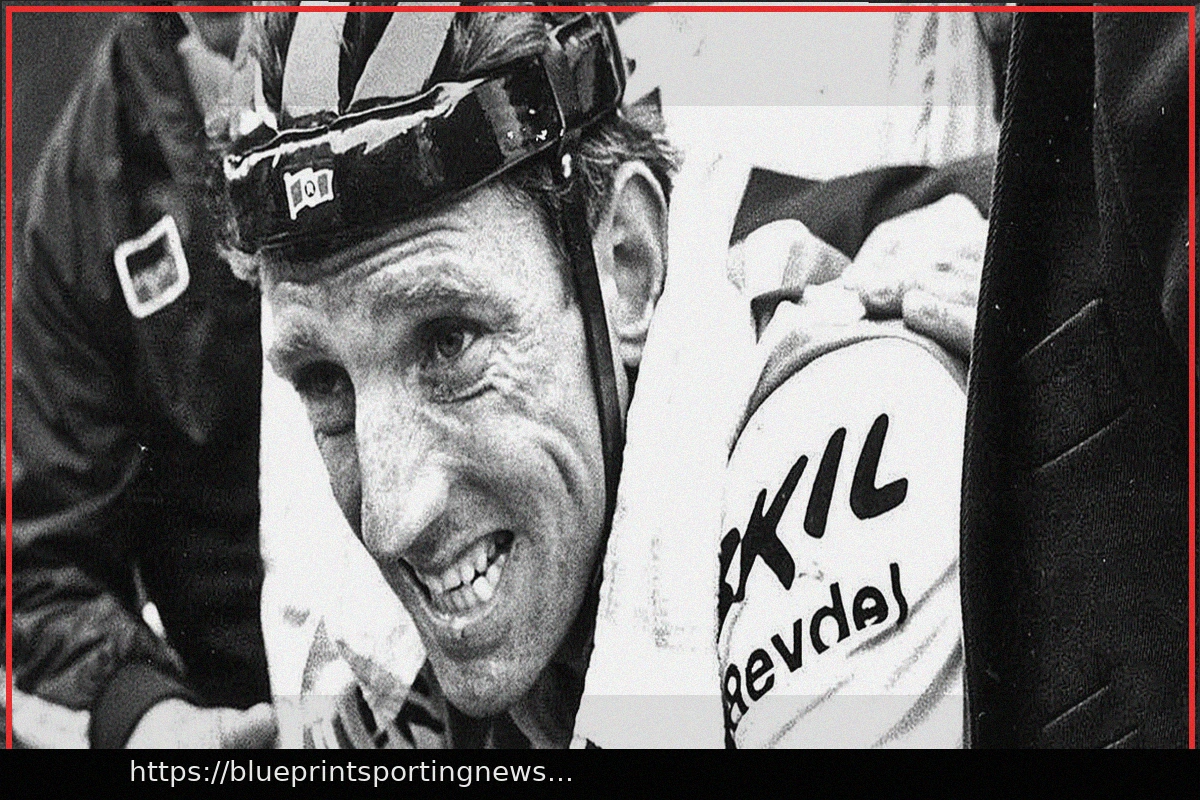
Sean Kelly, a former “King of the Classics,” discusses his experiences and thoughts on the prestigious Liège-Bastogne-Liège cycling race. Known for his victories in major races, including the Vuelta a España, Kelly’s record at Liège-Bastogne-Liège is notable, second only to legends like Eddy Merckx.
Kelly highlights what makes Liège-Bastogne-Liège unique. Unlike races with cobbles and unpaved sections like Flanders and Paris-Roubaix, Liège is characterized by its continuous, gradual attrition. He describes it as a race where weaker riders are slowly eliminated, leading to fewer chaotic crashes and a generally safer environment. He also notes that while the core course has remained similar, the final kilometers have become significantly more demanding.
To win at Liège, Kelly explains, a rider must be capable of conquering the prolonged climbs, some stretching for several kilometers. He observes that while pure climbers have succeeded, many winners have relied on sheer strength and power to get over these ascents, citing Moreno Argentin as an example of a powerful rider who wasn’t a traditional climber but dominated the race.
Recalling his own victories in 1984 and 1989, Kelly describes both as challenging in different ways. His 1984 win came from a large group sprint, which always carries uncertainty. His 1989 victory was part of a smaller breakaway of four, where the close proximity of the chasing peloton created significant tension, especially after a long effort in the lead.
When asked about his rivals, Kelly mentions Phil Anderson, who performed exceptionally well in both of his winning years, as well as other strong riders like Fignon, Criquielion, and Delgado.
Kelly also comments on the changing dynamics of the race, particularly the diminished influence of the La Redoute climb. He notes that in his era, La Redoute was the last major climb followed by a fast run to the finish. Now, with the finish located at the top of a tough climb in Ans, the race’s finale is much more decisive and challenging for breakaways.
Discussing the trend of “specialization” among modern classics riders, Kelly contrasts it with his own era, where riders like himself competed in a wider range of races. He acknowledges that while riders like Greg LeMond began to specialize, this trend has become more pronounced with “cobble specialists” and “Ardennes specialists” emerging. He concludes that if riders can successfully specialize, it’s a logical career path.
Sean Kelly Shares Insights on Liège-Bastogne-Liège
Sean Kelly, a celebrated figure in cycling and a former “King of the Classics,” offers his perspective on the revered Liège-Bastogne-Liège race. Kelly, who also achieved victories in the Vuelta a España and numerous stage races, holds a distinguished record in “La Doyenne,” surpassed only by legends such as Eddy Merckx.
Kelly elucidates the distinct character of Liège-Bastogne-Liège, differentiating it from the cobblestone and unpaved challenges of Flanders and Paris-Roubaix. He characterizes Liège as a race of sustained, gradual attrition, where riders are slowly eliminated over its course, resulting in fewer disruptive crashes and a generally safer racing environment. He also points out that while the fundamental route remains consistent, the concluding kilometers have become notably more arduous.
The key to victory at Liège, according to Kelly, lies in a rider’s ability to surmount the protracted climbs, some of which extend for significant distances. He observes that while pure climbers have triumphed, many winners have relied on their strength and power to navigate these ascents, citing Moreno Argentin as an example of a formidable rider who, despite not being a classic climber, achieved great success through his power.
Reflecting on his two victories in 1984 and 1989, Kelly describes both as demanding in their unique ways. His 1984 win was secured in a sprint from a large group, a scenario fraught with unpredictability. His 1989 triumph stemmed from a smaller group of four, where the close proximity of the pursuing peloton created considerable apprehension, particularly after a lengthy breakaway effort.
When queried about his notable rivals, Kelly names Phil Anderson, who demonstrated exceptional form during both of his winning years, alongside other formidable competitors such as Fignon, Criquielion, and Delgado.
Kelly also addresses the evolution of the race’s dynamics, specifically the diminished impact of the La Redoute climb. He recalls that in his racing days, La Redoute was the final significant climb, followed by a swift descent to the finish. Today, with the finish line situated at the summit of a challenging climb in Ans, the race’s conclusion is far more decisive and presents greater difficulties for breakaway riders.
Discussing the increasing trend of “specialization” among contemporary classics riders, Kelly contrasts it with the broader racing calendars of his era. He notes that while riders like Greg LeMond began to focus on specific events, this specialization has become more pronounced, leading to “cobble specialists” and “Ardennes specialists.” He concludes that if riders can effectively pursue this specialized approach, it represents a sensible career strategy.
English Translation:
Sean Kelly Talks Liège-Bastogne-Liège
Star Rider Interview: Sean Kelly, long recognized as the ‘King of the Classics’, also achieved victories in the Vuelta a España and numerous shorter stage races. His performance record at Liège-Bastogne-Liège is only surpassed by Argentin and Merckx. Ed Hood had a conversation with the Irishman to gather his thoughts on the ‘Old Lady’ of cycling.
In January, we sadly lost our friend and colleague Ed Hood, two years after he suffered a devastating stroke. Ed’s knowledge, connections within the cycling world, distinctive writing style, and passion for the sport will never be forgotten. Ed contributed thousands of remarkable articles to PEZ, and we will honor the ‘King of the Blackberry’ by re-publishing his exceptional work.
We extend our sincere gratitude to everyone who contributed to Ed’s ‘Go Fund Me’ campaign. Your generosity made a significant difference in his final two years.
You can read the PEZ-Crew’s memories of Ed Hood HERE.
Sean Kelly on the wheel of Phil Anderson on the road to Liège
Sean Kelly’s results at Liège read as follows: 1979, 20th; 1981, 11th; 1982, 10th; 1984, 1st; 1985, 4th; 1986, 12th; 1987, 20th; 1988, 5th; 1989, 1st. With such an impressive palmarès, Kelly is undoubtedly the ideal person to discuss the oldest and, many consider, the most challenging of the ‘monuments’.
PEZ: Sean, what makes Liège-Bastogne-Liège so special?
Sean Kelly: It’s a clean race and it traverses beautiful countryside. There are no cobbles or dirt, unlike Flanders and Roubaix where some sections of the course can be quite brutal. Flanders and Roubaix are fantastic races, but they are also constant battles. In Flanders, you have to fight to be at the front for the climbs, and in Roubaix, you have to fight to be first to the cobbles. Liège is much more of a wearing-down process. There’s a constant, slow elimination from the back as the weaker riders quietly drop away as the race progresses. Another factor is that there tend to be fewer crashes, making it somewhat safer than Flanders or Roubaix.
Two wins in Roubaix wasn’t too bad either
PEZ: Was the course much the same in the 80s as it is now?
Pretty much so, but the significant difference lies in the finale; the last few kilometers are very difficult now.
Kelly had a few crashes in his time, but it had to be very bad to stop him
PEZ: What does it take to win at Liège?
A winner must be able to get over the climbs one way or another. Some of the gradients can last for perhaps six or seven kilometers. If you study the race winners, you’ll find that while many climbers have won it, there are also many riders who conquered the climbs through sheer strength. Look at Moreno Argentin (Italy), who won it four times; in my opinion, he wasn’t a great climber – he never won an important stage race, for instance – but he was exceptionally strong and got over the climbs with his power.
Kelly with Anderson again along with Pedro Delgado
PEZ: You won twice, in ’84 and ’89. Which was tougher?
They were both hard in their own ways. In ’84, it was decided in a sprint from a large group; you can never be completely sure in a bunch sprint situation. In ’89, it was from a group of four: Philipot (France and Toshiba), Delgado (Spain and Reynolds), and Phil Anderson (Australia and TVM). The survivors from the peloton were getting very close, and I was getting nervous that they would catch us. We never had a large gap, and if you’ve been away for 50 kilometers, working hard in a break, only to be caught late in the race, it’s very difficult to then win a sprint. (The bunch, in fact, caught the break right on the line, but the escapees managed to hold on for the first four placings.)
Sean on the wheel of Criquielion, Lemond following in 1986
PEZ: Who were the riders to beat?
Phil Anderson was in very good form on both those occasions – he finished second in ’84 and third in ’89. But there were also Fignon, Criquielion, Delgado – all good, strong riders.
Anderson (TVM) Delgado (Reynolds), Philipot (Toshiba) and Kelly (PDM)
PEZ: The La Redoute climb doesn’t seem to be as influential in the race now, does it?
In my day, it was the last major climb, with perhaps one smaller climb after it, but after that, it was a fast run-in to the finish in Liège. Now, it finishes in the Liège suburb of Ans, at the top of a long, hard climb. If a breakaway formed in the 80s, it was difficult to catch them because the run-in was so fast. But now, a breakaway has to survive that tough finale, and it’s much harder to hold off chasers, so La Redoute isn’t quite as important anymore.
No ‘specialisation’ from Kelly – Strong all season through
PEZ: What are your thoughts on the ‘specialisation’ among classics riders? In your era, you rode everything, didn’t you?
When Greg LeMond first started racing, he rode a full program. In fact, he finished third to me at Liège in ’84. But as his career progressed, he began to specialize in the Tour, riding fewer and fewer other races. Of course, Indurain and Armstrong continued this trend. The classics riders followed suit later, and now you have ‘cobble specialists’ and ‘Ardennes specialists’. If you can manage it, why not?
Surrounded by the stars: Jan Raas, Sean Kelly and Bernard Hinault
# Stay PEZ for all the Classic news. #
The post Sean Kelly Talks Liège-Bastogne-Liège appeared first on PezCycling News.