

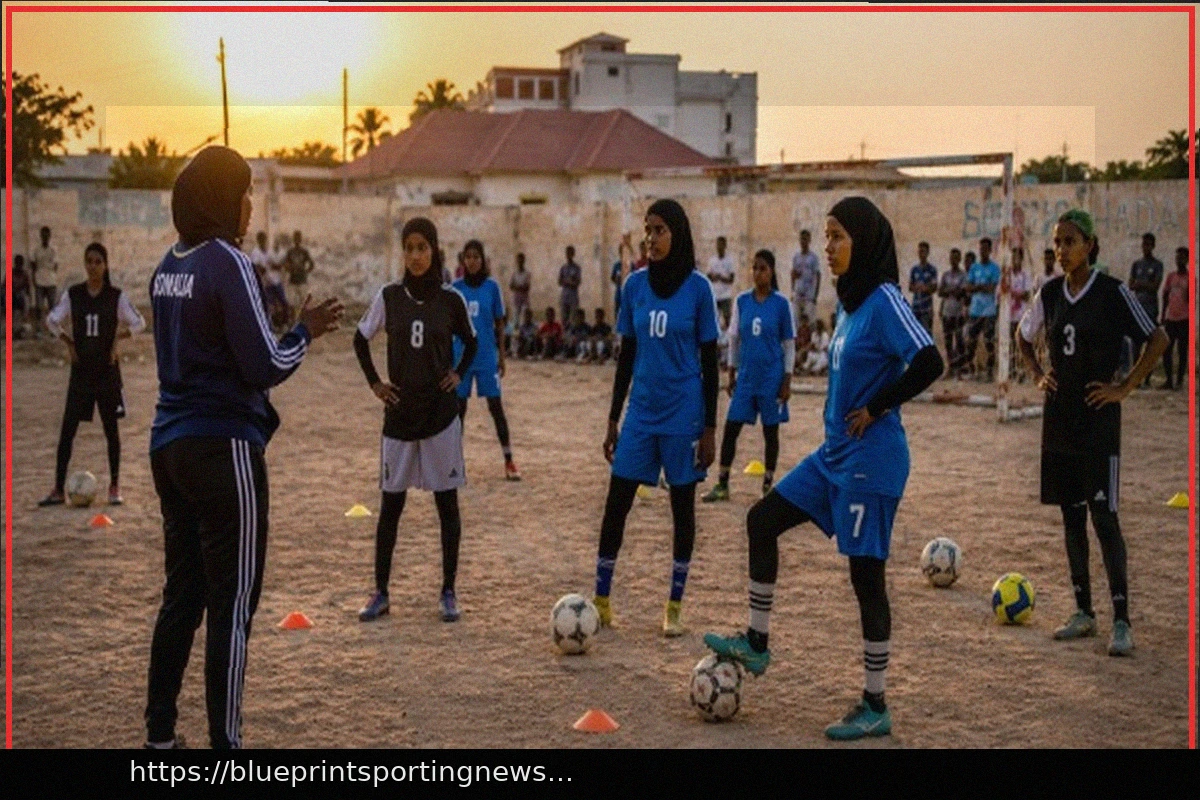
On March 8, 2024, a significant event took place in Mogadishu: the first official women’s futsal match under the Somali Football Federation’s (SFF) governance. This marked a pivotal moment for women’s football in a country where football for men was once deemed un-Islamic. The match, though small in scale, was a powerful statement of progress.
Two years later, the SFF’s women’s football championship has expanded dramatically, featuring 600 players across 10 teams, far exceeding initial expectations. Younger Somali women are not only participating but also closely following the sport’s growth, engaging with both local and international fixtures through digital platforms. This digital engagement often intersects with the men’s game, indicating a growing and overlapping sports audience.
The Genesis of a Program
Prior to 2024, there was no formal structure for women’s football in Somalia. While informal teams existed, the federation lacked a dedicated women’s department, competition framework, or coaching structure. The initial focus was not on organizing matches but on shifting mindsets to make them possible. The SFF conducted extensive awareness workshops, particularly targeting parents, to foster acceptance of their daughters participating in the sport. This strategy proved effective, leading to the successful launch of the first tournament in October–November 2024 with eight teams and minimal opposition.
The synergy between women’s football, mobile technology, and digital communities has amplified the program’s visibility. Social media and digital access have played a crucial role in its expansion, achieving a reach that stadium attendance alone could not have provided. The progression has been rapid: from the first official fixture to international participation in less than three years. By October 2025, the Ocean Starlets represented Somalia in their first women’s international friendlies in Djibouti. January 2026 saw the formal establishment of the national women’s team, and by March 2026, the Ocean Queens U-17 squad was preparing for an Arab tournament in Jordan, showcasing a program that officially did not exist in 2023.
Strategies for Success
SFF President Ali Abdi Mohamed emphasized that the program’s inception was driven by a recognition of cultural barriers rather than logistical ones. The approach involved awareness campaigns to dismantle these cultural obstacles. Alongside community engagement, FIFA provided crucial financial support for the 2024 tournament through the Women’s Football COVID-19 Relief Fund. The SFF adopted the motto TimeForWomen’sFootball and the theme Beyond Barriers for the first tournament, deliberately framing the initiative as culturally resonant and not an imposed external concept. To further align with Somali norms, players competed in full Islamic attire, including hijabs, long sleeves, and tights, signaling that the sport could exist harmoniously within the country’s religious and cultural framework.
The Players: A Diverse Representation
Seventeen-year-old Ramas Abdi Salah, a midfielder for the Ocean Queens, exemplifies the new generation of players. She trains and competes in full Islamic dress with her family’s full support, facing no objections. Goalkeeper Najma Ali Ahmed’s performance in a 2026 match, though a loss, was reported as a game performance rather than a cultural milestone, indicating a shift in media portrayal. The players hail from diverse backgrounds, with many originating from Mogadishu, but the 2026 championship has extended its reach to teams outside the capital. Some players have emerged from NGO-supported programs in displaced persons’ settlements, while others were discovered in informal neighborhood games. A significant factor is the support from family members who have followed men’s football for years and now encourage their daughters’ participation, a notable cultural shift.
The following table highlights the key milestones in the development of women’s football in Somalia:
| Date | Milestone |
|---|---|
| March 8, 2024 | First official women’s futsal match in Mogadishu (International Women’s Day) |
| October–November 2024 | Inaugural women’s football tournament: 8 teams, themed “Beyond Barriers” |
| October 24, 2025 | First women’s international fixture: Djibouti vs. Somalia |
| January 2026 | SFF celebrates the formation of the national women’s team |
| March 2026 | Ocean Queens U-17 squad prepares for the Arab U-17 tournament in Jordan |
| Mid-2026 | Championship expands to 10 teams with 600 registered players |
The rapid growth from 80 to 600 players in under two years is a strong indicator of the program’s genuine grassroots support, suggesting it is driven by player interest rather than solely institutional efforts.
Remaining Challenges
While significant progress has been made, the barriers to women’s football in Somalia have not disappeared entirely; rather, they have been navigated and partially overcome. Women’s rights in Somalia continue to face legal and social constraints that football alone cannot resolve. Persistent issues such as early marriage, limited access to education, and gender-based violence remain significant challenges. The SFF president acknowledges that not all families permit their daughters to play, and in some regions, community attitudes create greater complexities for organizing women’s sports compared to men’s.
The presence of Al-Shabaab in parts of the country adds a specific security dimension. The women playing do so in a capital city where security has improved sufficiently for matches to occur, but the threat that once led to the prohibition of men’s football has not vanished. The program’s success in this context lies in its careful positioning as Islamically acceptable, players’ adherence to appropriate attire, and family approval, effectively navigating the environment rather than directly confronting it.
International competition presents another set of challenges. The case of Iqra Ismail, a former Somalia captain playing in London, highlights how regulatory frameworks not designed with Muslim women in mind can create obstacles. Her refusal to wear shorts in 2024, which led to a temporary ban from the Greater London Women’s League, ultimately resulted in an FA apology and confirmation of her right to wear tracksuit bottoms, illustrating the need for more inclusive sporting regulations.
The Impact of a Dedicated Women’s League
The SFF has announced plans for a dedicated women’s league, a crucial next step for the program’s structural development. The establishment of a league, rather than a single annual tournament, promises several benefits:
- Consistent Competition: A league format fosters faster player development through more matches and varied opposition, providing sustained competitive pressure throughout a season.
- Club Identity and Fan Engagement: League football cultivates clubs that fans can support over time, building the kind of dedicated following seen in men’s football for decades.
- Scouting and Talent Development: A league provides selectors and national team coaches with a continuous stream of performance data for squad selection.
- Sponsorship and Commercial Opportunities: Brands and broadcasters are more likely to invest in sustained competitions like a league, creating the commercial viability the program currently lacks.
- Coach Development: Sustaining a league necessitates more coaches working over extended periods, driving demand for the certification programs the SFF already offers.
The overlap in audience between men’s domestic fixtures and women’s football content on social media, often accessed through similar digital platforms, is increasingly being recognized by potential sponsors and broadcasters.
Digital Reach and the Diaspora Connection
Somali communities globally, including those in Sweden, the UK, the Netherlands, Canada, and the Gulf, actively follow the women’s program through SFF’s social media, YouTube, and various apps. This digital engagement connects the diaspora directly to the unfolding story of women’s football in Somalia. When the SFF shares match clips or tournament results, the audience is not confined to Mogadishu.
This connection is reciprocal. Several players identified for the national squad have diaspora backgrounds, having grown up in more structured European football environments. While a technical gap may exist between these players and those who learned the game on informal pitches, the program is designed to bridge this gap progressively. Several factors could accelerate this development, according to stated priorities from the SFF and its partners:
- Regional Expansion: Supporting teams outside Mogadishu requires sustained logistical assistance for transport and accommodation, which clubs currently bear themselves.
- Girls’ Youth Pathway: Establishing national under-17 and under-20 structures, beyond squads assembled for specific tournaments, is crucial for long-term development.
- Female Coaching Education: Increasing the number of women in coaching roles is vital to support the growing player base.
- Broadcast Coverage: Regular broadcast coverage of women’s fixtures by a domestic TV channel would significantly boost the sport’s visibility within Somalia more effectively than any other single measure.
Despite the current limitations, players are actively participating—attending training, matches, and even international tournaments. The program is now working to catch up with their dedication and ambition.