

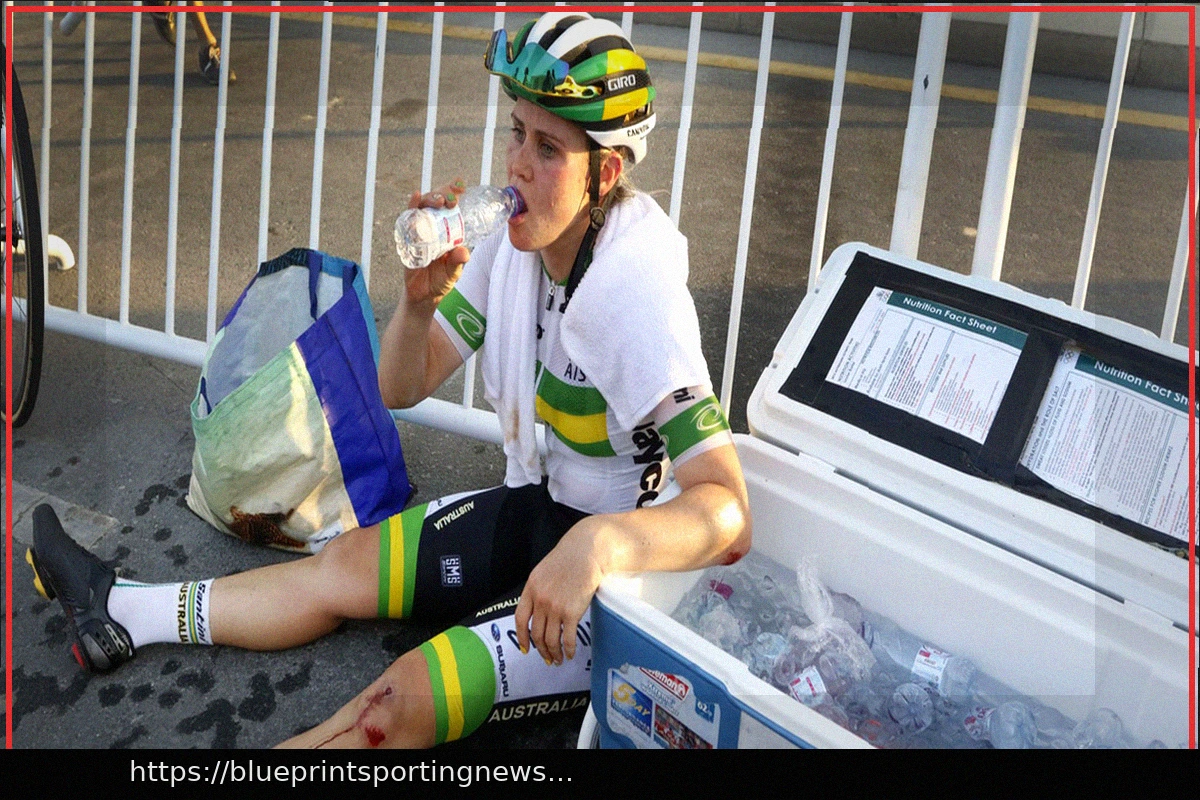
While cyclists often focus on power, heart rate, and aerodynamics, hydration—a crucial performance factor—is frequently overlooked. Understanding your sweat rate can be the key to maintaining your efforts in the heat, rather than seeing them diminish. Fortunately, measuring and acting on this metric is surprisingly simple and highly effective.
Cyclists have an extensive array of data to analyze, from established metrics like speed and power to newer ones like core temperature. In nutrition, the emphasis is typically on carbohydrate intake per hour, but a vital aspect often neglected is fluid loss.
This is a variable that can be accurately measured with minimal equipment during training or racing, and it significantly impacts performance. Effective hydration management is essential for thermoregulation, endurance, perceived exertion, and overall resilience. Knowing your sweat rate transforms hydration from a guessing game into a precise strategy.
Why Hydration Matters More Than You Think
Dehydration doesn’t affect performance gradually; its impact compounds. As dehydration worsens, cardiovascular strain increases, plasma volume decreases, and the body’s ability to dissipate heat becomes less efficient. Research indicates that:
- A loss of 1–2% of body mass may have a minor effect on performance.
- 2–4+% dehydration significantly impairs endurance performance.
- Environmental conditions play a role. In hot climates, dehydration can reduce VO₂max by 9–27%, compared to only 3–7% in cooler conditions.
The key takeaway: The hotter the environment and the longer the duration of the ride, the more critical hydration becomes, and paradoxically, the more challenging it is to consume enough fluids.
What Is Sweat Rate and Why It Matters
During exercise, the primary driver of fluid loss is thermoregulation. As your core body temperature rises, your body sweats. The evaporation of this sweat cools you down by removing heat, enabling you to continue performing.
Your sweat rate is influenced by several factors:
- Exercise intensity
- Environmental conditions (temperature, humidity, sun exposure)
- Body size and composition
- Acclimation and fitness level
Drinking to Thirst vs. Planned Hydration
For most athletes, sweat rates typically range from 0.5 to 1.5+ liters per hour, with considerable individual variability. To mitigate the negative effects of fluid loss, hydration strategies generally fall into two categories:
- Drinking to thirst (ad libitum)
- Planned drinking
Both approaches can be effective, but their suitability depends on the context. Drinking to thirst is straightforward and requires little effort. For many situations, particularly in moderate conditions and for shorter rides (around 1–2 hours), it can be adequate.
However, this method has limitations:
- Athletes often consume insufficient fluids, especially with higher sweat rates.
- The sensation of thirst can be suppressed during intense exercise.
- It doesn’t account for situations with limited fluid access (e.g., long climbs, remote routes).
- Drinking only plain water may reduce thirst before complete rehydration is achieved.
Planned hydration, conversely, offers structure and helps prevent significant dehydration, particularly during prolonged, hot, or high-intensity rides.
Measuring Your Sweat Rate (Simple Method)
If you decide a planned approach is necessary for your rides or races, here’s how to implement it. You’ll need a scale and a consistent method.
Basic process:
- Weigh yourself before exercise (wearing minimal clothing and after using the bathroom).
- Record all fluids and food consumed during the activity (note their weight).
- Weigh yourself again after exercise (under the same conditions).
Then, calculate: Sweat loss = change in body weight + fluid & food consumed. Divide this by the duration of the activity to get: Sweat rate = liters per hour. Repeating this process in various conditions will reveal patterns, which is where the true value lies.
What Sweat Rate Tells You
Tracking your sweat rate provides three key insights, enabling you to move beyond guesswork and into strategic planning:
- Total Fluid Needs: It quantifies how much fluid you lose, indicating how much you may need to replenish.
-
Hydration Strategy Effectiveness:
- Did you lose too much weight (>2–3%)?
- Did you overdrink and gain weight?
- Context-Specific Planning: It helps you understand how your sweat rate varies with temperature, intensity, and duration.
Real-World Example: Building a Race Plan
Once you have gathered several sweat rate data points, the next step is to translate this information into actionable strategies. Over time, this builds a dataset illustrating how your sweat rate responds to different conditions.
For each ride, you can log:
- Sweat rate (L/hr)
- Average temperature
- Duration
- Intensity (often measured by normalized power or TSS)
By analyzing this data, you can identify trends. For instance, you might observe a direct correlation between rising temperatures and increased sweat rate. Quantifying this for you is crucial. You can also factor in intensity (via TSS), as harder efforts often elevate sweat rates even at similar temperatures.
This process creates a predictive model for your sweat rate: “At X temperature and Y intensity, I can anticipate approximately Z L/hr of fluid loss.”
Applying Sweat Rate to a Specific Ride
To apply this to a real scenario, you can overlay temperature data for a specific course profile. This visualization helps you understand not only the expected temperatures but also when those changes will occur during the ride. Using weather forecasting tools can provide this information.
With this temperature data, you can reference your historical chart to estimate your sweat rate hour by hour. Instead of a single average number, you will have a dynamic estimate:
- Cooler early hours suggest a lower sweat rate.
- Midday heat will likely lead to peak fluid loss.
- Late-race fatigue combined with heat presents the period of highest risk.
Building the Plan & Solving Logistics
From these projections, you can develop a practical hydration strategy. This involves mapping out:
- Estimated fluid loss per hour
- Planned fluid intake per hour
The objective is not to perfectly match intake to losses—that’s unrealistic. Instead, the focus is on:
- Maintaining a manageable level of dehydration.
- Avoiding falling significantly behind in fluid replacement early on.
- Planning ahead for the most challenging and hottest sections of the race.
- Minimizing the burden of carrying unnecessary fluid weight.
Once this strategy is outlined, it becomes actionable. Based on these projections, you can determine:
- The number of bottles needed between aid stations.
- Whether a hydration pack is necessary or if bottles suffice.
- Optimal refill points.
- Potential risks of running out of fluids during high-heat periods.
This is where sweat rate data proves invaluable, bridging the gap between physiological understanding and effective race-day execution.
Real-World Example: UNBOUND Gravel
Consider a scenario like Unbound Gravel, anticipating a 9+ hour performance for an athlete targeting a strong finish. By combining historical sweat rate data with forecasted weather, you can construct a plan based on your specific physiology and the anticipated race-day conditions, rather than guessing or reacting mid-race.