A Brief History of California Games and its Little-Known Creator, Epyx, Inc.
Some games, while perhaps not groundbreaking in their mechanics, leave an indelible mark on our memories. Think of titles like Defender of the Crown, a game rushed to meet deadlines that, despite its visible flaws, is remembered with immense nostalgia by many players.
California Games, in its own way, falls into a similar category. While objectively better sports games may exist, California Games holds a special place in the hearts of many older gamers.
First released in 1987 on platforms such as the Commodore 64, ZX Spectrum, and Amstrad CPC, California Games later arrived on the Atari 2600, Commodore Amiga, and PC-DOS in 1988. By 1989, it was also ported to the Sega Master System, a version we'll touch upon later. The game was originally developed by the American company Epyx, Inc., and saw publication through numerous companies across a wide array of platforms over the years.
By the mid-1980s, Epyx, Inc. had achieved considerable success with titles like Summer Games, Winter Games, and World Games, all focusing on more conventional sports. However, the 1980s also saw a growing youth subculture, particularly in the US, embracing more alternative sports – those often associated with street culture and urban landscapes.
Epyx, Inc. astutely recognized this burgeoning trend and sought to capitalize on it. Drawing inspiration from the successful formula of their Winter Games and Summer Games series, they aimed to create a game that would appeal to a younger audience in a distinct way. The game's visual style and music were instrumental in crafting its "laid-back, summery vibe," imbuing it with more personality than their previous sports titles.
A significant novelty was the broad appeal of these "street" sports to both young men and women. Epyx, Inc. even noted after California Games' release that it was the first game of its kind to achieve such widespread success across both genders in pre-launch focus groups, indicating a vast potential audience.
Before delving deeper, it's worth pausing to consider Epyx, Inc. It may surprise many today that this company, once a giant among 1980s game developers, is now almost forgotten. Founded in 1978 as Automated Simulations by Jim Connelley and Jon Freeman, the company initially focused on simulation games for personal computers. Their first release, Starfleet Orion, came out in December of that year for the Commodore PET, later appearing on the TRS-80 and Apple II. Programmed in the accessible BASIC language, it was a humble beginning for what would become a leading video game developer.
Recognizing the limited market for serious simulation games, Automated Simulations shifted its focus to action titles, particularly sports games, which retained a connection to reality and simulation. The founders felt this new direction warranted a name change, and Automated Simulations became Epyx, Inc. From that point, things truly took off.
The company's golden age spanned the mid to late 1980s. At its peak, Epyx employed over 200 people, making it a significant software publisher for the era. Epyx, Inc. produced over 115 games across a wide range of platforms, with Mission Impossible, the racing game Pitstop, Summer Games, Winter Games, and, of course, California Games being among their most popular. They also brought the successful International Karate to the US market.
As mentioned earlier, California Games differed significantly from more traditional sports titles like Summer Games and Winter Games. The emphasis was placed more on fun and embodying the cool, sun-drenched Californian lifestyle through somewhat unconventional sports. While building on the foundation of the other "Games" titles, a key innovation in California Games was the inclusion of real-world sponsors. Instead of choosing a country to represent, as in Summer Games and Winter Games, players selected sponsors to associate with at the start of the game.
The integration of sponsors was relatively uncommon at the time, but Epyx, Inc. forged partnerships with brands like Santa Cruz Skateboards, Casio, Kawasaki, Ocean Pacific (OP) – a classic Californian surf-lifestyle apparel brand – and Costa Del Mar (sunglasses). This undoubtedly helped to further engage the target audience, who might have already been familiar with these brands through their interest in street sports. Epyx, Inc.'s understanding of its audience was a crucial factor in California Games' popularity.
California Games featured six distinct disciplines: surfing, skateboarding (half-pipe), roller skating, BMX biking, frisbee, and footbag (Hacky Sack). Minor variations in content existed depending on the platform. For instance, the Sega Genesis version omitted the frisbee event, while the Atari 2600 and Atari Lynx versions lacked both frisbee and roller skating.
The development of California Games was an in-house effort at Epyx, taking place between 1986 and 1987, with a team of 12 developers. This was a substantial team for a single game at the time, when many titles were created by a single person or, for larger productions, typically three to five individuals. Each programmer was responsible for a specific sport; for example, the surfing segment was developed by an actual surfer, while the footbag/hacky sack discipline was handled by Ken Nicholson, who later went on to create DirectDraw, the technology that formed the basis of Microsoft's DirectX.
While California Games was released on numerous platforms, Epyx, Inc. did not handle all the ports. Sega, for instance, acquired the rights to port the game to the Sega Master System. A certain Mark Cerny, working as a programmer and game designer for Sega in Tokyo at the time, was tasked with this porting effort.
Cerny initially believed that porting a game composed of six mini-games to the new platform would be a straightforward task, estimating around three months for his team. However, it ultimately took more than double that time. Cerny's team consisted of himself, an art director, and a planner/project manager. They based their Master System version on the Commodore 64 release. Unlike some other ports, the Sega Master System version of California Games included all six original sports and is often considered one of the best versions of the game, on par with the Commodore 64 release.
California Games proved to be a massive commercial success for Epyx, Inc., becoming one of their best-selling titles. It sold approximately 300,000 copies within its first nine months, a significant figure for the late 1980s. By the end of 1989, it had reached half a million units sold, outselling Summer Games, Summer Games II, Winter Games, and World Games.
Many today regard California Games as the last true classic from Epyx's sports game lineup. Its sequel, the inevitable but less successful California Games II, was released in the early 1990s on platforms like PC-DOS, Commodore Amiga, and Atari ST, but it never achieved the same level of success. By this time, Epyx, Inc. was already facing considerable challenges. The company experienced a series of financial difficulties, which, according to former Epyx programmer Stephen Landrum, began with the company becoming too spread out and attempting to do too much.
Epyx, Inc. wasn't just a game producer; they also ventured into manufacturing gaming accessories like joysticks and began developing their own ambitious handheld console codenamed "Handy." Showcased to industry professionals in January 1989, Epyx soon realized they couldn't produce the console independently. Nintendo was approached to join the project but declined, likely preoccupied with their own Game Boy, which launched a few months later. Consequently, Epyx partnered with Atari, with Atari handling production and Epyx focusing on game development. The Handy was subsequently rebranded as the Atari Lynx.
Despite the visionary nature of the Handy project (which notably featured a color LCD screen), this console marked the beginning of the end for Epyx. The company struggled to fulfill its end of the agreement with Atari, leading Atari to withhold crucial payments, a devastating blow to Epyx. Following California Games' release in 1987, Epyx boasted over 200 employees; two years later, this number had dwindled to fewer than 20. In 1989, Epyx ceased developing games for personal computers like the Commodore Amiga and Atari ST to focus on creating titles for the Atari Lynx, managing to produce only a handful of games for the console.
In October 1989, Epyx, Inc. filed for bankruptcy, signifying the end of Epyx, Inc. as it was known, just over two years after the release of California Games. Today, Epyx is rarely mentioned, despite being one of the most successful game developers of the 1980s. However, Epyx still exists as Epyx Games, and their intellectual property can be licensed, for example, to create a new California Games. Since the 1990s, California Games has seen a few rather unsuccessful releases on PC and Android, while California Games X, released in 2008 for Java, relied on "quick-time event" sequences for its sports disciplines and bore little resemblance to the original game.
California Games stands out as one of Epyx's greatest achievements, not necessarily for being their finest game, but because it perfectly tapped into a cultural trend with its target audience. Epyx, Inc. had its finger on the pulse. Epyx was "at the top of its game," making it all the more tragic that the company virtually disappeared within two or three years, and that today, Epyx, Inc. is largely forgotten. Fortunately, many of us still remember California Games as a truly special game.
Fresh materials — Gaming

Star Fox for Switch 2: New Multiplayer Maps & Split-Screen Mode Announced
After persistent requests to Nintendo and Velan Studios, which aimed to revitalize the multiplayer mode of Star Fox that was seeing a decline by late July, the developers have announced a significant free update for Star Fox on Nintendo Switch 2. This update, scheduled for September 30th, addre

"Remain" de M. Night Shyamalan : Jake Gyllenhaal tombe amoureux de Phoebe Dynevor, qui le tourmente
Les films romantiques avec une touche d'horreur perturbante gagnent en popularité, et beaucoup d'entre eux sortent à l'approche de la Saint-Valentin. Après des exemples récents comme "Heart Eyes" et "Companion", M. Night Shyamalan s'apprête à lancer sa propre proposition. Juste à temps po

Call of Duty Black Ops 7 & Warzone Season 6: Doom Crossover Incoming
Despite Activision's promise that Call of Duty: Modern Warfare 4 would steer clear of outlandish crossovers to maintain a more focused, military simulation style, the current iterations of Call of Duty: Black Ops 7 and Call of Duty: Warzone remain open to all sorts of peculiar collaborations.

LCS Summer 2026 Playoffs: Six-Team Bracket Finalized, Full Schedule Confirmed
While many regional League of Legends leagues are nearing the end of their Summer splits, the North American LCS is extending its season with its playoffs yet to begin. The first round of the LCS Summer 2026 Playoffs is set to kick off this weekend, featuring the newly confirmed six-team b

EA Sports FC 27: Top 27 Men's and Women's Player Ratings Revealed
As EA Sports FC 27's release date of September 25th rapidly approaches, the highly anticipated player ratings have begun to surface. While the complete list of player ratings is still under wraps, EA has unveiled the top 27 highest-rated players for both men's and women's categories. As expect
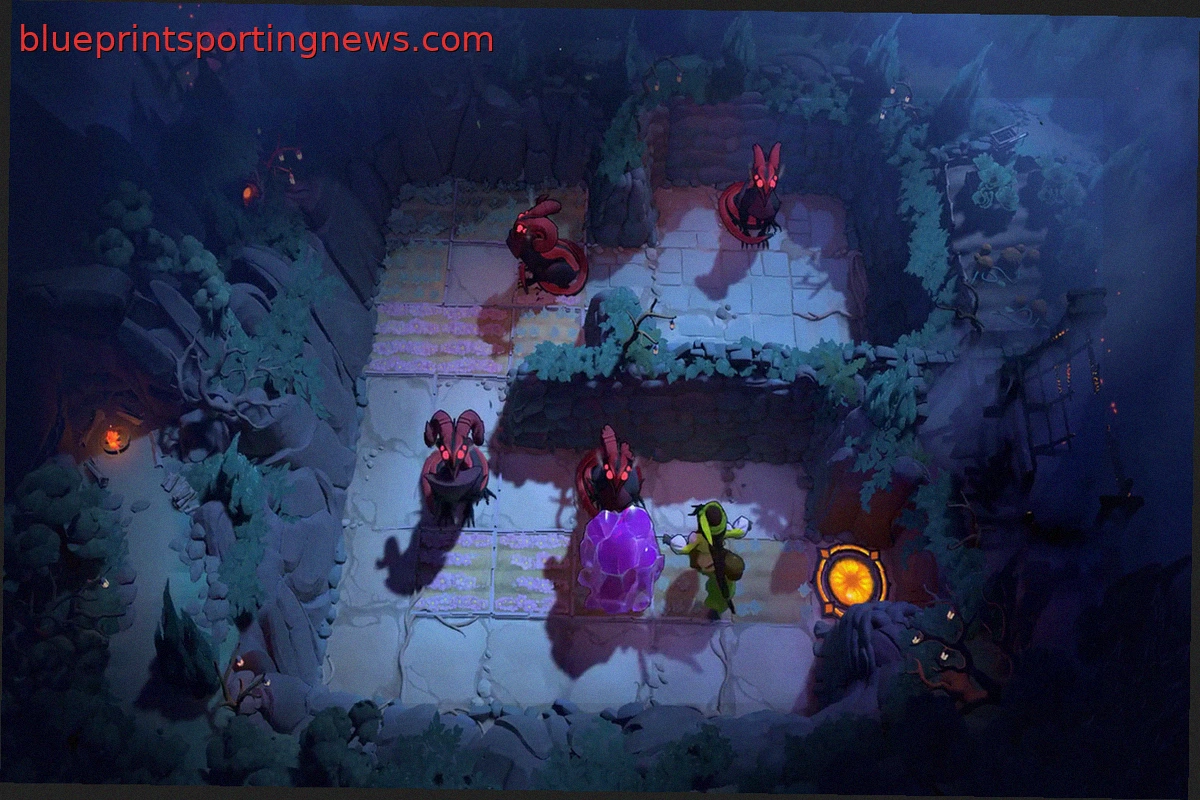
Order of the Sinking Star Arrives Early October
Jonathan Blow, the visionary behind acclaimed titles like Braid and The Witness, has announced the official release date for his latest creation, Order of the Sinking Star. Originally revealed at The Game Awards in 2025 with a planned 2026 launch, the intricate fantasy puzzle game will now be