Grady Hendrix: Turning Personal Family Trauma into Universal Horror
It's undeniable that certain experiences tap into universally terrifying aspects of the human condition, resonating across global cultures and spreading initially through literature, then through cinema. Few individuals are as well-equipped to discuss the horror genre, both as a writer and screenwriter, as Grady Hendrix. He was recently interviewed at the 15th Celsius 232 Festival of Horror, Fantasy, and Science Fiction in Avilés, Spain. You can watch the full interview, complete with localized subtitles, below.
But where does a story like *Witchcraft for Wayward Girls* originate, a horror narrative that achieves global appeal despite its plot being rooted in specific American cultural traditions? As Hendrix explains, the answer lies in his own family's experiences.
"It was something very personal," Hendrix shared. "I discovered that some of my relatives had been sent away when they were teenagers, and nobody knew about it for 50 or 60 years later. So, I started thinking, 'There's a story here.' And the more I learned, the more I realized, 'This is a great story.'"
This personal experience, however, is not an isolated incident. As the author himself points out, similar events have occurred in other parts of the world.
"I think it happened in a lot of countries. Someone told me it happened in Spain. It happened in Ireland. It happened to some extent in the UK.
"But I also think that even if you didn't have that specific story, you understand that same feeling. Across the world, in every country, since the dawn of time, single mothers have been hated. That's universal; that's completely true. In stories, single mothers can be depicted as beings to be hated or as horror."
*Witchcraft for Wayward Girls* tells the story of a teenager named Fern who, after becoming pregnant, is sent to an isolated institution to give birth in secret and surrender her babies. We discussed this book and many other topics, including the horror found in cinema, in the interview with Grady Hendrix available above.
Fresh materials — Gaming

Star Fox for Switch 2: New Multiplayer Maps & Split-Screen Mode Announced
After persistent requests to Nintendo and Velan Studios, which aimed to revitalize the multiplayer mode of Star Fox that was seeing a decline by late July, the developers have announced a significant free update for Star Fox on Nintendo Switch 2. This update, scheduled for September 30th, addre

"Remain" de M. Night Shyamalan : Jake Gyllenhaal tombe amoureux de Phoebe Dynevor, qui le tourmente
Les films romantiques avec une touche d'horreur perturbante gagnent en popularité, et beaucoup d'entre eux sortent à l'approche de la Saint-Valentin. Après des exemples récents comme "Heart Eyes" et "Companion", M. Night Shyamalan s'apprête à lancer sa propre proposition. Juste à temps po

Call of Duty Black Ops 7 & Warzone Season 6: Doom Crossover Incoming
Despite Activision's promise that Call of Duty: Modern Warfare 4 would steer clear of outlandish crossovers to maintain a more focused, military simulation style, the current iterations of Call of Duty: Black Ops 7 and Call of Duty: Warzone remain open to all sorts of peculiar collaborations.

LCS Summer 2026 Playoffs: Six-Team Bracket Finalized, Full Schedule Confirmed
While many regional League of Legends leagues are nearing the end of their Summer splits, the North American LCS is extending its season with its playoffs yet to begin. The first round of the LCS Summer 2026 Playoffs is set to kick off this weekend, featuring the newly confirmed six-team b

EA Sports FC 27: Top 27 Men's and Women's Player Ratings Revealed
As EA Sports FC 27's release date of September 25th rapidly approaches, the highly anticipated player ratings have begun to surface. While the complete list of player ratings is still under wraps, EA has unveiled the top 27 highest-rated players for both men's and women's categories. As expect
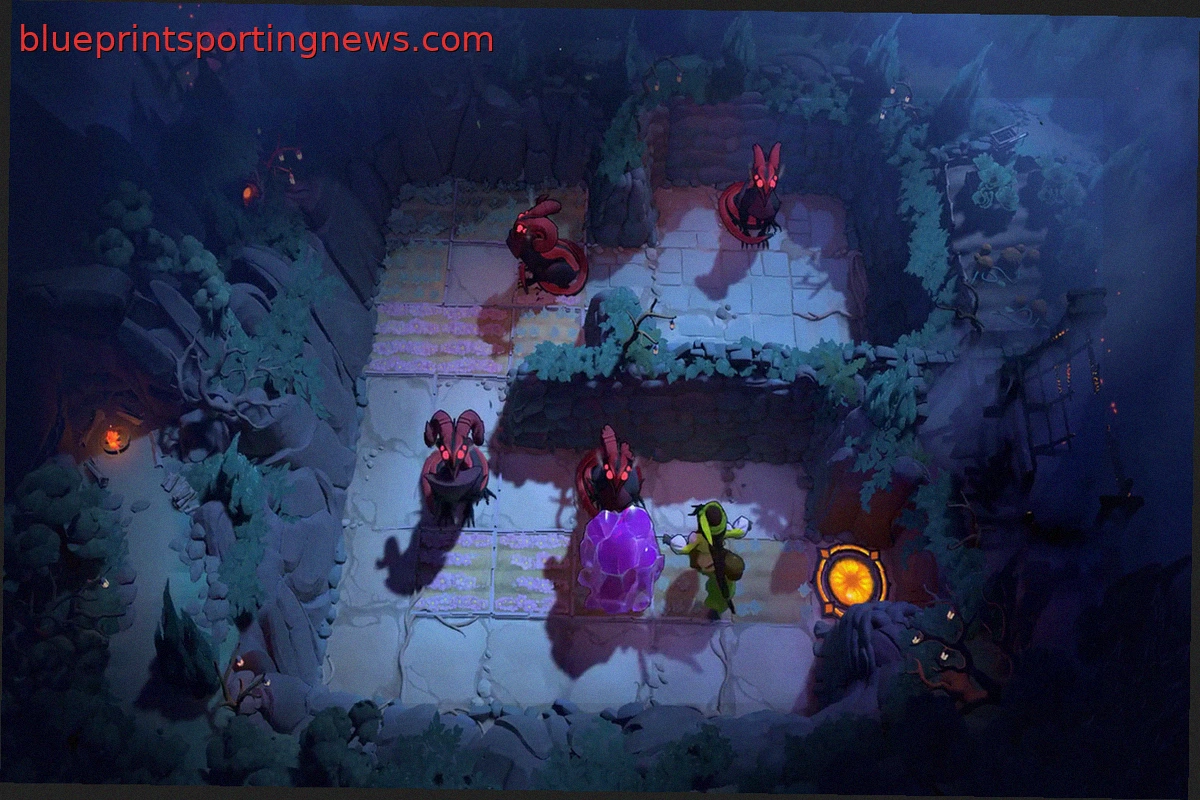
Order of the Sinking Star Arrives Early October
Jonathan Blow, the visionary behind acclaimed titles like Braid and The Witness, has announced the official release date for his latest creation, Order of the Sinking Star. Originally revealed at The Game Awards in 2025 with a planned 2026 launch, the intricate fantasy puzzle game will now be