Silent Hill: Townfall Review - A Psychological Horror That Hits the Mark, But Not the Heart
The Silent Hill series is undoubtedly peculiar. Born as a contrast to Resident Evil's survival horror, it focused more on the psychological aspect of horror and narrative as the core experience. It began with an exceptional first installment, followed by a second that
The Silent Hill series is undoubtedly peculiar. Born as a contrast to Resident Evil's survival horror, it focused more on the psychological aspect of horror and narrative as the core experience. It began with an exceptional first installment, followed by a second that solidified its place in the horror pantheon. Subsequent chapters saw a decline, culminating in the dire Silent Hill: Downpour, which seemed to cement the series' fall from grace, despite vocal fan demand. This bizarre nature stems from just two standout titles, out of nearly a dozen in total, carrying the franchise for years and establishing its legacy, even when objectively weighed against its shortcomings. It's no coincidence that Silent Hill 2 was chosen for a 2024 remake by Bloober Team, resurrecting the series with a faithful yet modernized rendition. The same story, same emotions, just a different, updated presentation.
Following that, we saw the excellent Silent Hill f, which, despite its combat system flaws, bravely took the concept of Silent Hill beyond its American town setting. It transformed it into a liminal space where people found themselves for various reasons – their personal purgatory. This was a departure from the town itself, which, while being a physical place, might have constrained developers' creativity too much to maintain its original essence. It wasn't an easy change, nor was it initially well-received, but I believe the chapter captured the series' core and delivered a profoundly human story. It was a tragedy that, while further explored through multiple playthroughs, already outlined Hinako's tormented journey during a historical period of oppression for women in Japanese society. Yes, it had its flaws, but I've always considered Silent Hill's strength, its distinction from Resident Evil, to be its plot; the internal narrative of its characters, its ability to portray a world of suffering individuals who didn't fit into a simple black-and-white dichotomy. James Sunderland is the most emblematic character in this regard, perhaps defining Silent Hill as we remember it. However, the team behind Silent Hill f did an admirable job revitalizing the series. This revitalization is what Screen Burn aims to capture with the upcoming Silent Hill: Townfall, which for the first time adopts the series' unfamiliar first-person perspective. While The Short Message experimented with this first, it's hard to consider it a full game, though I appreciated it nonetheless.
Personally, I wasn't sure what to expect. I played and enjoyed Stories Untold from the studio, and Observation still stares at me from my vast backlog. The core idea was intriguing, but as experience teaches, Silent Hill is one of those games that can start strong but then collapse under the weight of design choices that aren't quite aligned, and more importantly, a narrative that fails to live up to the bar set by the second installment, a bar that no one has truly matched since (as much as I appreciate Silent Hill f, no, not even that one; James's story remains a step above).
After sixteen hours (about thirteen of actual gameplay) spent in the foggy, port town of St. Amelia, I'm ready to summarize an experience that gets many things right but, with a touch of regret, falters significantly in its second half. The final section is flawed in several aspects, and the narrative becomes convoluted in its exposition, obscuring important plot points and undermining what could have been an excellent story. The premises were all there, confirmed and strengthened by a truly excellent first half that unfortunately began to stumble in the second, falling multiple times. As we'll discover, however, it remains a recommended game; it's just less impactful than it could have been.
A Nebulous Narrative That Loses Its Intimacy
Silent Hill: Townfall opens in an enigmatic fashion, placing us in the shoes of a protagonist, Simon Ordell, whose backstory is a complete blank slate. He is summoned to the remote and isolated port village of St. Amelia, off the coast of Scotland, by the desperate words of a certain Richard, a man who sees him as the only hope to resolve a situation that has spiraled out of control. Simon literally emerges from the frigid waters of the pier. It's 1996, and the village greets us like a phantom wreck shrouded in dense fog – a visual trick that, while clearly nodding to the franchise's tradition, finds a geographical and climatic justification in St. Amelia that perfectly supports the infamous dichotomy between the physical and metaphysical planes of horror.
What makes the initial scene so disturbingly beautiful is a small yet macabre detail: Simon awakens with an IV tube attached to his arm, ending implacably on the back of his left hand. Yet, and this is where the narrative shows its first cracks in emotional coherence, our protagonist is a tremendously difficult character to grasp. Despite almost total amnesia and a town that quickly reveals the monstrosities hidden in the fog, Simon reacts with a composure that borders on pure apathy. His granite-like tranquility in the face of the nightmare repeatedly risks breaking the player's suspension of disbelief, portraying a man perhaps too detached to be a true empathetic vehicle.
Fortunately, the plot compensates for the protagonist's flatness with an environmental lore of exceptional depth. Following the few available clues and tracking down Zoe Ellis, a nurse whose role is intricately linked to St. Amelia's secrets, Simon begins to uncover a Pandora's Box. The game wisely rations answers, hinting from the outset at the involvement of a shadowy corporation behind what appears to be a true ecological and sanitary disaster: inexplicable deaths of fish and birds, coupled with forced isolation from the mainland, cutting off supplies (especially medical ones), leaving the town to rot from within, unable to contain the emergency.
It is precisely in the investigation of this collective tragedy that Townfall delivers its best blow in this first half. In its descent into the abyss, Simon is not the only lens through which to observe the ruin. In a series of carefully placed sections, the game directly puts us in control of Zoe and Richard himself: a brilliant idea, a most welcome surprise that fragments the narrative's perception and allows the stark reality of events to emerge gradually, with devastating weight. This choral approach enormously enriches the first part of the experience, laying the foundation for a horror that isn't limited to the individual but suffocates an entire community.
While it’s hard to find an emotional connection with the protagonist, Silent Hill: Townfall on a purely atmospheric level approaches excellence, at least in its first half. The title masterfully orchestrates a play of oppressive silences, dense fogs, and relentless sound design – made of guttural groans and anguished music – capable of raising the tension to high levels. Reinforcing this sense of constant threat is intelligent level design that plays with St. Amelia's geometry: streets dynamically widen and narrow, shifting from wide roads to narrow, winding alleys, even suffocating the player within the confines of the buildings to explore. Aware that threats could lurk in minimal spaces, players are driven to almost paranoid caution. The game itself wisely encourages prudence over action: while the temptation to fight your way through is strong, the combat system makes every encounter extremely demanding in terms of resource consumption. Everything in the early hours evokes the best of the saga and delivers an atmosphere of pure psychological horror.
At least, until the narrative fabric begins to unravel, revealing its intractable knots.
Townfall's main problem isn't so much the banality of its underlying theme, although the game desperately tries to make it appear more layered than it is. Today, it's extremely difficult to find original subjects, but the true differentiator of a narrative isn't what is told, but how. The plot ends up getting lost in a tangled, confusing mess, too focused on its socio-political substrate to remember that, in a Silent Hill game, the true nerve center must always be the character. And this is precisely where the game betrays the series' core, losing sight of what we could call the necessity of 'nominal being.'
Historically, Silent Hill centers on the individual: their traumas, their demons, their unconfessable guilt. The liminal space molds itself around a strictly personal dimension, forcing the protagonist to make choices where there is no victory, only the least devastating option. This happened with James Sunderland, whose controversial realization remains the pillar of the genre, and it happened with Hinako in Silent Hill f, whose capacity for endurance was profoundly and tragically hers. You can empathize with them, you can detest or judge them, but you cannot deny their heartbreaking intimacy. In Townfall, this concept finds no room. Simon's burden is bland, diluted in a macro-environmental and collective situation that overwhelms him, making him almost a bystander in his own nightmare despite the key role he inevitably plays. Social and circumstantial themes can and should serve as a backdrop – they contribute to building the altar upon which the protagonist will sacrifice himself – but they cannot replace the sacrifice itself, which must occur in a uniquely personal dimension.
This deviation from the canon, combined with a narrative exposition that is incomplete in too many parts, leads to an ending that leaves a bothersome sense of incompleteness. If, at the end of James's or Hinako's first descent, the player has all the pieces (who, what, where, how, and when) to understand the magnitude of the tragedy, in Townfall, one stumbles all the way to the credits. Despite the limited cast, interpersonal dynamics remain vague, and often even the motivations of key characters struggle to find irrefutable logic within the disaster they are all involved in.
First-Person Gameplay: CRTV, Stealth, the Omniscient Stalker, and the Alternation Between Simon, Zoe, and Richard
The adoption of a first-person perspective for Silent Hill: Townfall effectively subverts the series' classic approach, immersing the player in a more intimately claustrophobic experience. The game's design makes no secret of its nature: here, stealth is not just an option, but by far the most encouraged approach. Our primary survival tool is not a weapon: it's Simon's CRTV, a portable television device that serves both as a narrative device for intercepting external events and, practically, as a true radar for monitoring threats. By tuning into the right frequencies, the screen displays enemy silhouettes as black blobs on an oppressive red background, allowing us to study their patrols and plan our movements.
Relying on subterfuge is imperative because the combat system, while functional in its simplicity, is tremendously demanding on resources. Blunt weapons have rather laughable durability – with practically no difference in impact between an iron pipe or a wooden plank – and completely lack tactical options: there are no advantages to attacking from behind, nor the ability to charge shots. Firearms offer better feedback, but come with the severe drawback of inevitably attracting the attention of nearby creatures, thanks to enemies' well-calibrated reactivity to sound. In close combat, furthermore, it's sometimes possible to fumble with the controls, finding ourselves in a clearly disadvantageous position. It's thus evident that direct action should be considered an extreme last resort, an option to be used sparingly, and ironically, almost exclusively in the final moments, when the game forces the issue by placing enemies in patrols impossible to circumvent with stealth patience.
However, Townfall finds its best rhythm by fragmenting the gameplay experience. The alternation between the three protagonists translates into three distinct but perfectly complementary playstyles. While Simon is the hybrid dedicated to caution, Zoe embodies pure survival tension. Incapable of defending herself in any way, the nurse relies solely on a pager that signals enemies via black notches on the screen's edge. Her sections, purely stealth and played on a knife's edge between timing and distraction, represent some of the highest tension peaks of the entire package, further enriched by what are arguably the best integrated puzzles in the experience. At the opposite extreme, we find Richard, whose excursions abandon any pretense of diplomacy in favor of raw action; with him, dialogue is left exclusively to bullets. This variety greatly enriches the gameplay loop, although in some segments the duration of these situations tends to drag on longer than necessary.
And suffering from this uneven pacing is, above all, Simon, plagued by what is, hands down, the worst-managed element of the entire production: his personal stalker. An invincible enemy that hunts the player in specific sections, capable of inflicting a brutal and inescapable 'one-shot kill' if it manages to reach them. Compared to a Pyramid Head – who hit hard, yes, but left room for maneuver and survival – and Hinako's stalker, which involved always manageable escape sequences, this one is afflicted by the cardinal sin of artificial omniscience. It always knows where we are, even if we are cowering in total darkness. Such artificial difficulty, combined with the inability to effectively slow it down even with bullets, transforms these sections into exercises of pure frustration. We go from tactical and reasoned planning to a desperate, headlong rush, hoping to put enough distance between us and the creature to trigger the animation where it 'forgets' it saw us. A draining dynamic, where the constant risk is never balanced by adequate gameplay reward.
Fortunately, the puzzle design stands as a bulwark of the gameplay component. The puzzles are solid, satisfying, and often require considerable lateral thinking, combined with good observation and deduction skills. Solving them provides that gratifying dopamine rush that old fans of the series know well. Yet, even here, Townfall stumbles spectacularly right at the end. The elephant in the room is the section preceding the final confrontation: a disaster in staging and execution. The game unwisely chooses to combine a lengthy puzzle (based on questionable clues and tedious, constant backtracking) with the cumbersome presence of the aforementioned omniscient stalker. The result is an segment dragged out excessively, extremely frustrating and annoying to play, symptomatic of a second half that, in its desperate attempt to raise the stakes both narratively and in terms of gameplay, only ends up floundering under its own weight.
Overall, and despite a final progression that would have greatly benefited from a significant streamlining and less contrived design choices, Townfall's blend of exploration, stealth, and puzzle-solving still manages to uphold the standard of Silent Hill's best chapters, reminding us, at least at times, of the atmosphere and depth of previous works like the complex narrative and moral choices that characterize Silent Hill f.
Technical and Sound Compartment: Decadent St. Amelia, Minor Framerate Drops, and Textbook Sound Design
Visually, Silent Hill: Townfall relies on a solid artistic direction to mask some inevitable technical roughness. St. Amelia is a triumph of decadent aesthetics: the Scottish village is slimy, dilapidated, and oppressive, enhanced by an lighting system that masterfully manages the contrast between darkness and rare shafts of light. The heavy use of visual filters, particularly analog distortions and aberrations related to the CRTV, gives the work a distinct aesthetic identity, perfectly in line with the development studio's previous works. While the visual spectacle is fascinating, the graphics engine occasionally falters with some framerate drops during environmental transitions or in larger outdoor sections, minor blemishes that never compromise the game's playability.
The true, undisputed star of the entire production, however, is the sound design, an aspect where the game doesn't miss a single beat. The contextual effects are meticulously crafted: from the creaking of rotten wood underfoot to the guttural groans that tear through the fog's silence, every sound is placed with surgical precision to maintain tension at high levels. The music accompanies exploration without ever overpowering it, intervening with perfect timing to emphasize moments of greatest anguish. Rounding out an excellent audio section is a high-quality voice acting; the actors' performances are consistently strong and believable, capable of giving depth and emotional weight to the characters even where the screenplay begins to show its flaws.
Fresh materials — Gaming
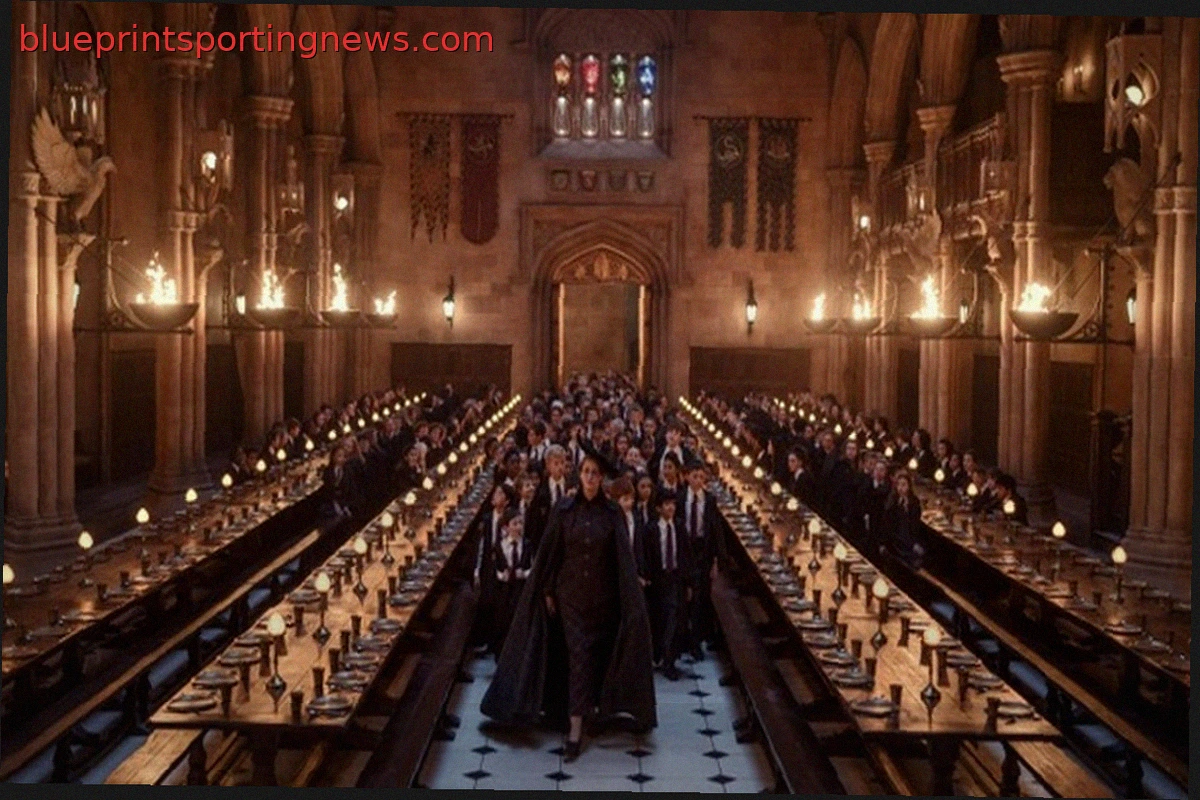
Harry Potter Series: HBO Aims for Less Than Annual Seasons, 10-Year Plan Uncertain
HBO has moved away from the idea of releasing a new Harry Potter season every year. Casey Bloys, CEO of HBO and Max Content, told Deadline that the time required for production makes a 12-month turnaround difficult. The series will adopt a different rhythm, though efforts will be made
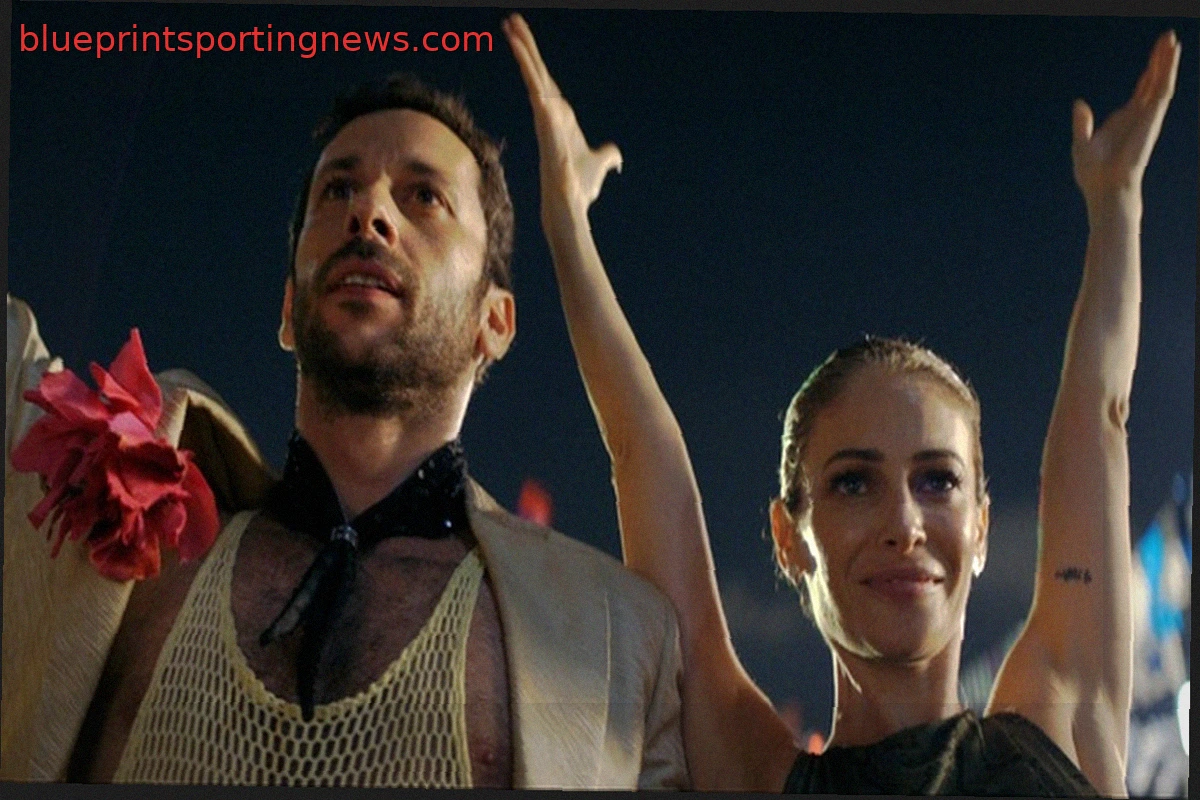
Yes: A Necessary and Timely Film on Post-October 7th Israel
Following controversy surrounding the documentary Naza, which led to an Israeli government investigation over leaked sensitive information, another film has arrived in Italian cinemas that angered Tel Aviv's powerful figures last year. "Yes," an Israeli production co-financed by France
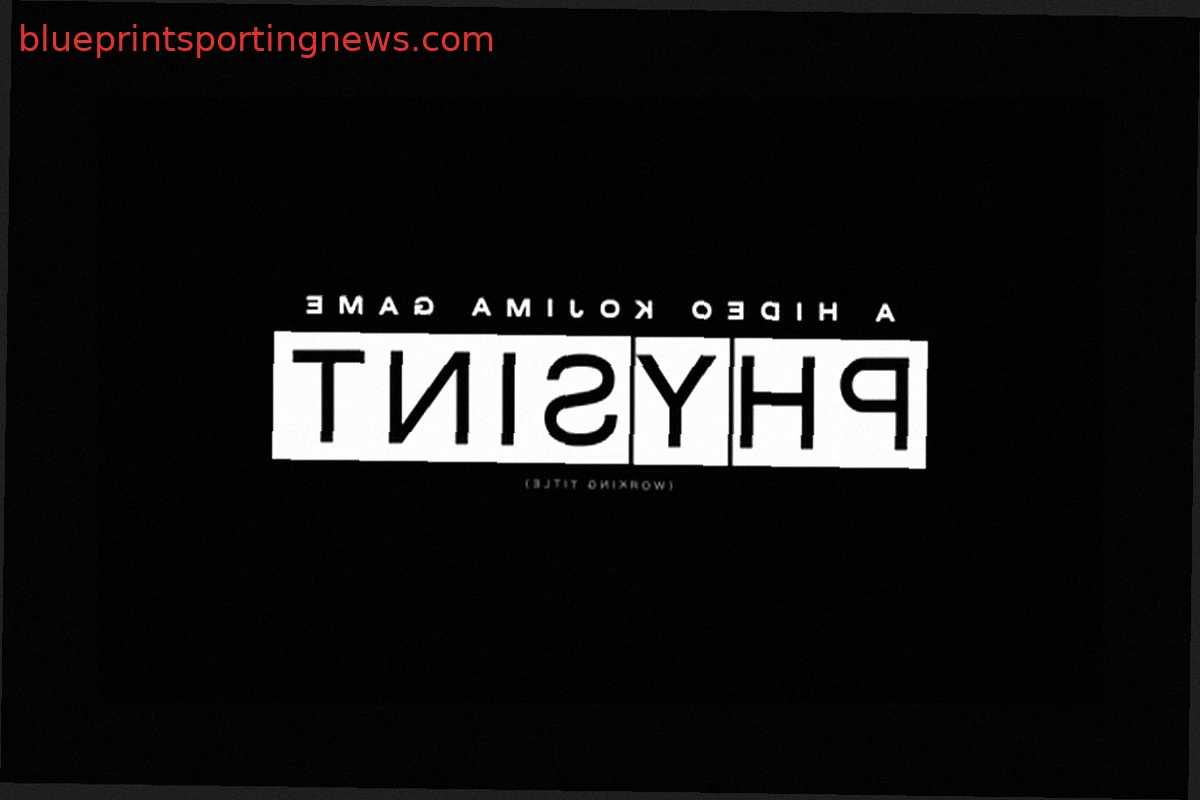
Sony's Refusal of Physint: The Reasons Behind It
Hideo Kojima's name has long been associated with PlayStation, starting with the iconic Metal Gear Solid. This long-standing partnership continued even after Kojima left Konami to establish his own studio. Therefore, Sony's decision to end its collaboration with Kojima Productions and forgo pub

Star Fox for Switch 2: New Multiplayer Maps & Split-Screen Mode Announced
After persistent requests to Nintendo and Velan Studios, which aimed to revitalize the multiplayer mode of Star Fox that was seeing a decline by late July, the developers have announced a significant free update for Star Fox on Nintendo Switch 2. This update, scheduled for September 30th, addre

"Remain" de M. Night Shyamalan : Jake Gyllenhaal tombe amoureux de Phoebe Dynevor, qui le tourmente
Les films romantiques avec une touche d'horreur perturbante gagnent en popularité, et beaucoup d'entre eux sortent à l'approche de la Saint-Valentin. Après des exemples récents comme "Heart Eyes" et "Companion", M. Night Shyamalan s'apprête à lancer sa propre proposition. Juste à temps po

Call of Duty Black Ops 7 & Warzone Season 6: Doom Crossover Incoming
Despite Activision's promise that Call of Duty: Modern Warfare 4 would steer clear of outlandish crossovers to maintain a more focused, military simulation style, the current iterations of Call of Duty: Black Ops 7 and Call of Duty: Warzone remain open to all sorts of peculiar collaborations.